
This project took The Polished Hare beyond its Chicago base and into Michigan: a regional deployment to Kalamazoo/Battle Creek International Airport (KAZO) for a combined exterior wash and interior detail on a Cessna Citation X. The scope paired a Level 2 exterior wash with a Level 2 interior detail — a complete presentation reset that returned both the exterior finish and the passenger-facing cabin to a composed, departure-ready standard ahead of the aircraft’s next movement window.
The Citation X is one of the fastest civilian aircraft ever produced — a long-range, high-speed super-midsize jet that spends real time at altitude and on the move. Aircraft like this rarely sit still long enough for a leisurely detail. The job has to be efficient, aircraft-aware, and complete: a cleaner exterior the moment the next passenger walks up, and a cabin that reads as cared-for rather than merely serviced.
Project Details
Why a Combined Exterior and Interior Reset
For an operator running a Citation X, presentation is rarely just an exterior problem or just a cabin problem. The aircraft is judged as a whole the moment a passenger approaches on the ramp, climbs the airstair, and settles into the cabin. A spotless fuselage undercut by a tired cabin — or a pristine cabin behind a streaked, exhaust-stained exterior — sends a mixed message. Pairing a Level 2 exterior wash with a Level 2 interior detail resets the entire presentation in a single visit, which is the most efficient way to prepare an aircraft for a high-value departure.
That is the approach we took at KAZO. The exterior work removed flight-cycle contamination and restored gloss across the painted surfaces, leading edges, and brightwork. The interior work reset the passenger-facing environment — wood veneer, leather, galley brightwork, storage presentation, and the cockpit-entry transition — so the cabin matched the freshly washed exterior.
Scope Completed
- Level 2 exterior wash across painted fuselage, wings, and empennage
- Leading-edge cleaning and exhaust/hydraulic residue removal
- Brightwork and bare-metal surround attention
- Underbelly and access-panel area cleaning with surface-safe methods
- Level 2 interior detail across cabin, galley, and cockpit-entry areas
- Wood veneer hand cleaning and presentation polish
- Leather cleaning and conditioning on passenger seating
- Galley brightwork and serviceware presentation reset
- Cabin storage and amenity organization
- Carpet and high-touch surface attention using aircraft-aware methods
- Before-departure presentation documentation
Exterior: Level 2 Wash and Surface Detail
A Citation X accumulates a specific contamination profile: exhaust soot along the aft fuselage and around the engine nacelles, hydraulic film near gear and control surfaces, bug and atmospheric deposits on leading edges, and general flight-cycle grime across the belly. A Level 2 exterior wash addresses all of it with chemistry and technique chosen for each surface, not a one-size-fits-all degreaser. Painted surfaces, bare-metal brightwork, composite panels, and acrylic windows each demand a different touch.
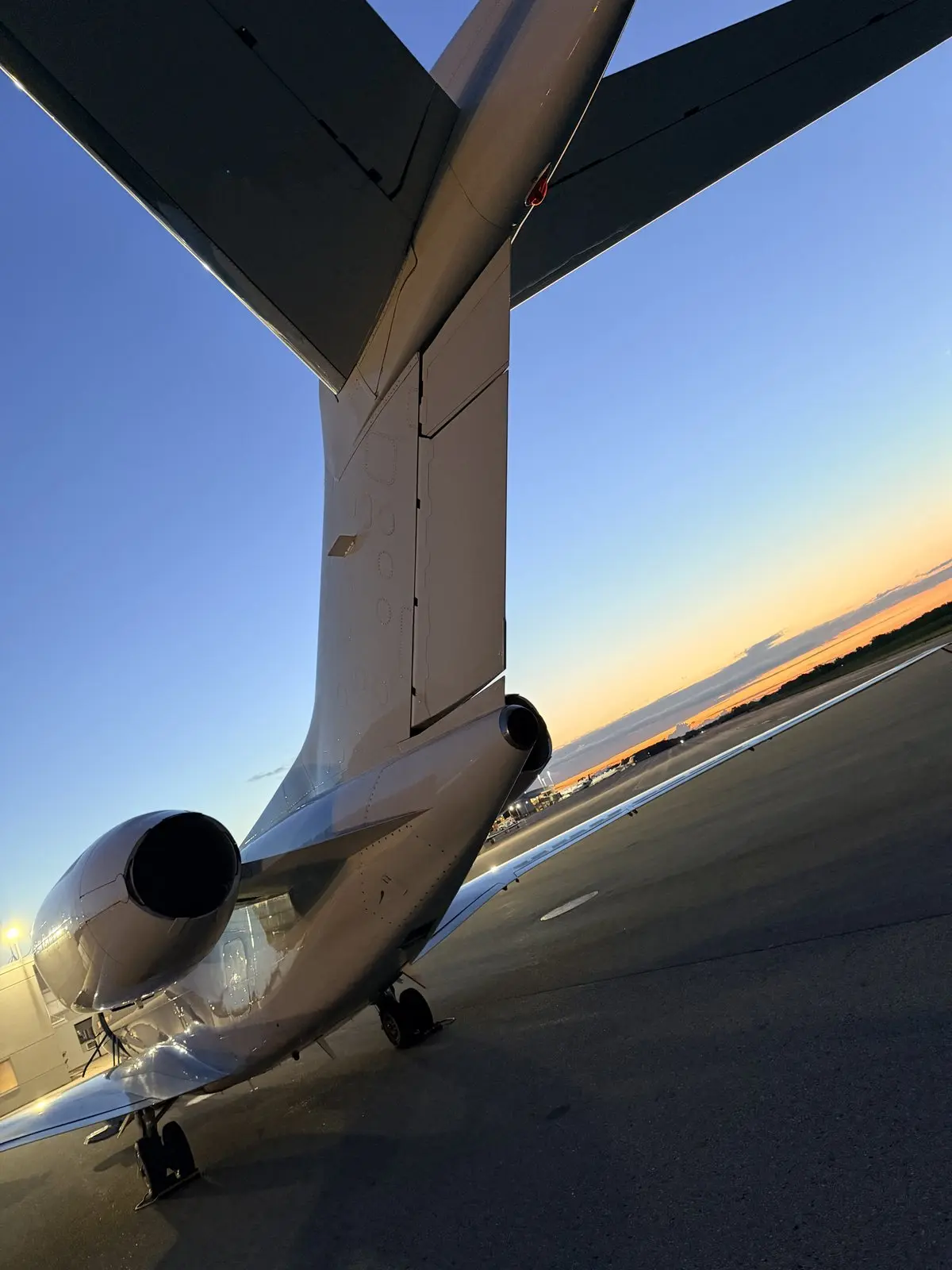
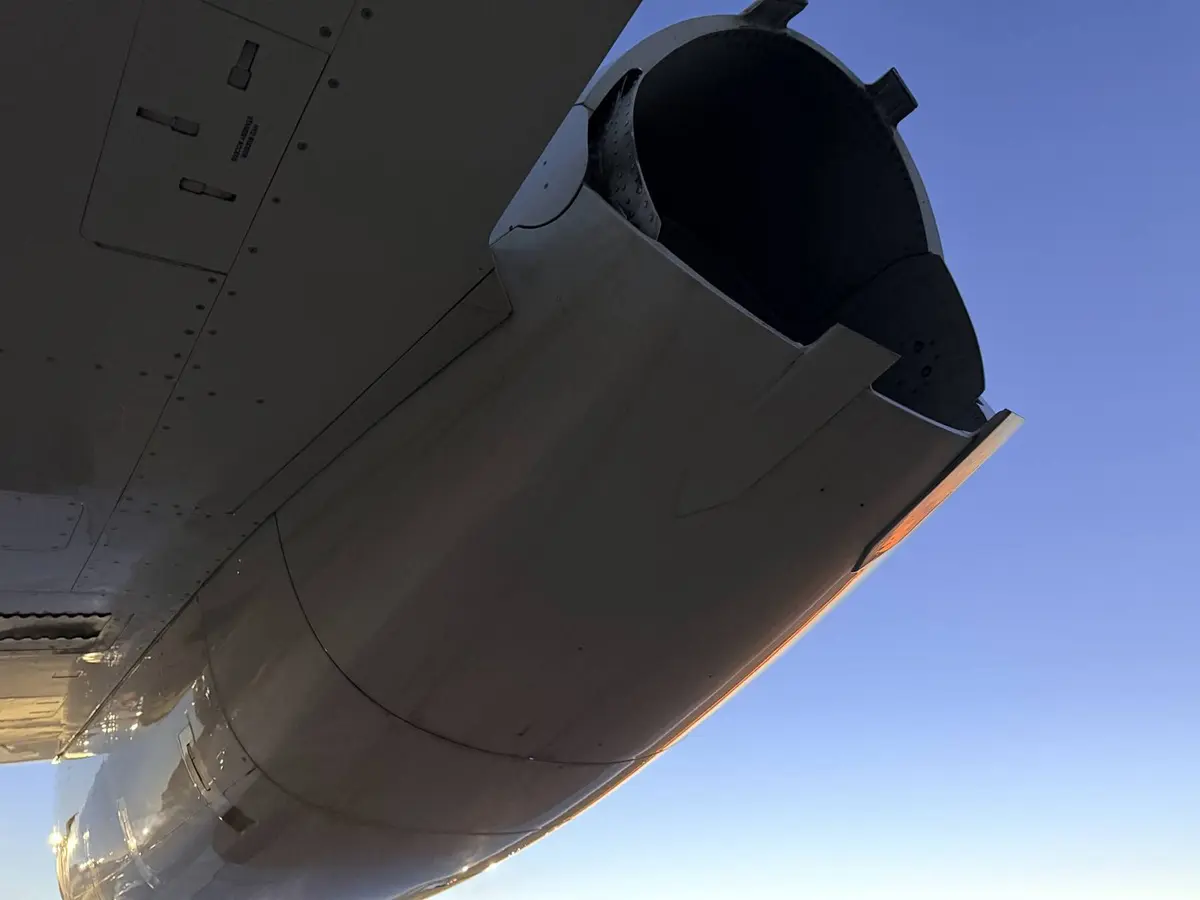
The engine nacelles and inlets are a signature of any aircraft exterior. They are also among the most contaminated areas and the most sensitive to careless cleaning. The cowlings were washed and brought back to gloss, with restraint around the inlet itself — presentation work, never anything that crosses into maintenance territory or risks introducing material into the intake.
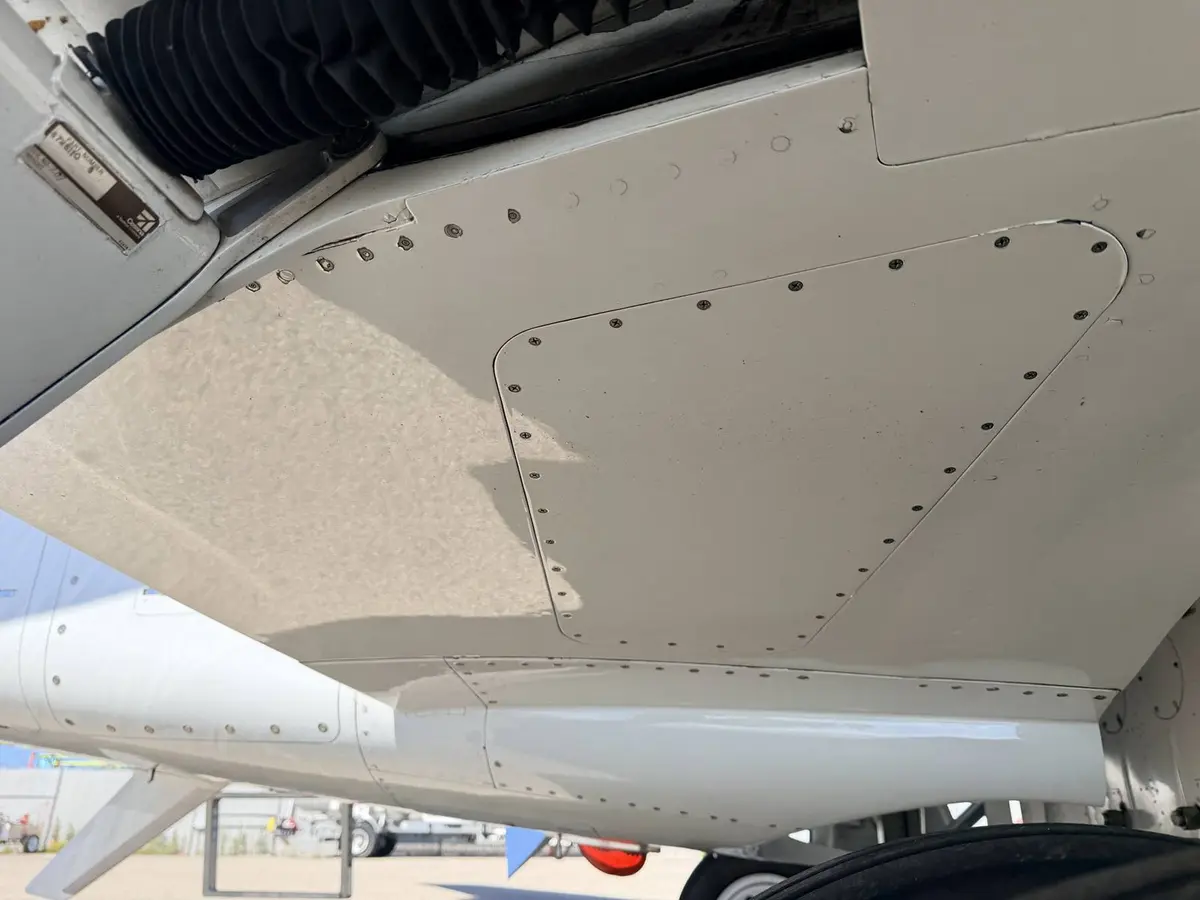
The belly is where flight-cycle contamination collects most heavily and where many washes stop short. Access panels, seams, and the tailcone underside were cleaned with surface-safe methods so the lower aircraft matches the rest of the finish rather than betraying a rushed job from below.
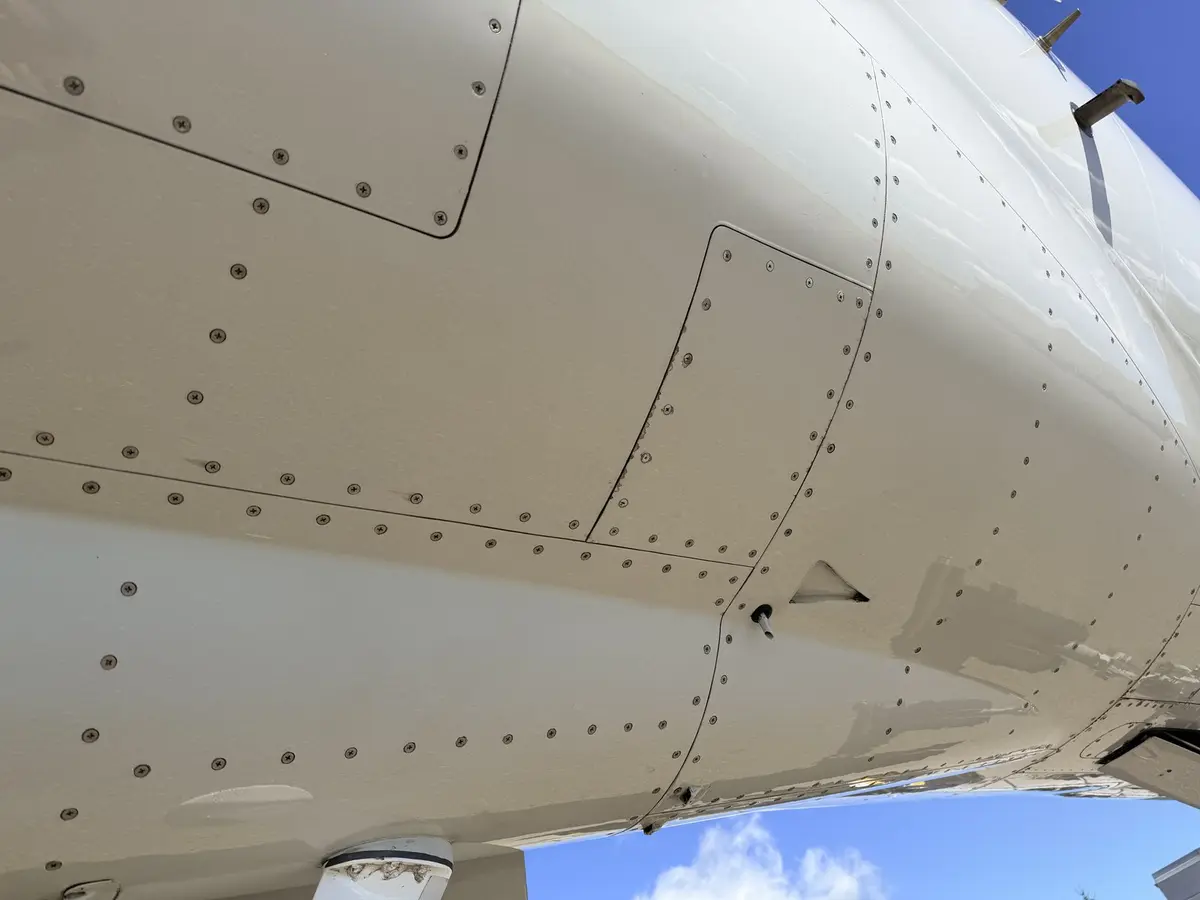
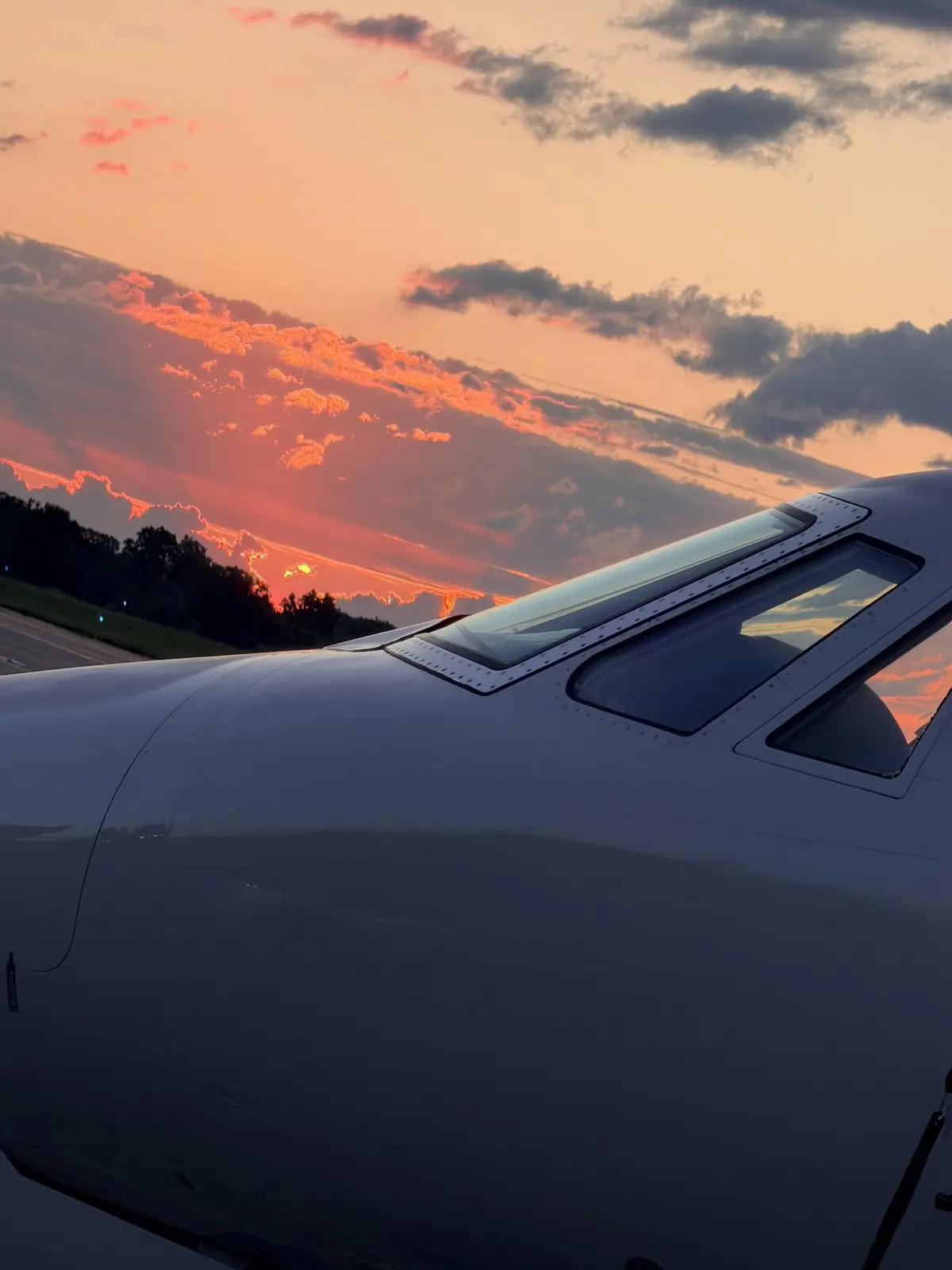
Up close, the difference between a washed aircraft and a detailed one shows in the paint itself. Rivet lines, lap joints, and panel edges are exactly where soot and atmospheric film collect and where streaking hides. Cleaning these areas evenly — not just the broad flat panels — is what lets the finish read as uniform from any angle.
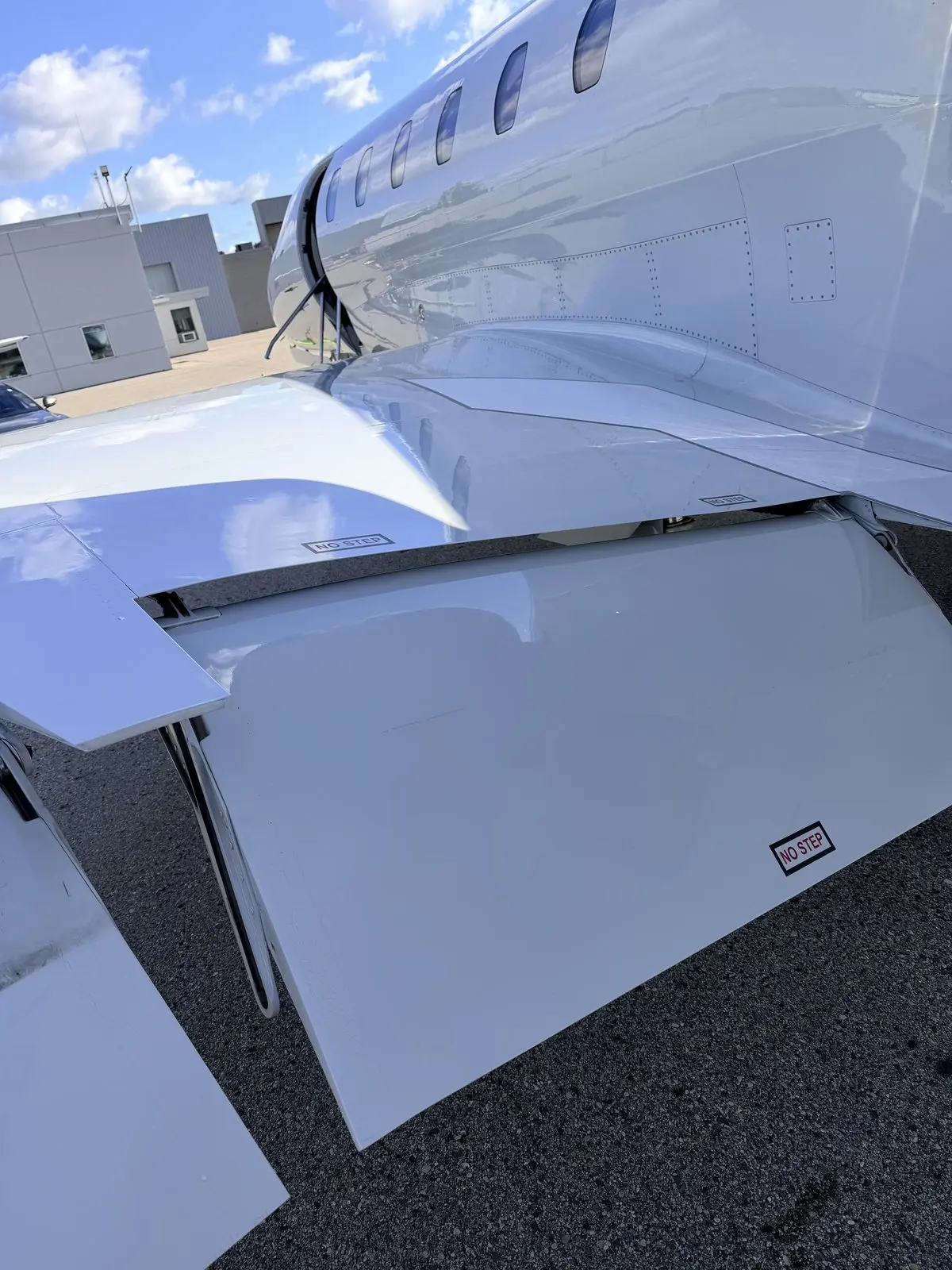
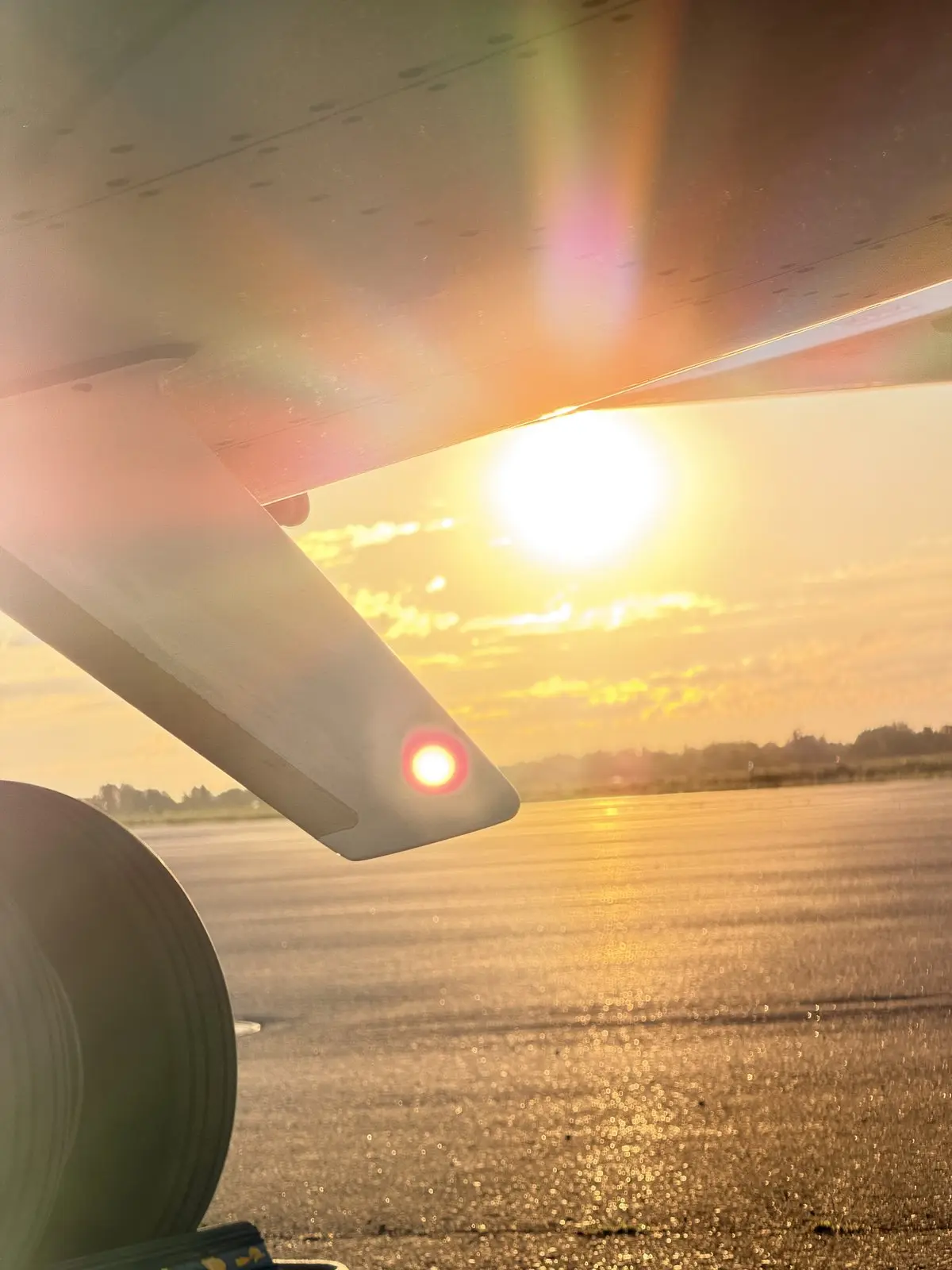
The wing root and flap fairings see foot traffic, fuel, and hydraulic film, and they sit directly in a passenger’s sightline on boarding. Bringing the topcoat back to a sharp reflection here — while keeping placards and “NO STEP” markings clean and legible — is presentation and respect for the airframe at the same time.
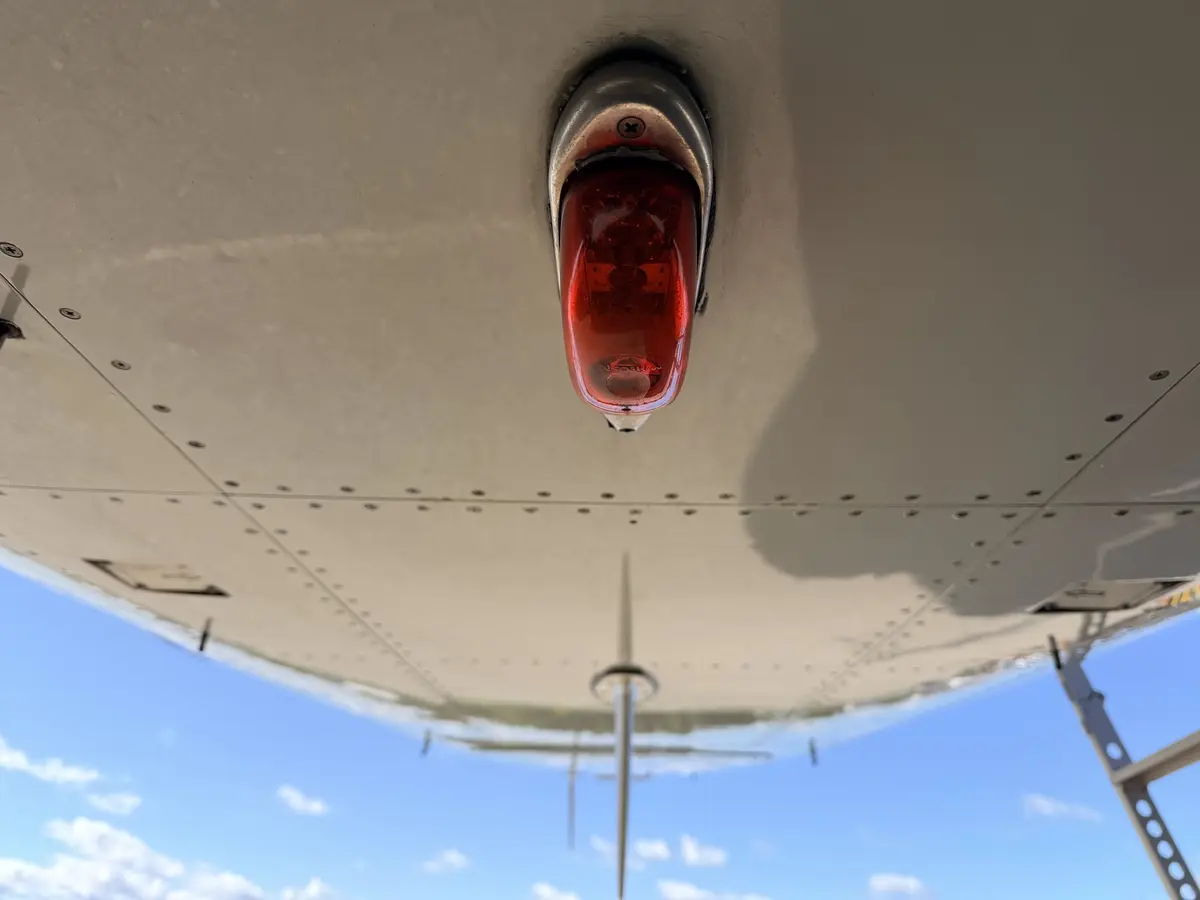
The underside is the part of an aircraft almost no one photographs — which is exactly why it matters here. Antennas, the anti-collision beacon, and the surrounding rivet field were cleaned so the belly holds up to the same scrutiny as the topsides. Nothing on this aircraft was treated as out of sight.
Interior: Level 2 Cabin Detail
Inside, the Citation X carries the appointments expected of a top-tier business jet: real wood veneer, fine leather, polished galley hardware, and curated cabin amenities. A Level 2 interior detail treats each of these as a distinct material with its own care protocol. The objective is a cabin that feels composed and intentional — not just vacuumed and wiped.
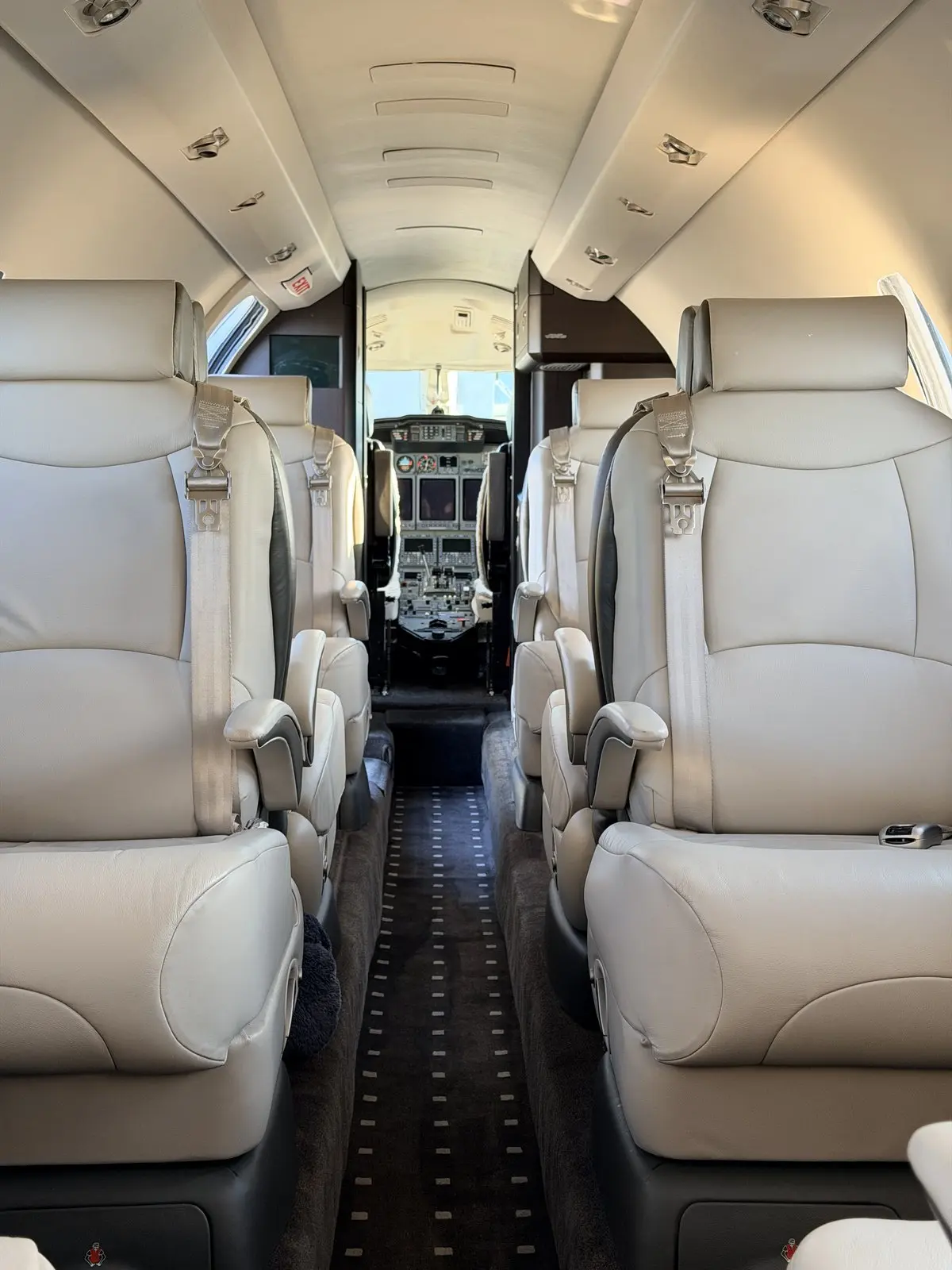
Stepping into the cabin is the moment the whole detail is judged. Looking forward down the aisle, the club seats, sidewalls, headliner, and runner all have to read as a single, cared-for environment — no tired seat betraying the row beside it, no scuffed runner undercutting the leather. This view is the reference point everything else in the cabin is measured against.
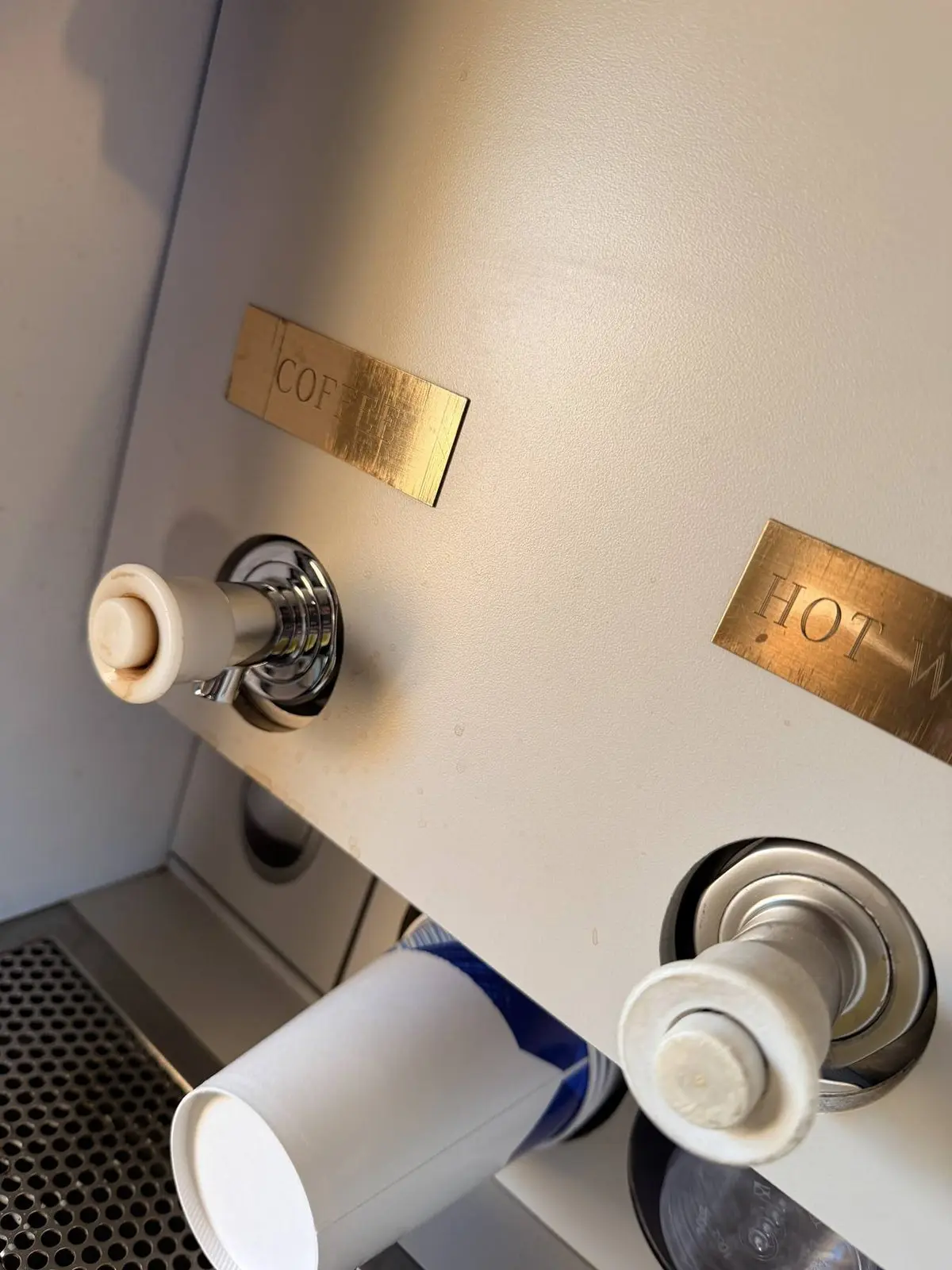
The galley is a high-visibility, high-touch zone. Polished brightwork around the coffee and hot-water service fixtures shows water spotting and fingerprints immediately, so it was cleaned to a clean, streak-free finish. The galley was treated as a presentation area — fixtures, placards, and surrounding surfaces reset together rather than just functionally wiped.
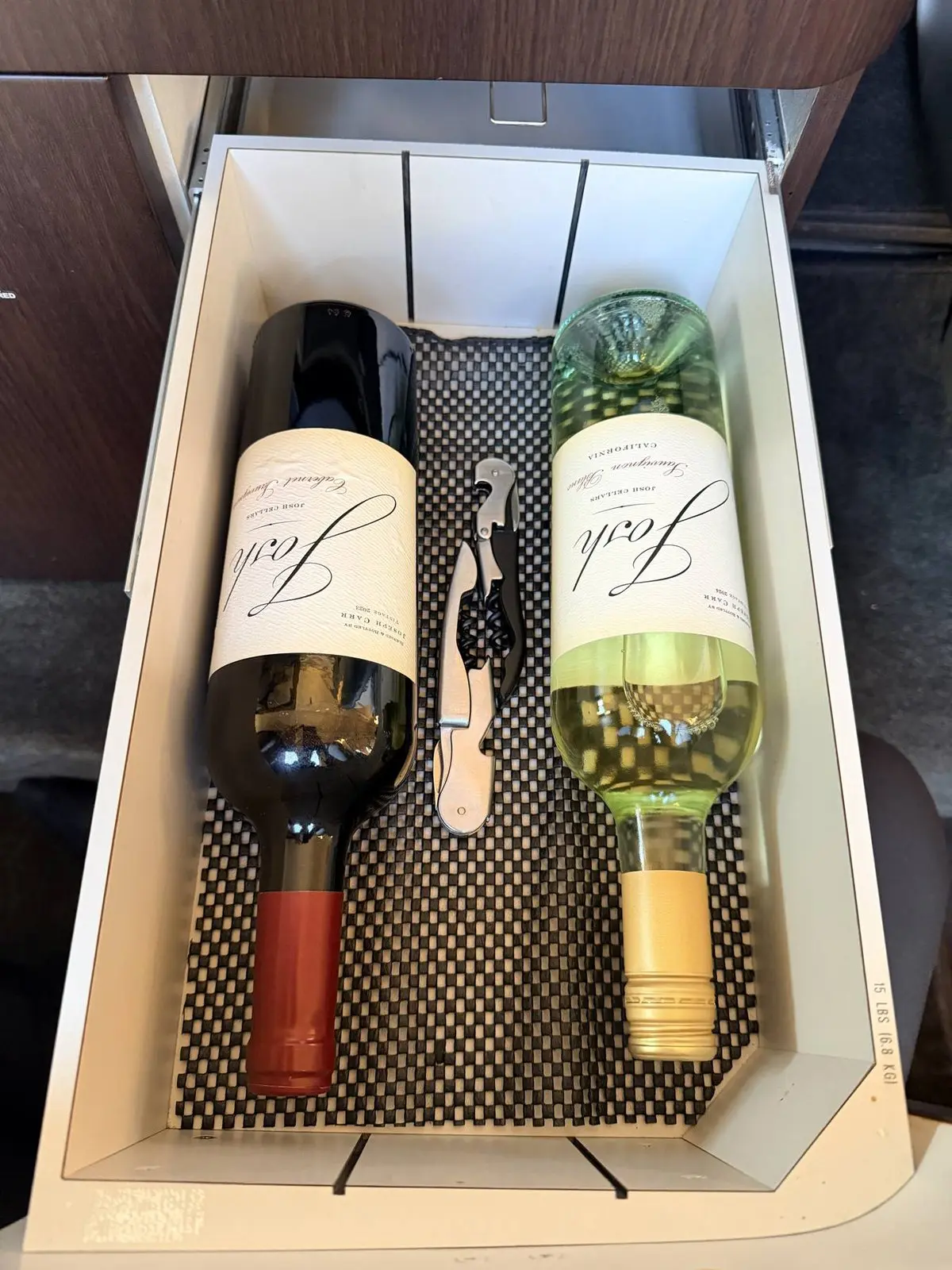
Presentation extends to the details a passenger actually opens. Storage and service drawers were cleaned and organized so amenities are returned neatly rather than left loose. These small touches are what separate a cabin that was merely cleaned from one that was reset with intention.
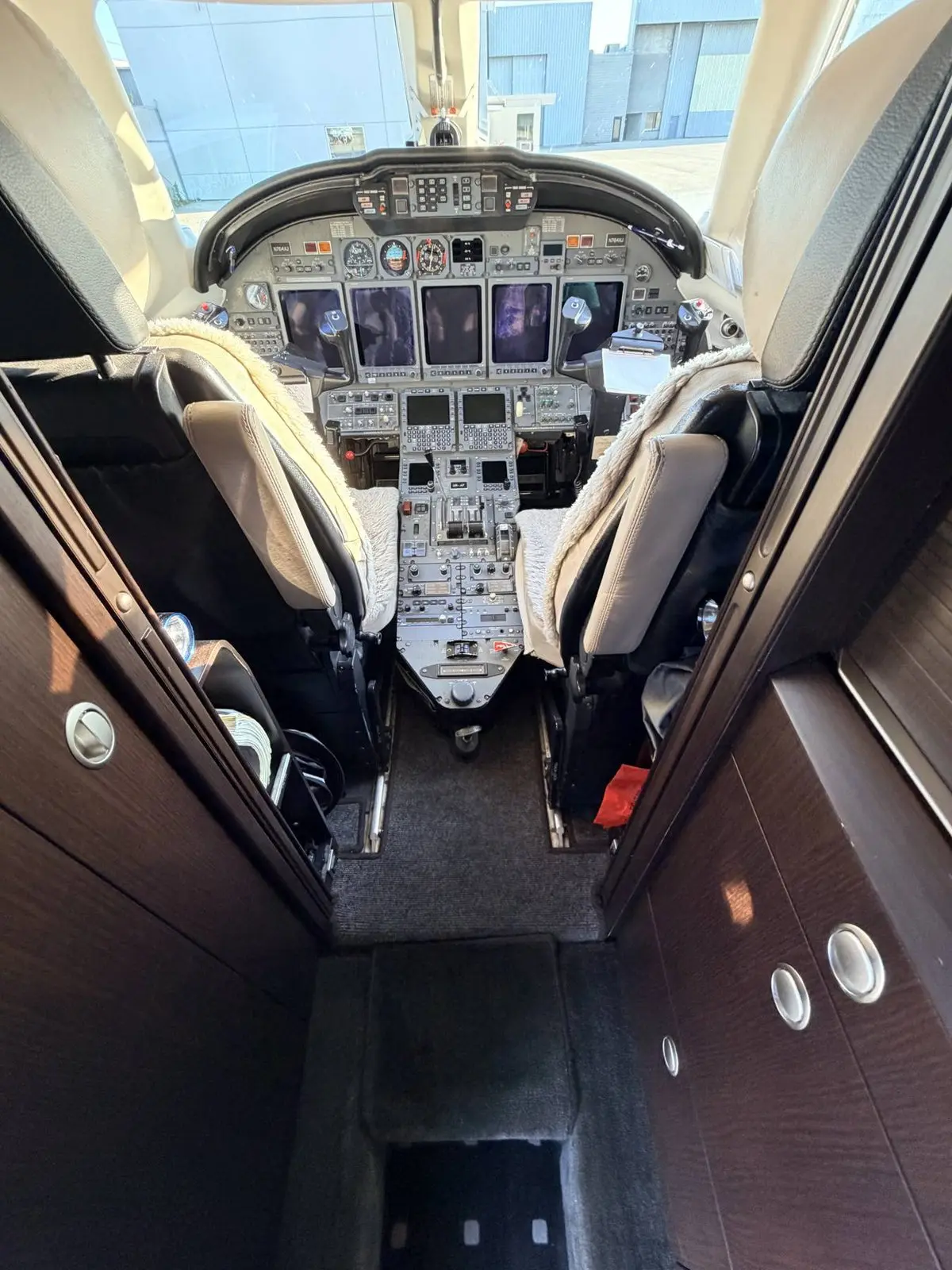
The cockpit-entry transition is the first thing a boarding passenger sees and the last thing the crew passes through. The forward cabin, aisle carpet runner, and flanking veneer were reset as one connected presentation zone, with restraint around the flight deck itself. As with every project, the cockpit was treated as an operating environment — dust control and presentation only, never anything that interferes with controls, avionics, or crew workflow.
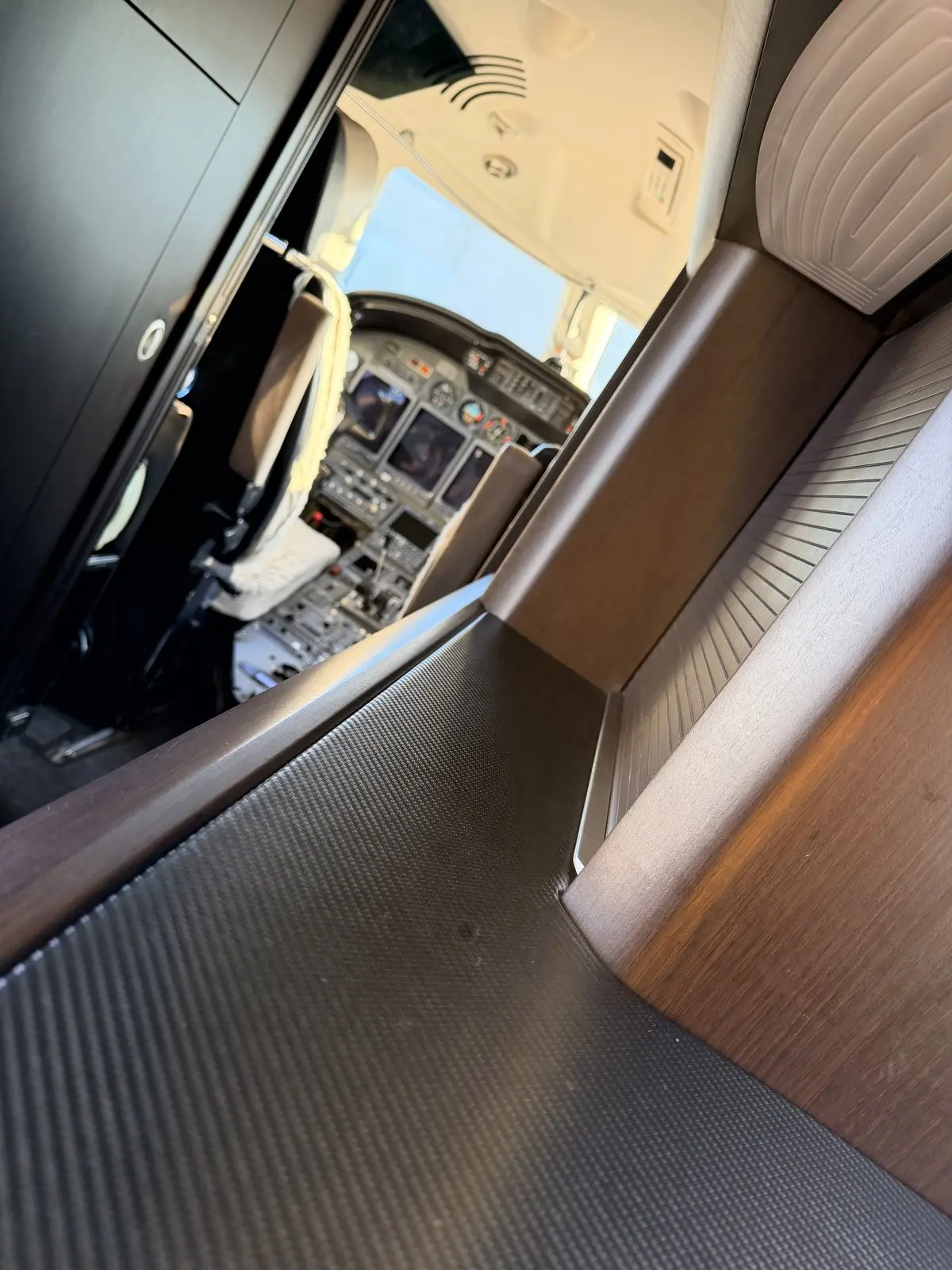
The forward cabinetry mixes carbon-fiber and wood veneer, and the seam where they meet is exactly where dust and product residue accumulate. Each material was cleaned to its own standard so the transition stays crisp rather than smudged. From here the eye carries straight through to the flight deck — which is why the entry zone has to be flawless.
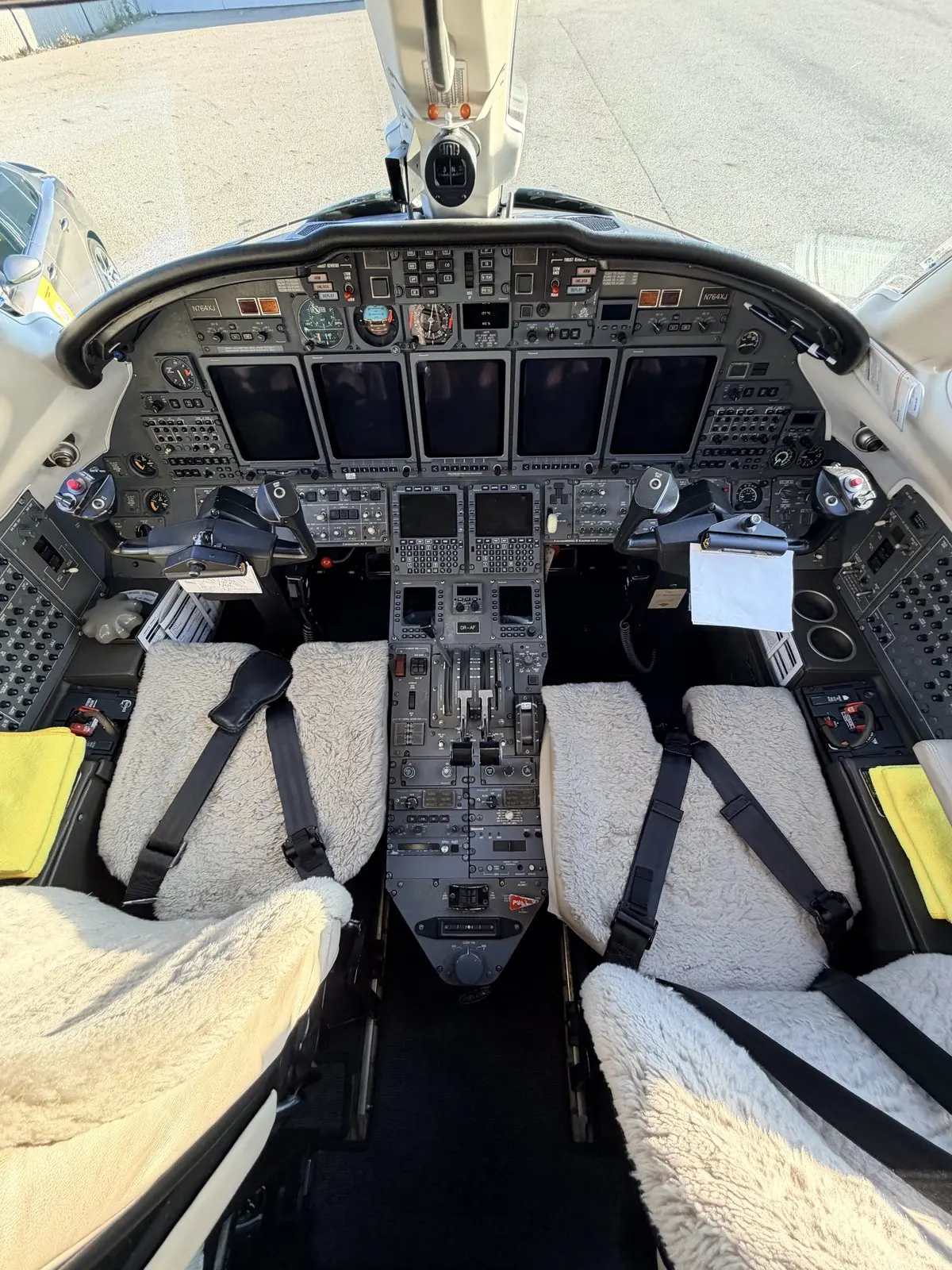
The flight deck is where restraint matters most. Displays, switches, the center pedestal, and crew seats were dusted and presented without touching anything that affects how the aircraft is flown. The goal is a clean, professional workspace the crew steps into — never a cockpit that has been “cleaned” in ways that move a switch or leave residue on a screen.
Regional Deployment to Michigan
While The Polished Hare is based in Chicagoland and serves seven Chicago-area airports, fleet and charter clients do not always keep their aircraft in one place. This project was a regional deployment — a mobile crew dispatched from the Chicago corridor to Kalamazoo, Michigan, to detail the aircraft where it was, on the operator’s schedule. For owners and operators who move aircraft across the Midwest, that reach matters: the same aircraft-specific standards travel with the crew rather than being limited to a home base.
Regional work also reinforces why mobile aircraft detailing has to be operationally aware. The crew worked around FBO activity, movement windows, lighting, and weather, then returned the aircraft ready for departure without becoming the reason the schedule slowed down.
Aircraft-Specific Care Notes
The Citation X combines high-value finishes inside with sensitive surfaces outside. Both reward material-specific protocols and punish generic, automotive-style detailing.
- Engine nacelles and inlets require presentation cleaning only — no methods that risk introducing material into the intake
- Brightwork and bare-metal surrounds need metal-safe polishing distinct from painted-surface care
- Acrylic and polycarbonate windows require safe product and towel selection to avoid scratching
- Wood veneer is finish-sensitive — finish-safe products only to avoid hazing or topcoat damage
- Galley brightwork shows spotting instantly and must be finished streak-free
- Cockpit-entry and flight-deck areas are presentation-only, with no interference to controls or avionics
- Underbelly and access-panel areas require surface-safe degreasing, not aggressive solvents
Final Result
The aircraft finished as a complete presentation: a cleaner, glossier exterior across paint, leading edges, brightwork, and belly, paired with a cabin that read composed from the cockpit-entry transition through the galley and passenger seating areas. The combined Level 2 exterior wash and Level 2 interior detail delivered a single-visit reset that prepared the Citation X for its next high-value movement.
This was not a heavy restoration — it was a disciplined, aircraft-aware presentation reset delivered on location in Michigan. For a fast, frequently moving super-midsize jet, that combination of completeness and operational respect is exactly the standard that keeps an aircraft consistently departure-ready.
Departure-Ready: Presentation at Golden Hour
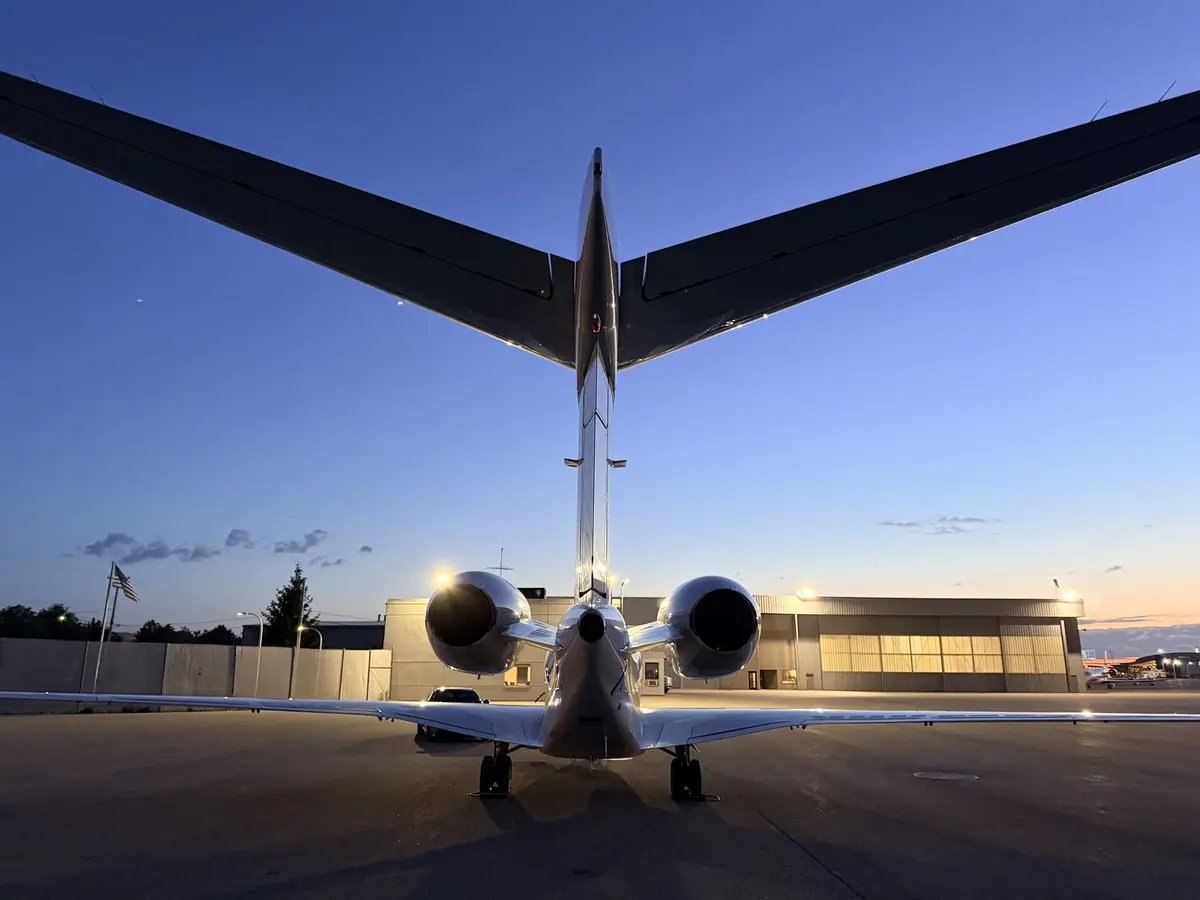
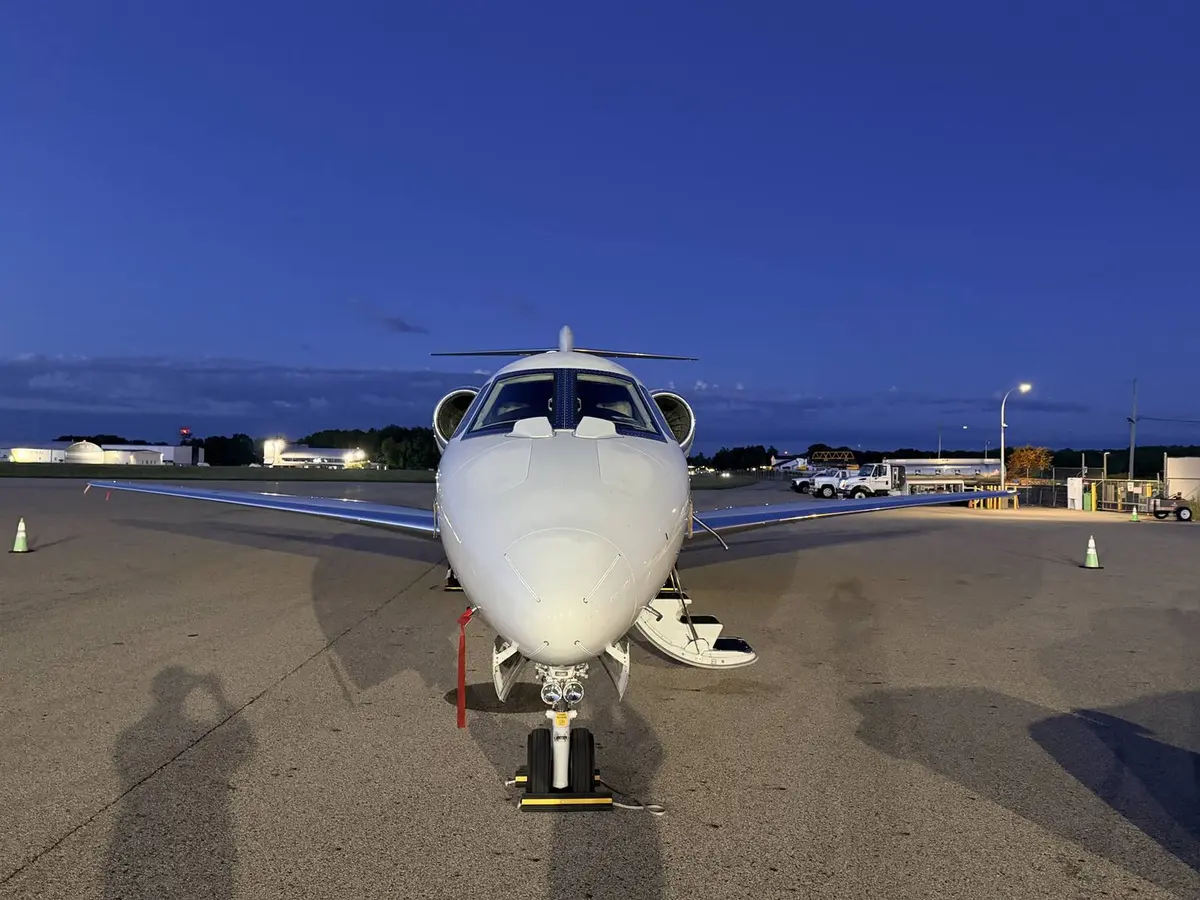
The real test of a detail is how the aircraft reads when the light is unforgiving. Low, raking golden-hour and twilight light shows every streak, every missed panel, and every dull patch — or, when the work is done right, a finish that holds its gloss and reflects cleanly from nose to tail. These were taken on the KAZO ramp as the aircraft was readied for departure.
Recommended Next Steps
- For frequently moving aircraft like the Citation X, pairing exterior and interior service on the same visit is the most efficient way to keep presentation consistent without repeated downtime.
- A recurring exterior wash interval protects paint, brightwork, and leading edges from cumulative exhaust and atmospheric contamination that becomes harder to remove over time.
- Wood veneer, leather, and galley brightwork benefit from a scheduled interior cadence so finishes stay protected and the cabin never reaches a tired baseline that requires heavier correction.