
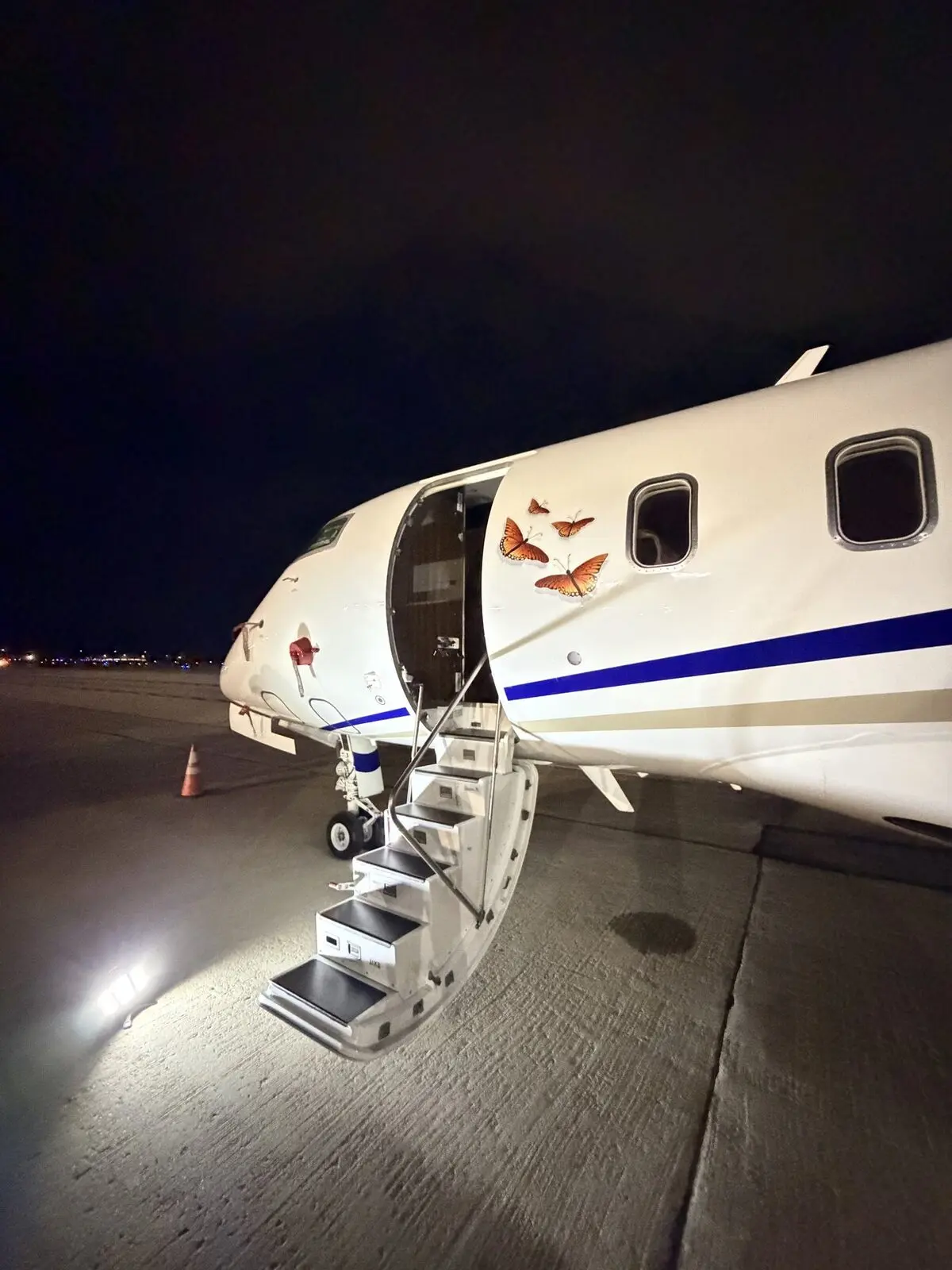
This Bombardier Challenger 300 project at Milwaukee Mitchell International Airport was an evening interior detail and carpet extraction on a super-midsize business jet. The aircraft was on the ramp at MKE with a defined next-day movement window, so the work had to improve the cabin, cockpit, lavatory, galley, carpet, and final presentation without creating disruption for the operator or FBO.
The Challenger 300 is a purpose-built super-midsize platform. It is large enough to carry a true executive cabin, but compact enough that every lower trim line, seat base, galley edge, carpet transition, and cockpit-adjacent surface still matters. Its cabin gives passengers a high-comfort experience, while the aircraft itself is built for serious utilization: fast turns, multi-leg days, charter movements, and crews that expect the aircraft to be ready when the schedule says it is ready.
For detailing, that combination matters. The job is not just wiping visible surfaces. It is working through a dense aircraft interior while protecting materials, controlling moisture during carpet extraction, respecting cockpit boundaries, and returning the cabin in a condition that supports the next movement.
Project Details
Initial Condition
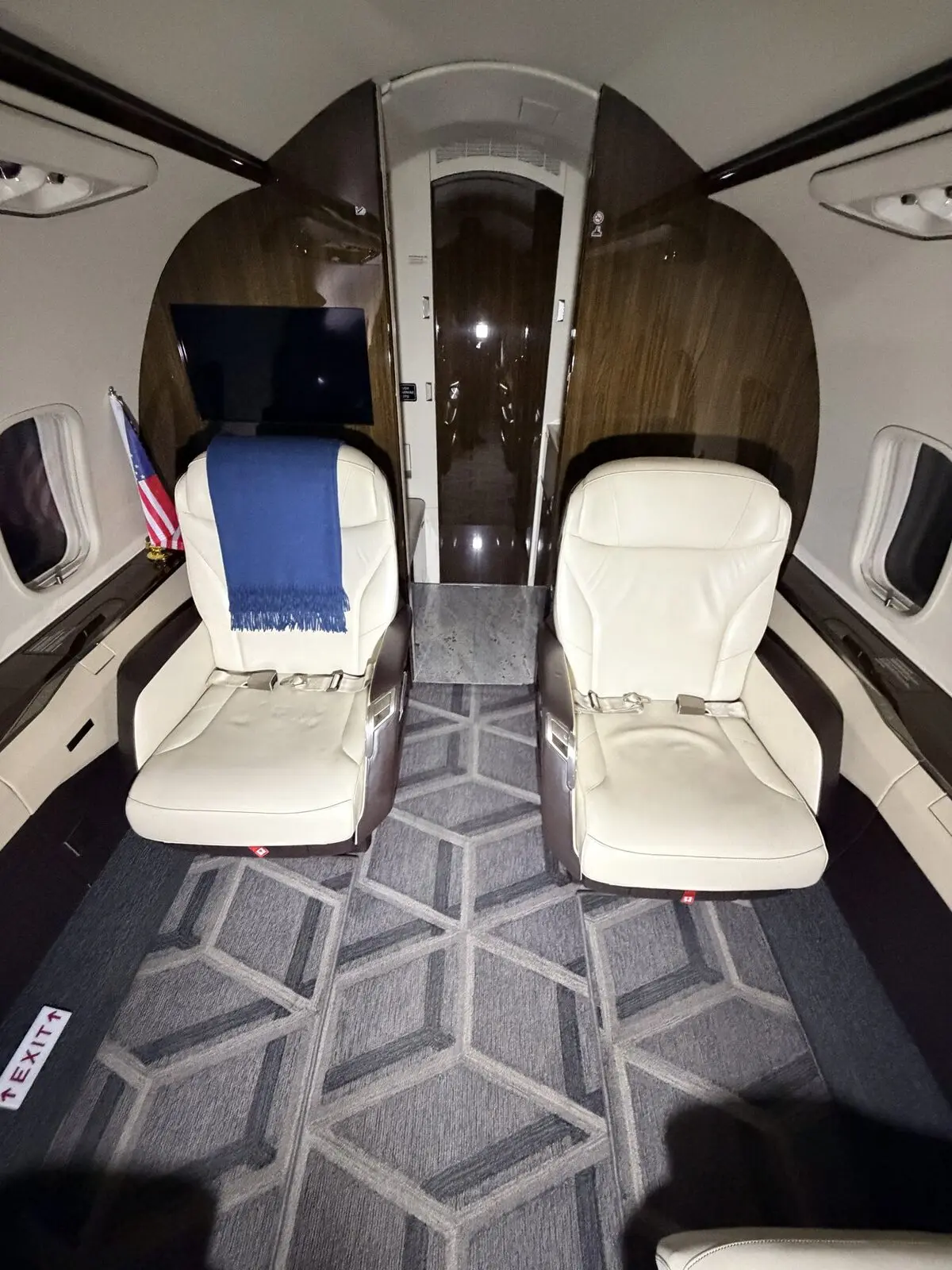
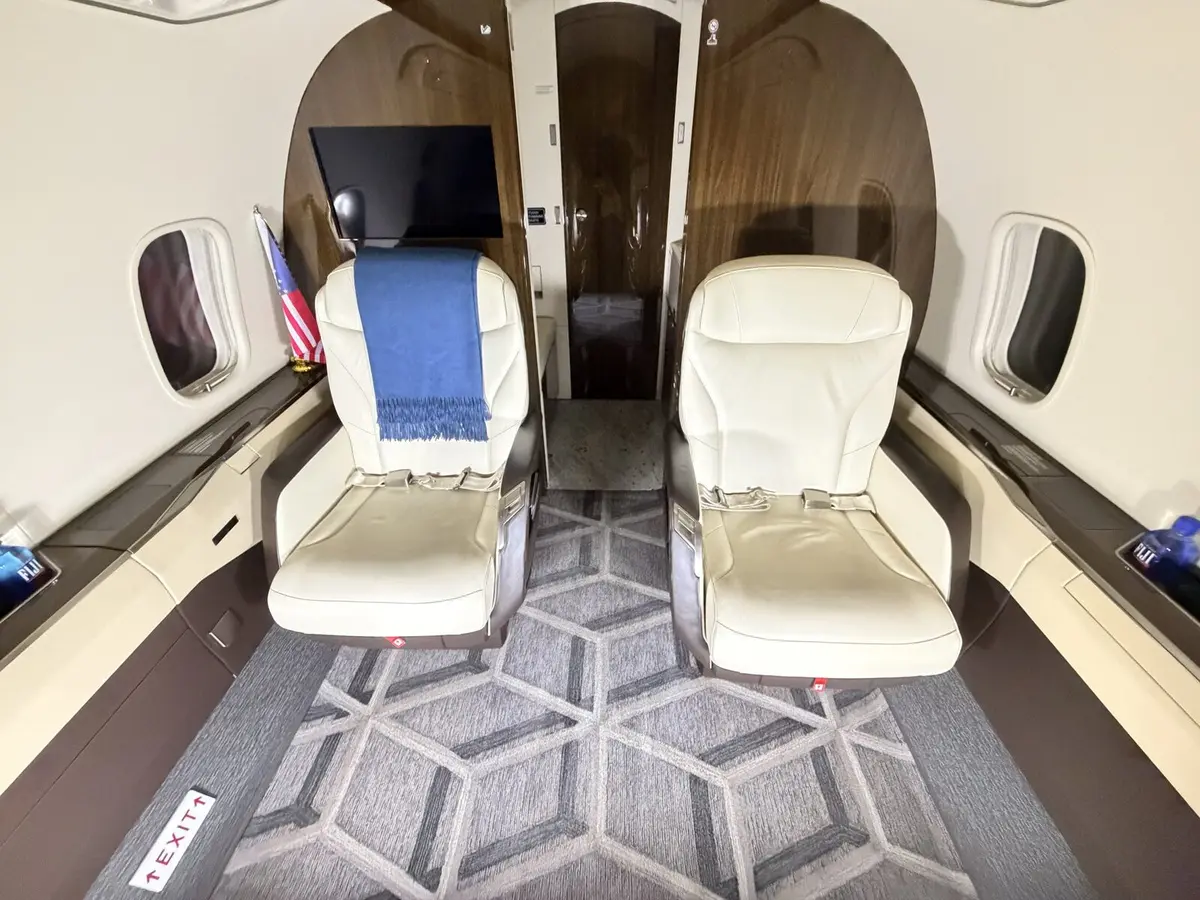
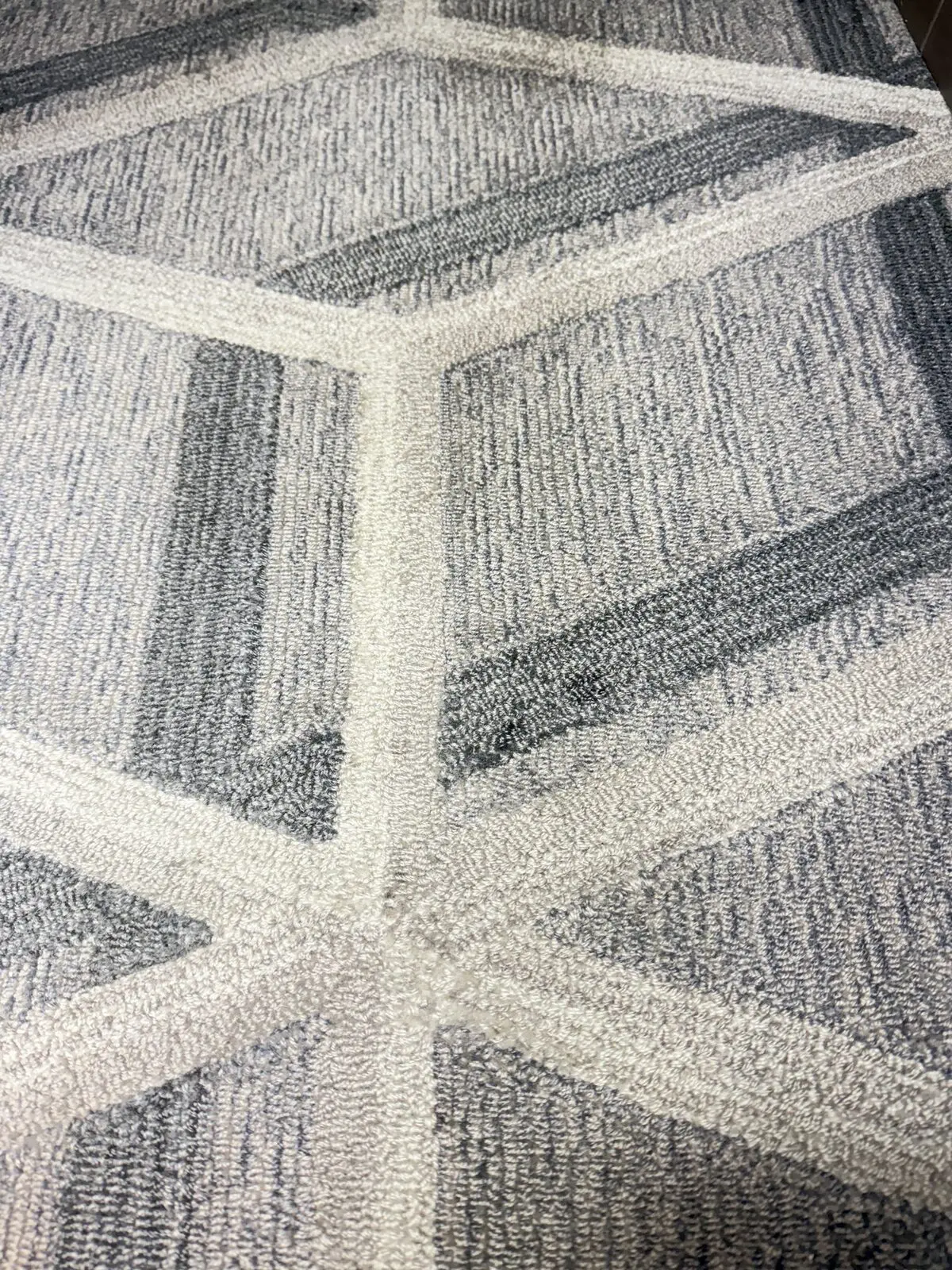
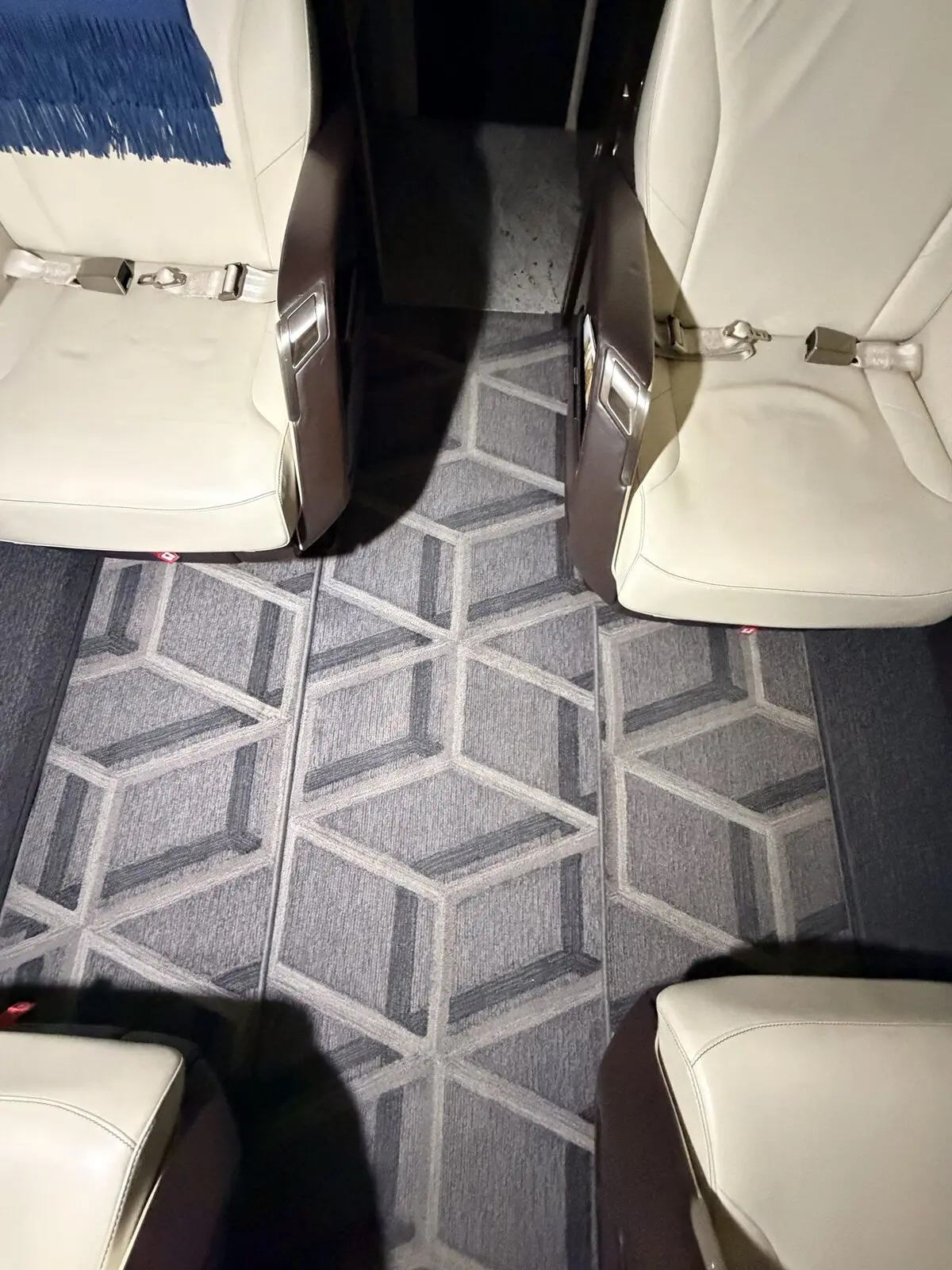
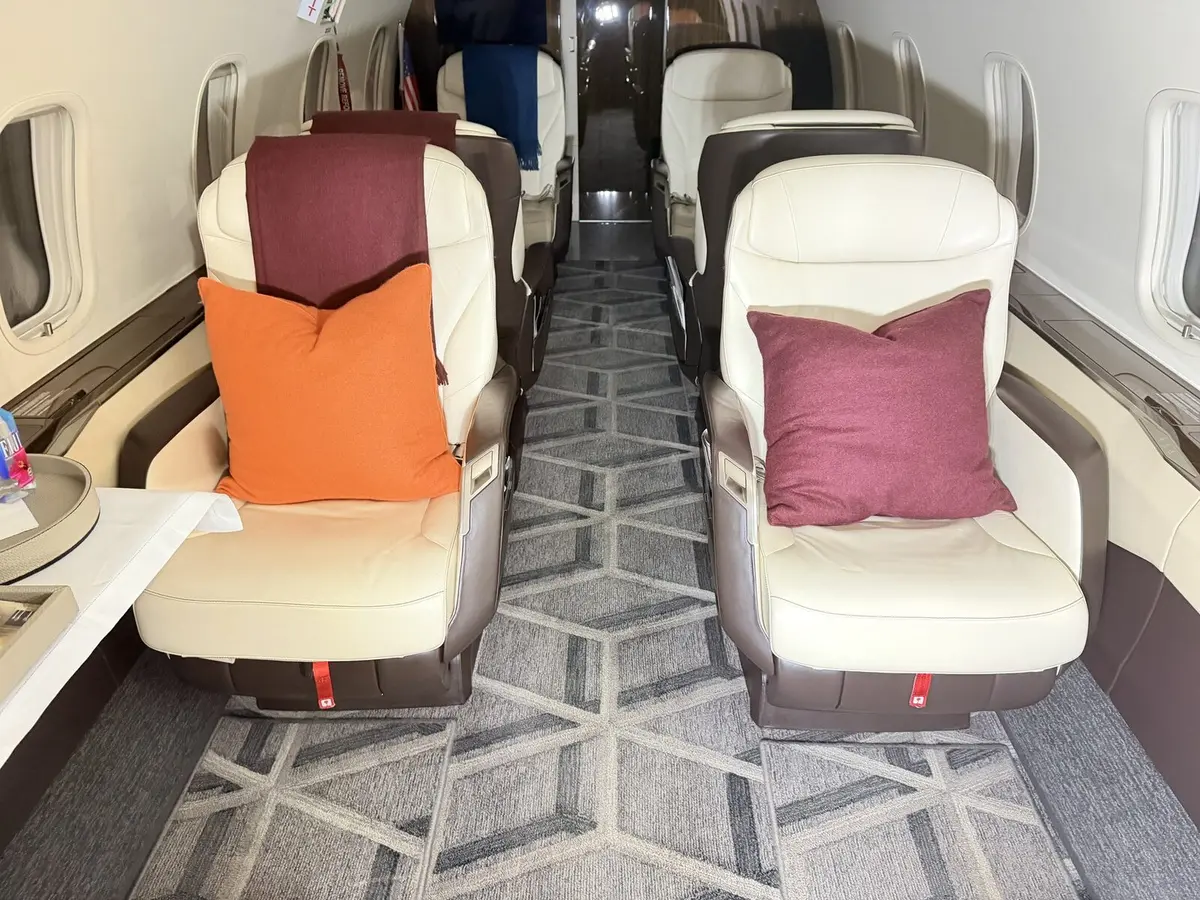
The aircraft showed normal use-related cabin buildup. The most visible issue was carpet condition: traffic patterns, darkened areas, and localized staining that required more than a standard vacuum pass. This type of carpet can hide soil when viewed from one direction and then reveal it sharply under direct work lights. A proper reset requires looking at the cabin from multiple angles, then working the carpet in sections instead of treating the aisle as one flat surface.
The forward cabin, passenger seating areas, and aisle carpet required attention. The carpet pattern itself is visually active, which can make it easy to miss staining until the work light hits the pile. That is why photo documentation matters. It forces a slower inspection and keeps the corrective work focused on what actually needs attention.
Forward Cabin & Carpet Condition
Scope Completed
- Level 2 interior detail across cabin and cockpit areas
- Carpet extraction for documented traffic patterns and staining
- Interior vacuuming and debris removal
- Passenger seating area wipe-down and presentation reset
- Galley and lavatory-adjacent surface reset
- Cockpit vacuum, dusting, and restrained wipe-down
- Interior window and high-touch surface attention using aircraft-aware methods
- Final cabin organization and presentation review
- Before-and-after photo documentation
The Challenger 300 Detailing Problem
The Challenger 300 sits in the category where cabin quality and operational speed meet. It has enough cabin volume to feel composed and executive, but it still has the tight geometry of a working business jet. Seats, side ledges, window reveals, lower wall sections, carpet seams, table hardware, storage compartments, and cockpit transitions all sit close together.
That density changes the process. A floor stain is rarely just a floor stain. It may sit next to seat tracks, lower sidewall carpet, trim, upholstered panels, or furniture bases. A cockpit wipe-down is never just a wipe-down. It is a sequence of controlled movements around screens, yokes, switch panels, placards, and flight crew materials. A lavatory reset is not only about the sink or mirror. It is about returning a small, high-use area to a clean presentation without introducing moisture or residue into the wrong places.
This is why the work was sequenced from documentation to dry removal, then carpet extraction, then cabin reset, then cockpit and final presentation checks. The aircraft needed a cleaner cabin, but it also needed to remain a ready aircraft.
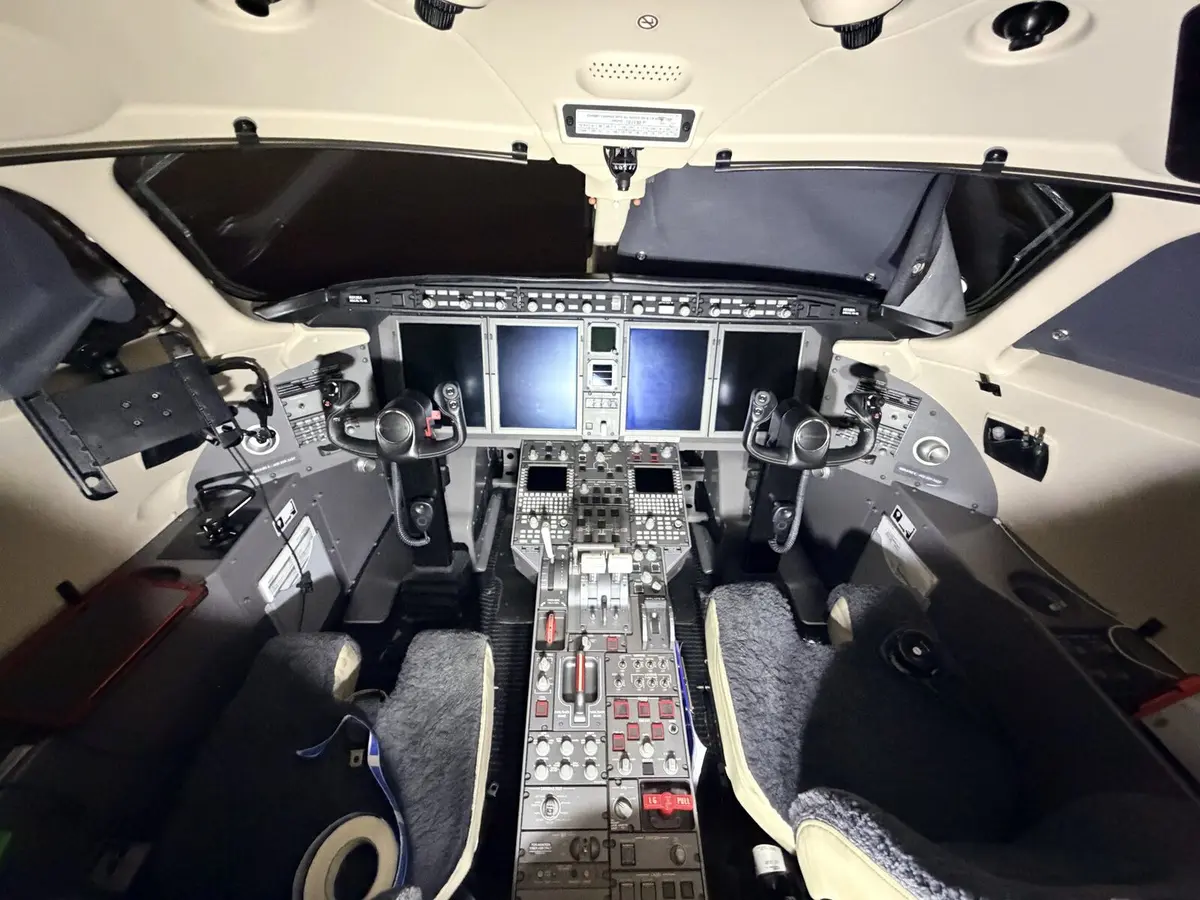
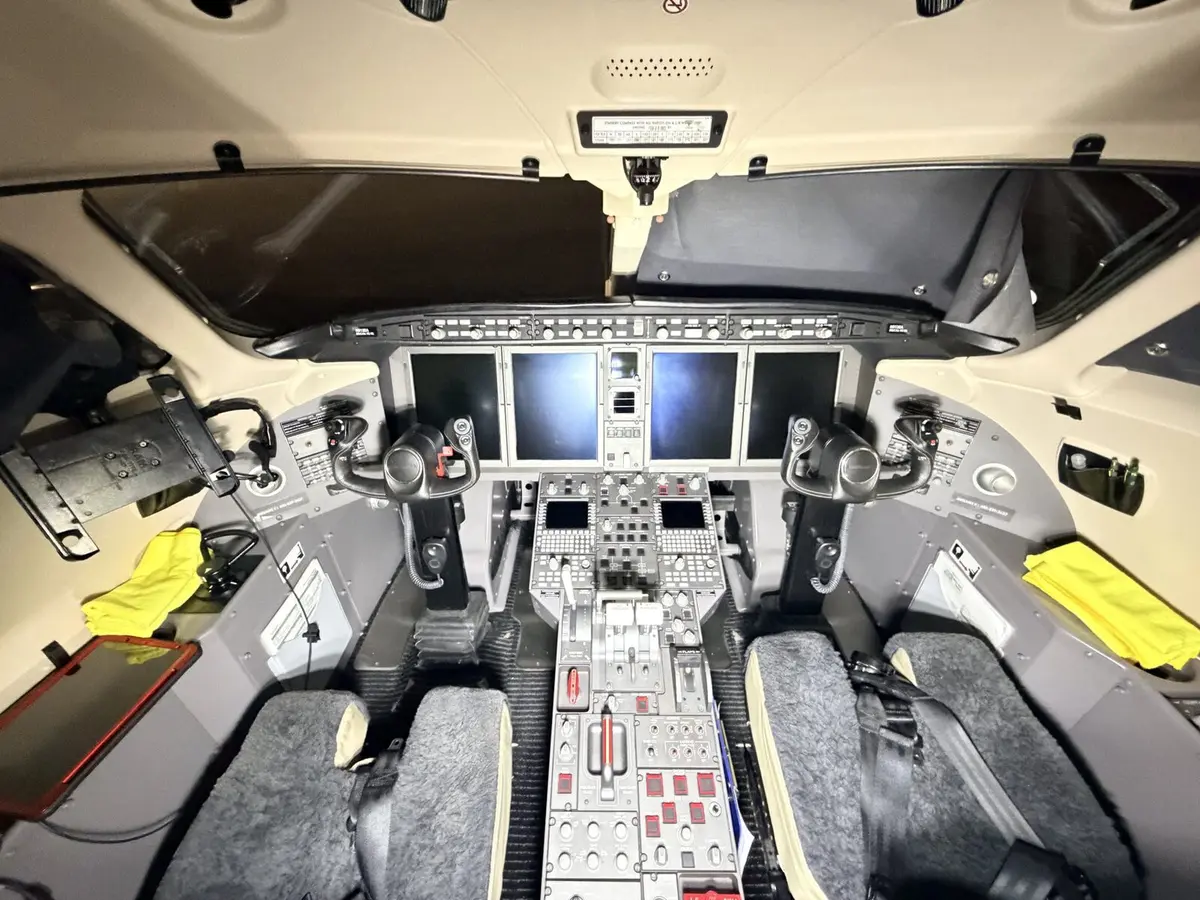
Cockpit Reset
Carpet Extraction Process
The carpet work started with inspection and dry removal. Extraction is more effective when loose debris, lint, and surface material are removed first. If a carpet is immediately saturated, the process can drive soil deeper into the pile or move it into adjacent areas. On an aircraft, that risk is higher because carpet intersects with rails, lower cabinetry, side panels, seat bases, and trim.
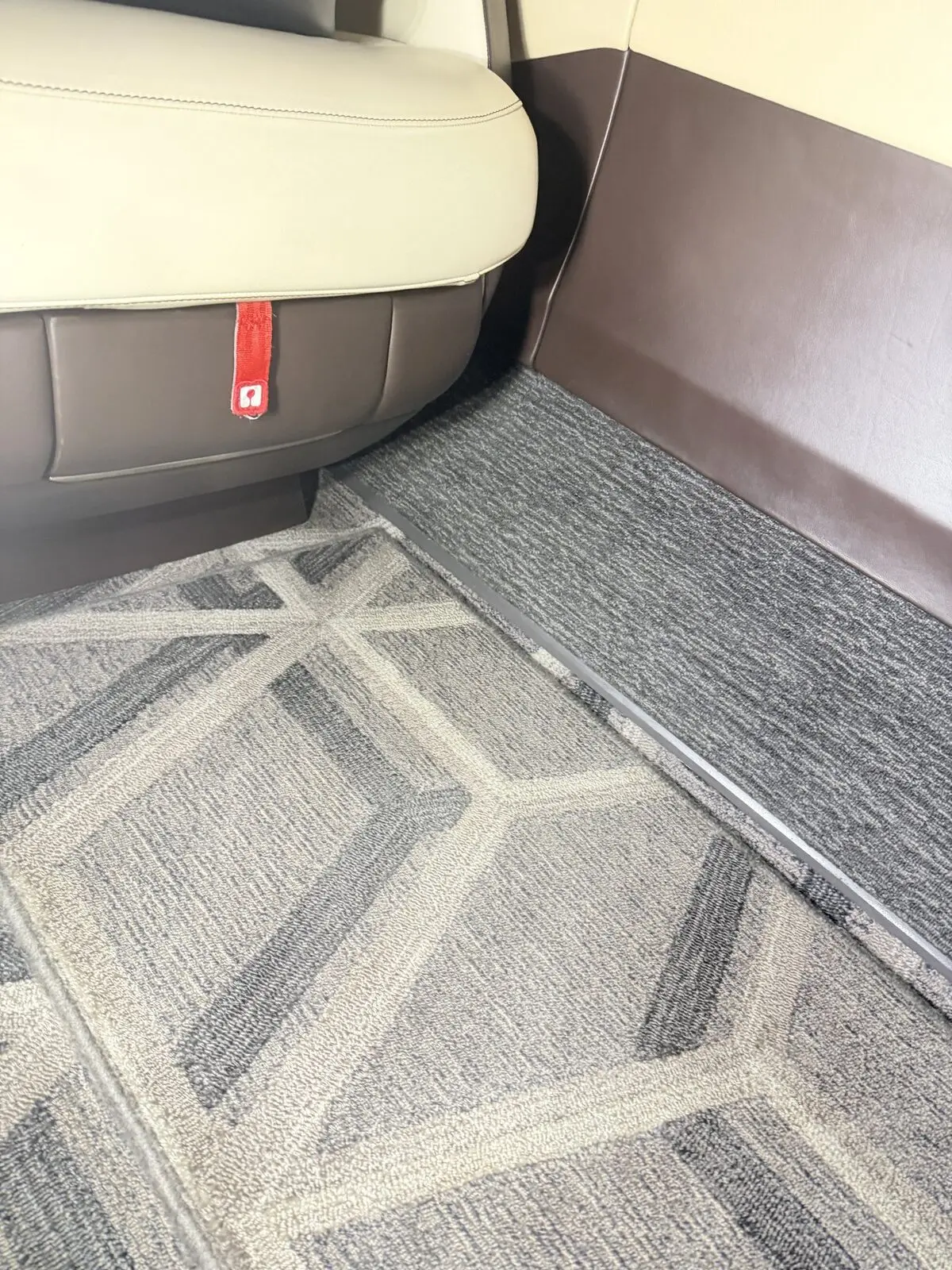
The visible carpet traffic was treated as a sectional problem. Aisle areas were addressed, then passenger seating zones, then lower and transition areas. The objective was controlled improvement: lift the staining and traffic marks, reduce embedded material, and leave the carpet better presented without over-wetting the cabin.
The work also required lighting discipline. Ramp lighting and cabin lighting do not show carpet the same way. Work lights can reveal staining that looks muted under ambient cabin light. Final checks need to happen from passenger eye level and from the floor-level angles where traffic marks show.
Carpet Extraction Result
Cabin, Galley, and Lavatory Reset
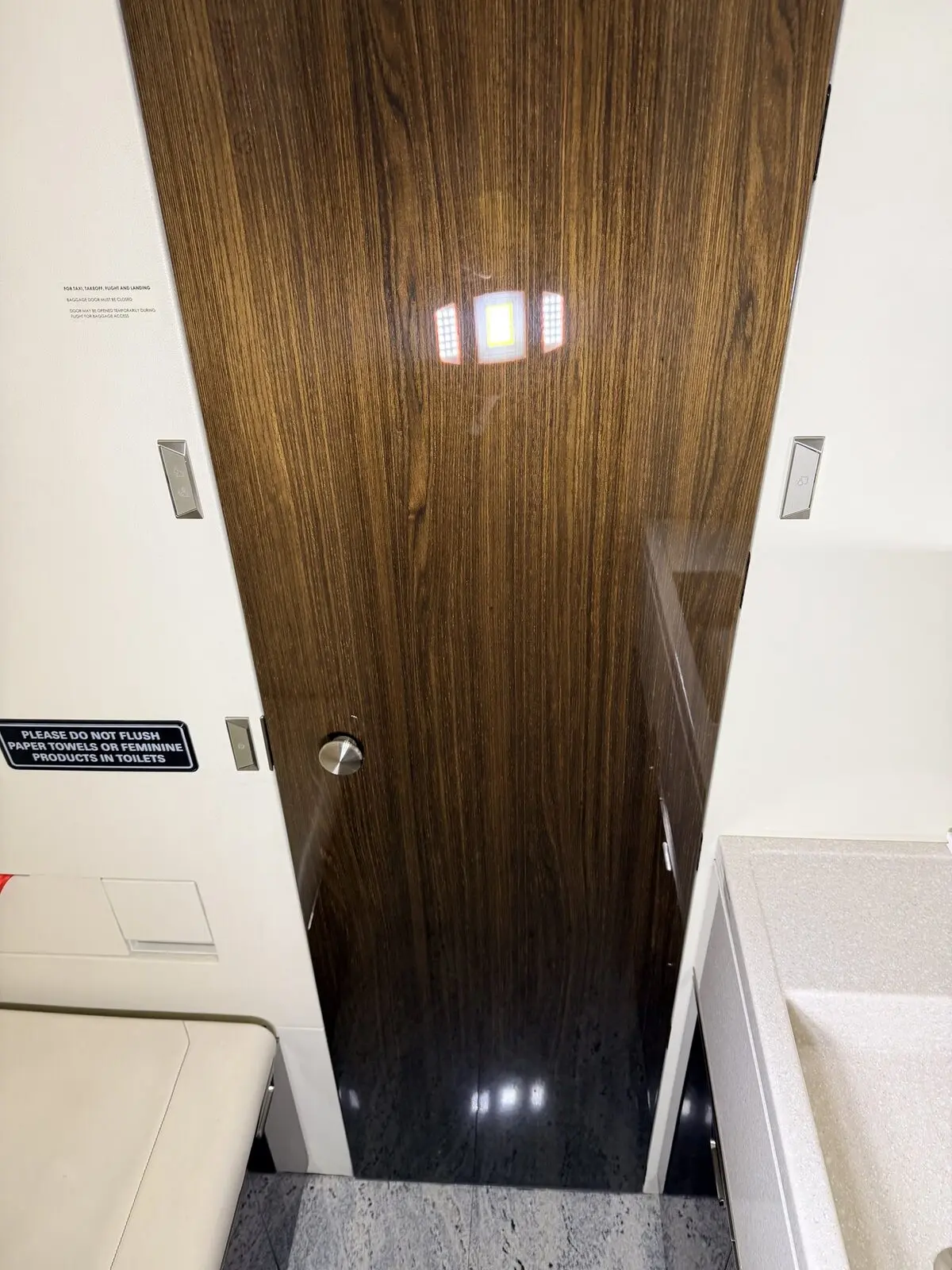
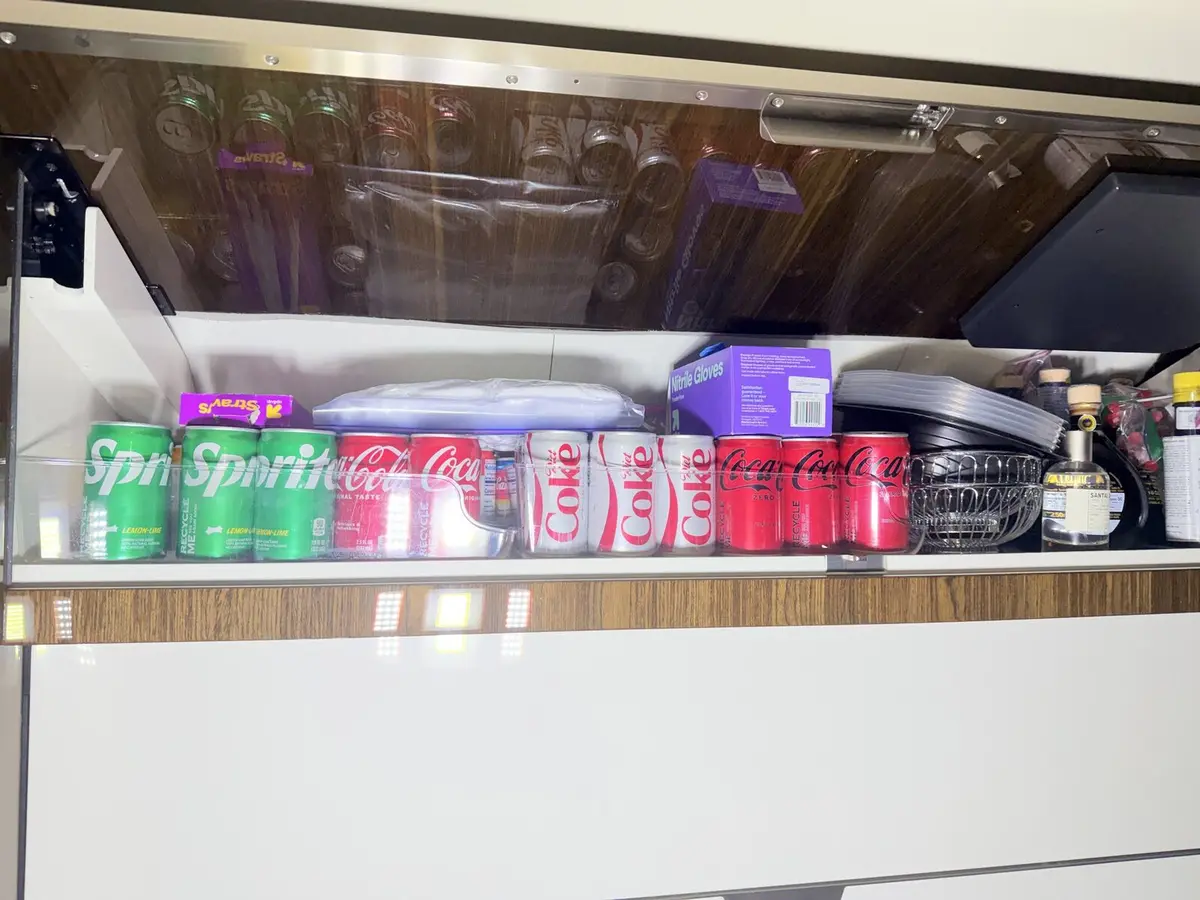
The cabin reset moved beyond the carpet. The Challenger 300 interior has polished cabinetry, light seating, lower sidewall surfaces, compact storage, window areas, and passenger-facing fixtures that need to read clean as a complete environment. A clean floor does not carry the cabin if the surrounding details still show fingerprints, residue, or disorder.
The galley and lavatory-adjacent areas were reset with the same logic. Small aircraft service zones carry a disproportionate amount of the passenger impression because they are tight, bright, and frequently touched. Sink areas, cabinet faces, storage edges, door frames, and nearby carpet transitions need to be handled as one connected presentation area.
The result is a cabin that feels composed rather than merely cleaned. That difference matters for charter and managed aircraft. Passengers may not inspect every surface, but they can tell when the aircraft has been reset with order and restraint.
Cockpit-Specific Care Notes
The cockpit was treated as a separate work zone. Aircraft controls and avionics do not tolerate casual detailing habits. The correct approach is restraint: vacuum loose debris, dust carefully, wipe only where appropriate, avoid direct liquid application around sensitive areas, and leave crew-critical organization intact unless a simple reset is clearly appropriate.
This is one of the cleanest lines between aircraft detailing and automotive detailing. A business jet cockpit is not an interior trim panel. It is the operating center of the aircraft. Screens, switches, yokes, throttle areas, placards, labels, vents, storage pockets, and crew seating all need cleaning discipline.
The cockpit reset on this project focused on presentation, dust control, footwell cleanup, and visible high-touch areas while staying inside the detailing lane. No maintenance sign-off is implied. The work improved the environment without interfering with aircraft systems or crew workflow.
Ramp Context and Release
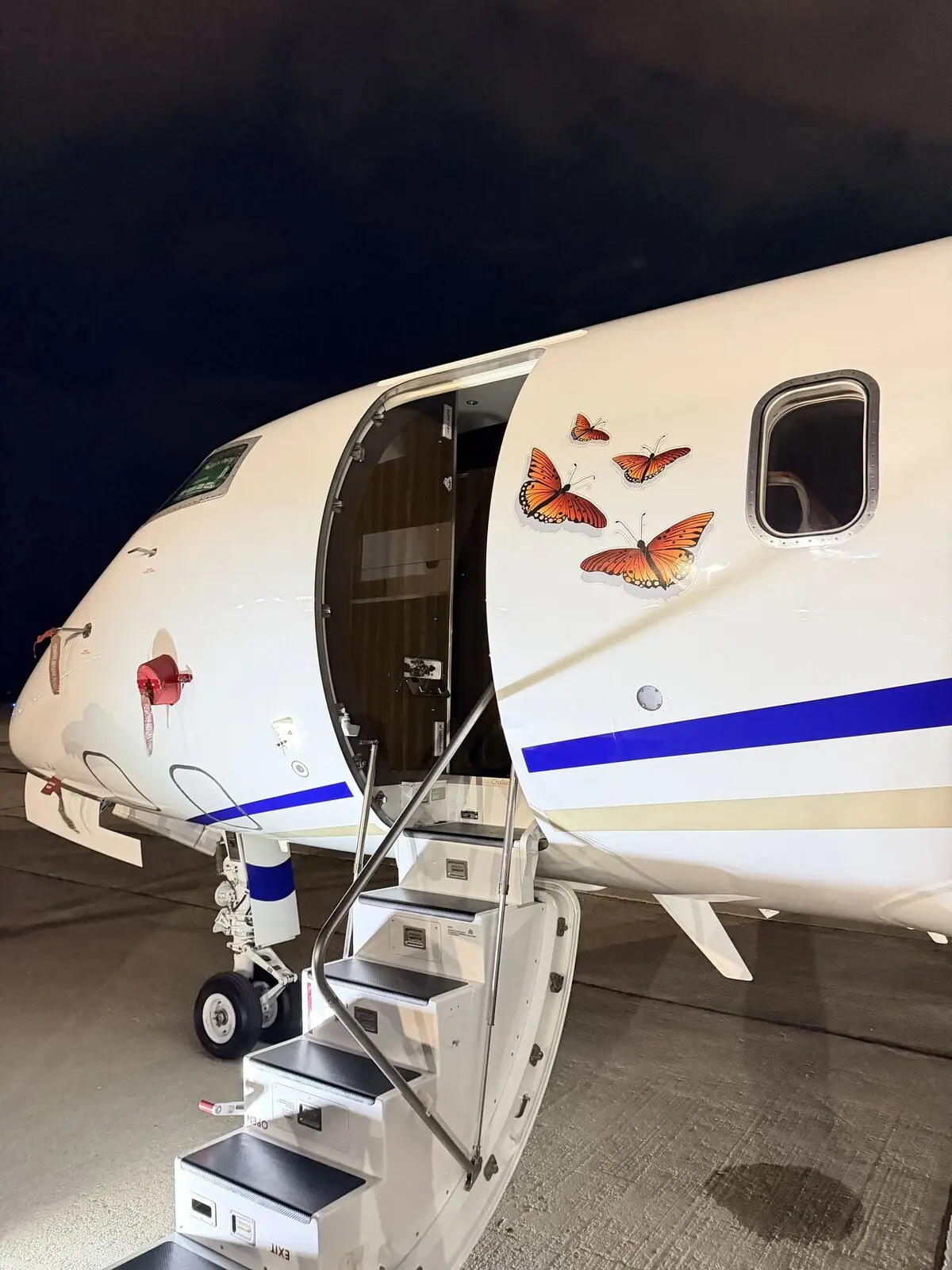
Ramp context matters in a case study because the aircraft has to return to service as a complete presentation. A clean cabin is part of the job, but the transition from ramp, stairs, entry, cabin, cockpit, lavatory, and final release is what the operator experiences.
The night-ramp setting also shows why mobile aircraft detailing has to be operationally aware. Work happens around FBO activity, aircraft movement windows, lighting constraints, weather, equipment staging, and the need to avoid interrupting the operator’s schedule. The aircraft has to be improved without becoming the reason the schedule slows down.
Aircraft-Specific Care Notes
The Challenger 300 rewards restraint. Its cabin is polished enough that aggressive product use can create streaks, shine mismatch, towel marks, or moisture problems. Its cockpit is dense enough that a careless cleaning pass can move from cosmetic work into an area that should not be touched.
- Aircraft windows may be acrylic or polycarbonate — require safe product and towel selection
- Cockpit areas require restraint around avionics, screens, controls, switches, labels, and placards
- Carpet extraction requires moisture control relative to surrounding finished surfaces
- Leather and upholstery require conservative handling and finish awareness
- Cabinetry and high-gloss finishes require low-residue wiping and clean microfiber discipline
- Galley and lavatory resets must improve presentation without crossing into maintenance
- Sensitive areas outside approved scope were left alone
Final Result
The aircraft finished with a cleaner cabin, improved carpet presentation, reset seating areas, organized service zones, and a cockpit that looked more composed without overstepping into system handling. The carpet extraction addressed the visible traffic and staining concerns that drove the interior scope. The cabin read better from the entry, through the passenger seating area, into the lavatory and cockpit zones.
The final result was not a dramatic restoration. It was a disciplined turnaround. That is often the more important standard for a working Challenger 300: improve what matters, document the work, protect the schedule, and return the aircraft ready for its next use.
Recommended Next Steps
- For high-use Challenger 300 operations, carpet extraction should be treated as recurring maintenance for presentation, not an emergency correction. Traffic patterns become harder to remove when they are allowed to settle through repeated passenger cycles.
- Interior details should also include periodic attention to cockpit footwells, galley storage, lavatory-adjacent areas, window surrounds, seat bases, and lower sidewall zones. These are the areas that make a cabin feel either maintained or tired.
- For future evening or overnight turns at MKE, the most efficient approach is to pair interior detailing with scheduled carpet extraction intervals so the aircraft can stay on a predictable presentation cadence without requiring heavier corrective work later.