
This Bombardier Global 5000 project at Milwaukee Mitchell International Airport was a heavy-jet detailing service built around interior pet-hair remediation, carpet extraction, Level 2 interior detailing, and a Level 2 exterior wash. The aircraft had to be returned to standard inside a defined overnight window, with a two-person crew working through cabin, cockpit, lavatory, galley, carpet, and exterior presentation areas before the next scheduled movement.
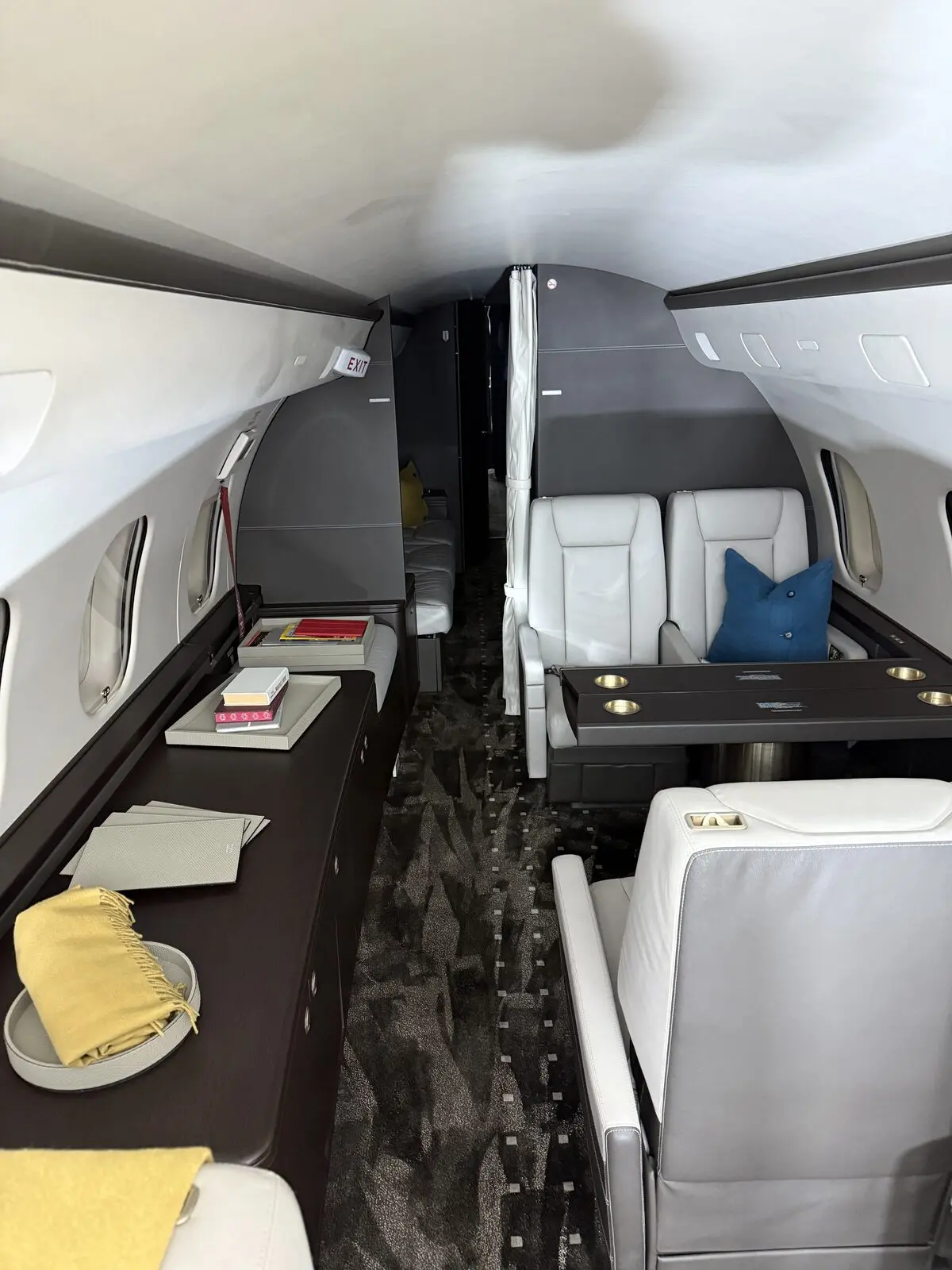
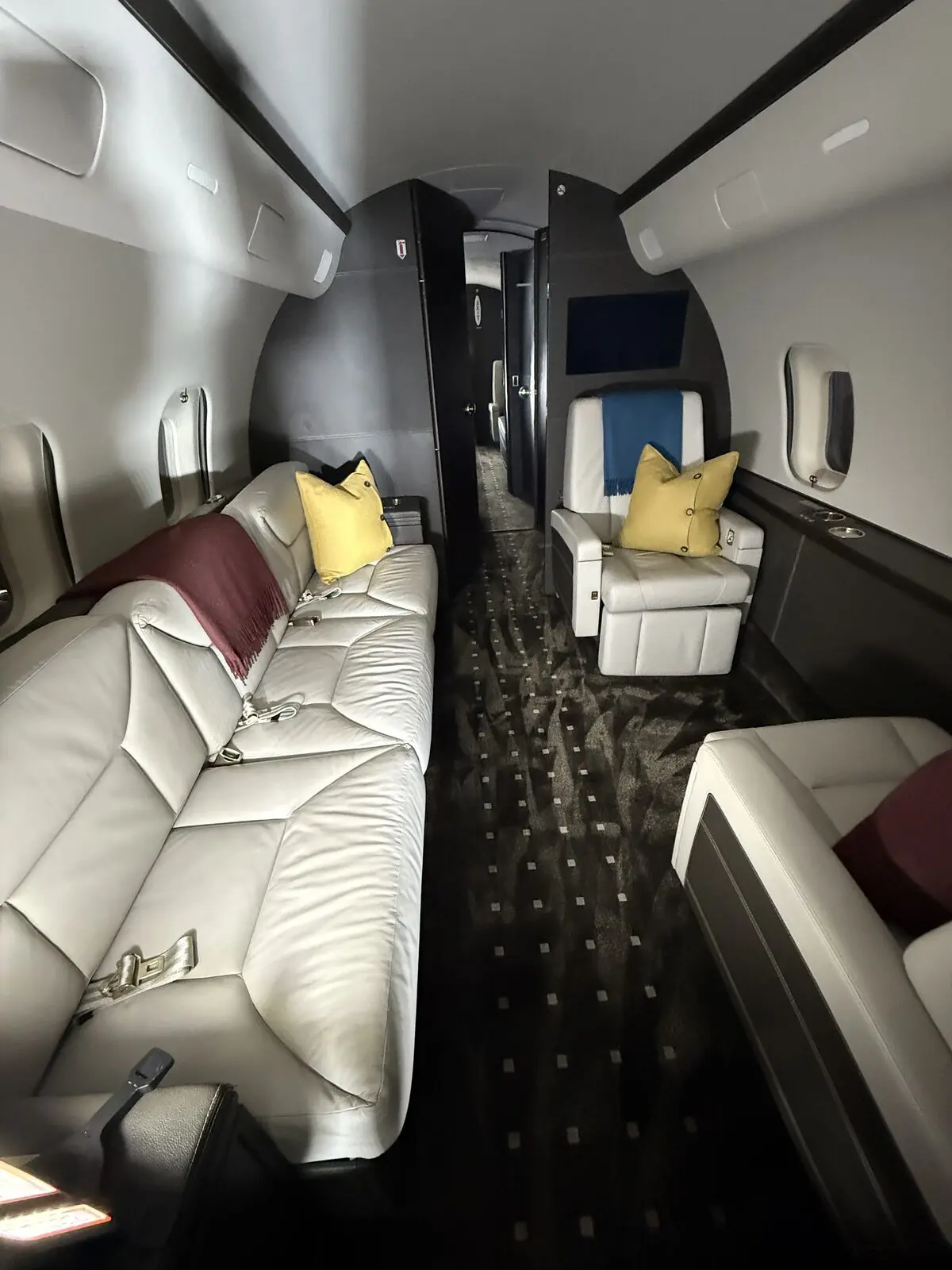
The Global 5000 is not a routine volume-turn aircraft. It is a large-cabin, long-range business jet built for intercontinental executive movement, with the cabin scale, systems density, and finish level that come with that mission. A light jet can often be reset with speed and economy as the primary drivers. A Global 5000 requires more restraint. The cabin is larger, the materials are more deliberate, and the detailing process has to respect a mix of leather, carpet, sidewall panels, dark cabinetry, carbon accents, cockpit controls, plated fixtures, and custom passenger-facing accessories.
This interior also included custom leather pieces from Giobagnara, along with carbon accents and finished surfaces that could not be treated like ordinary trim. Those details change the work. They require cleaner towel discipline, more controlled product use, dry handling where appropriate, and constant attention to what should be cleaned, what should be lightly reset, and what should be left alone.
Project Details
Initial Condition
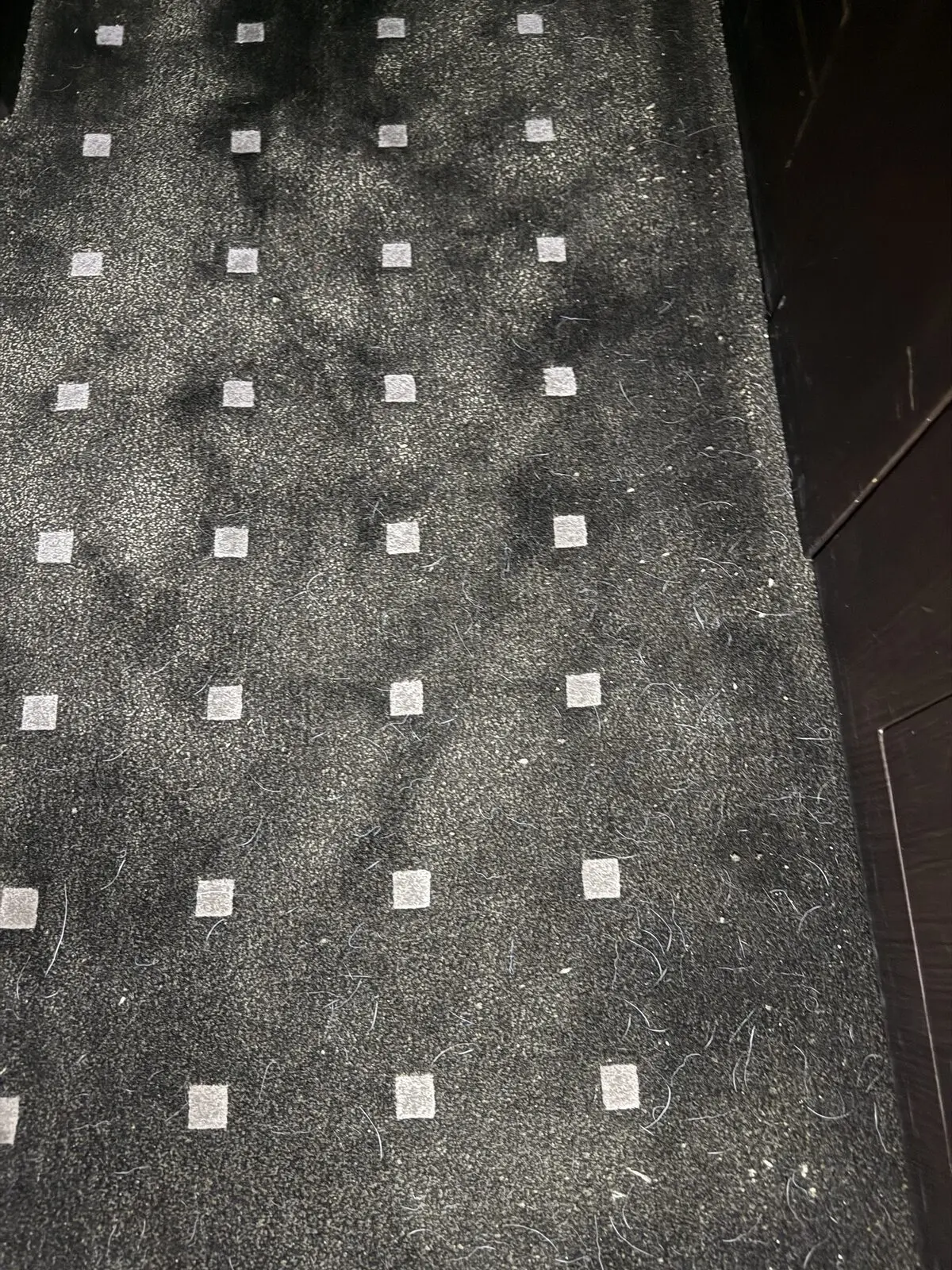
The aircraft arrived with normal operational use, but the strongest corrective issue was pet hair. A dog had been on board, and hair was documented across carpeted areas and cabin surfaces. On a large-cabin jet, that type of contamination is easy to underestimate. The aircraft has more floor area, more seating surfaces, more sidewall transitions, more furniture bases, and more shadowed lower-cabin zones than a smaller jet. Pet hair works into carpet nap, gathers near floor-track transitions, catches around seat bases, and reappears if dry removal is not staged correctly before extraction.
The cabin also carried the usual presentation fatigue of a working high-end aircraft: light leather needed careful handling, carpet required extraction, lavatory and galley areas needed reset, passenger-facing storage needed organization, and cockpit-adjacent areas required restraint around controls and screens. The interior was not treated as a generic clean. It was handled as a high-value cabin with layered materials and a narrow margin for aggressive product use.
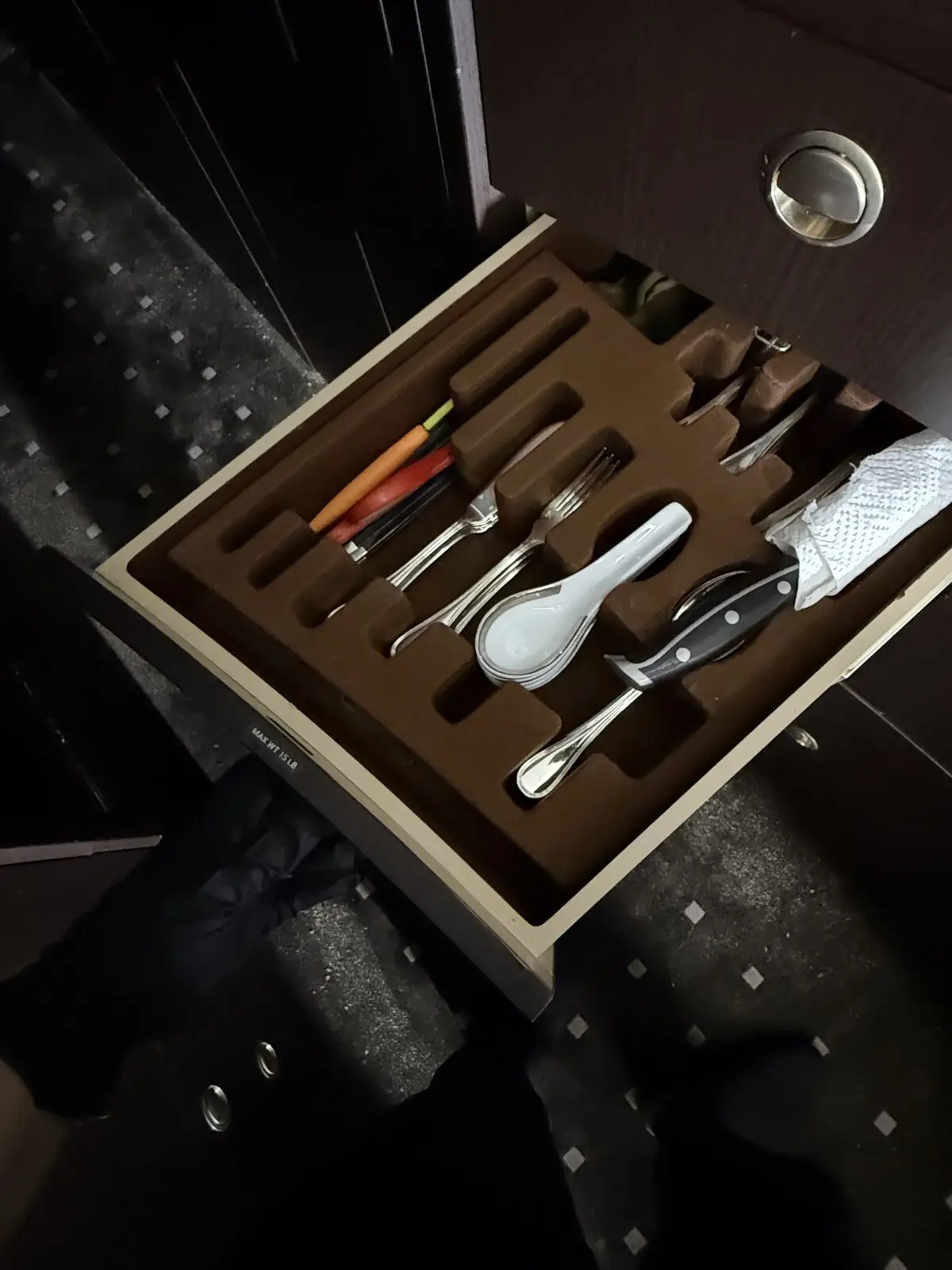
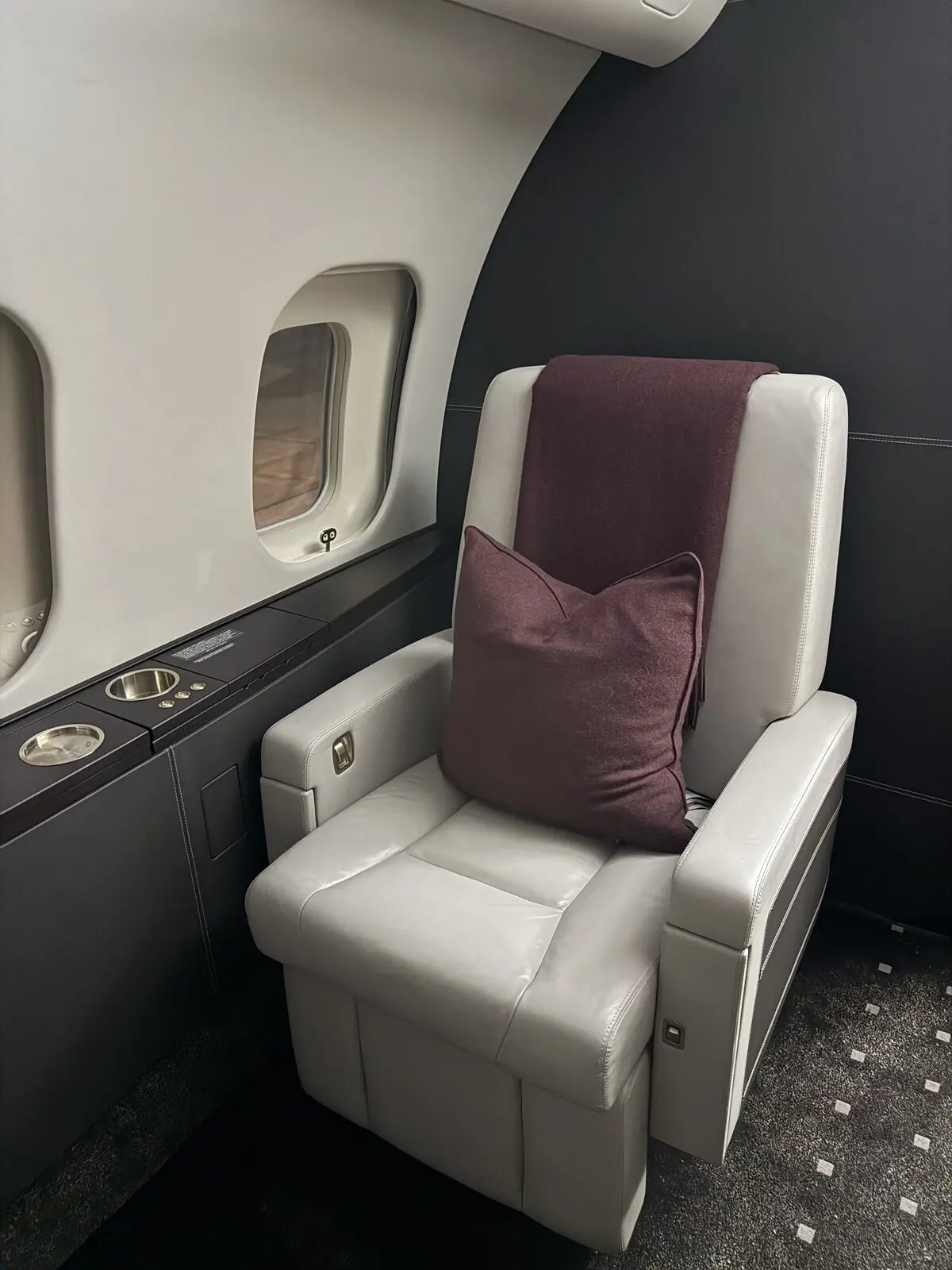
The custom materials mattered. Light leather can show transfer and towel marks. Dark cabinetry can reveal streaking under direct light. Carbon accents can hold residue along texture and edges. Giobagnara leather accessories and serviceware inserts are part of the passenger impression, but they are not hard plastic trays. They need to be reset with the same discipline used on other premium soft goods.
Scope Completed
- Level 2 interior detail across cabin, cockpit, galley, lavatory, and passenger areas
- Carpet extraction for embedded pet hair, loose fibers, and use-related buildup
- Focused pet-hair removal from carpeted areas and lower cabin zones
- Light leather surface cleaning with restrained product use
- Careful reset of custom Giobagnara leather accessories and serviceware storage
- Carbon accent and finished trim wipe-down using conservative methods
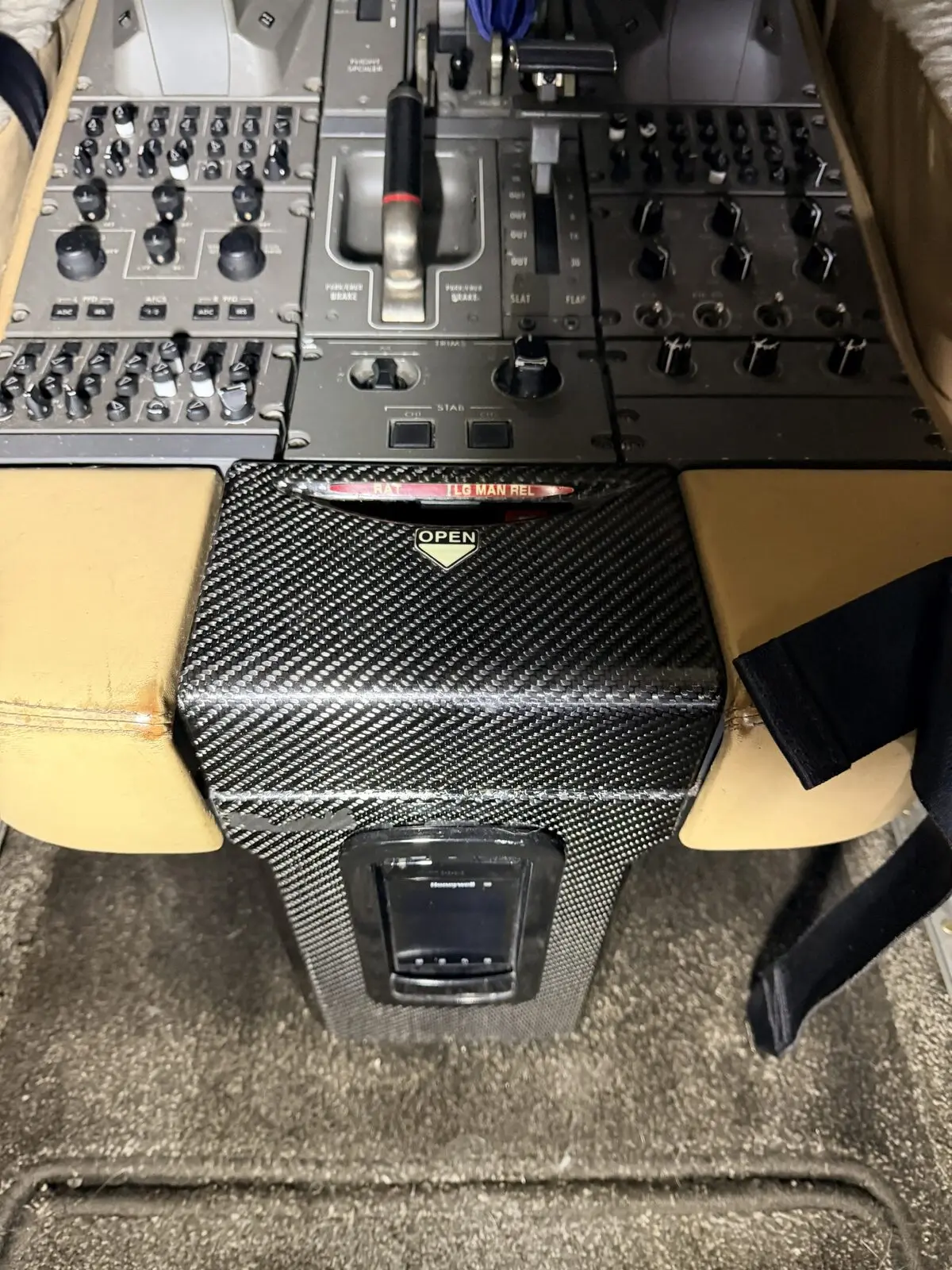
- Cockpit-area dusting and wipe-down around controls, screens, switches, and labels
- Lavatory, galley, cabinetry, storage, and high-touch passenger-surface reset
- Level 2 exterior wash and night-ramp presentation work
- Before-and-after photo documentation
Detailing Process
The work started with documentation and dry removal. Pet-hair remediation fails when it starts wet. Hair has to be lifted, loosened, vacuumed, and isolated before extraction, otherwise the process drives material deeper into the carpet or moves it from one cabin zone to another. On this aircraft, the carpet had to be approached in sections: visible aisle areas, seat-adjacent carpet, sidewall transitions, lower furniture areas, and places where hair gathered around cabin geometry.
Once the dry phase was complete, carpet extraction followed. The goal was not to over-wet a large-cabin aircraft. It was to remove embedded material while controlling moisture, dwell time, and cleanup sequence. That matters in a Global 5000 because the cabin is not just carpet and seats. The floor intersects with cabinetry, seat bases, side ledges, trim panels, electrical areas, and finished surfaces. Extraction has to improve the floor without creating risk for surrounding materials.
The cabin reset then moved upward. Leather seating areas were cleaned conservatively, with attention to light-colored surfaces and passenger-facing contact points. Dark cabinetry and sidewall surfaces were wiped with control so streaks were not left behind under cabin lighting. The lavatory and galley were reset as presentation areas, not just functional zones. Storage spaces were organized, serviceware was returned neatly, and the custom Giobagnara leather pieces were handled as premium cabin accessories rather than standard supplies.
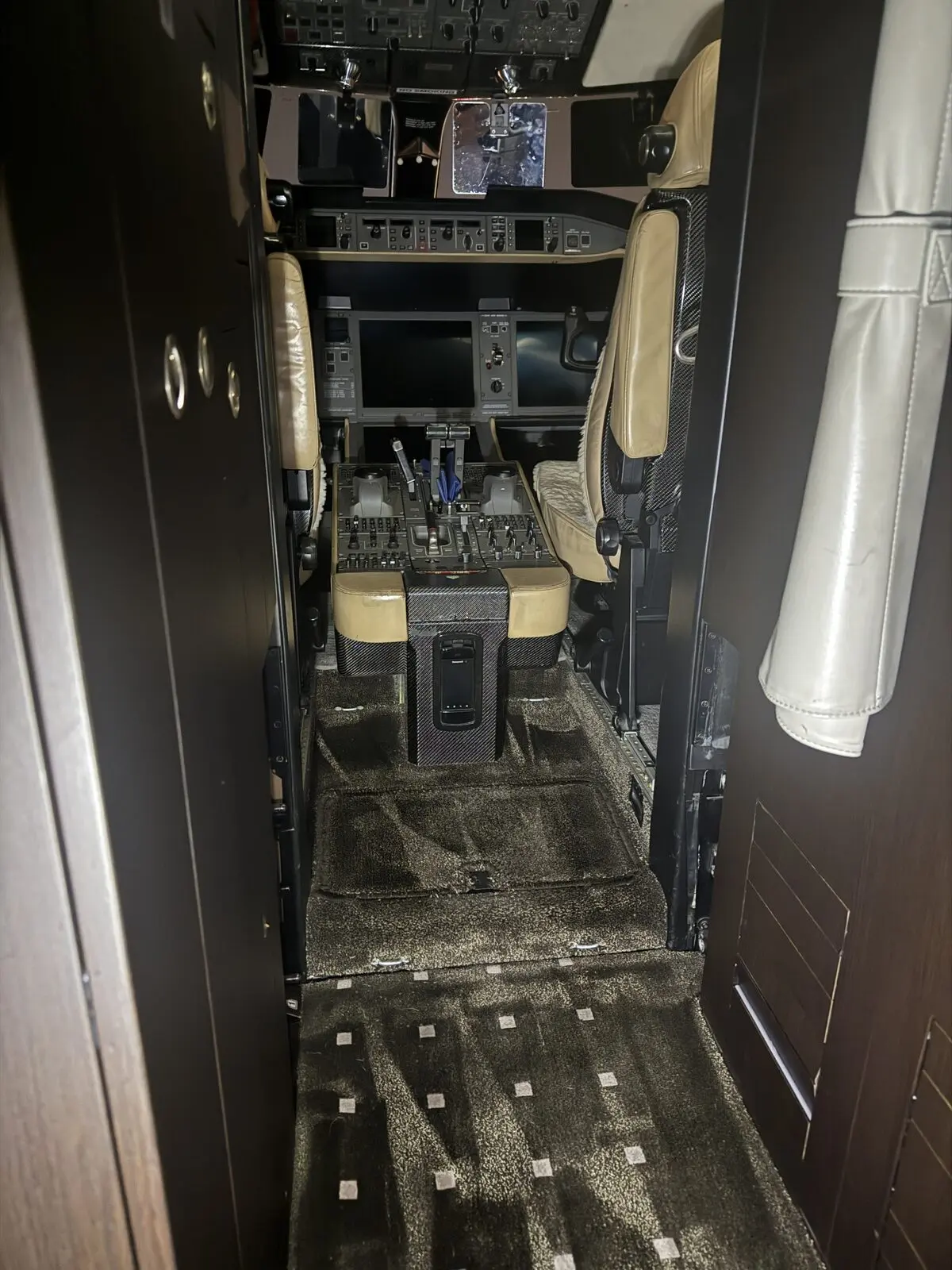
The cockpit and carbon-accented areas required a different standard. Cockpit controls, screens, switches, placards, yokes, throttle areas, and labels do not tolerate automotive-style product habits. The correct approach is restrained dusting, careful wiping, no saturation, and clear separation between detailing and maintenance. Carbon surfaces were treated with the same caution: clean enough to improve presentation, but never aggressively enough to dull, load, or leave residue on the surface.
Material Care: Leather, Carbon, and Giobagnara Details
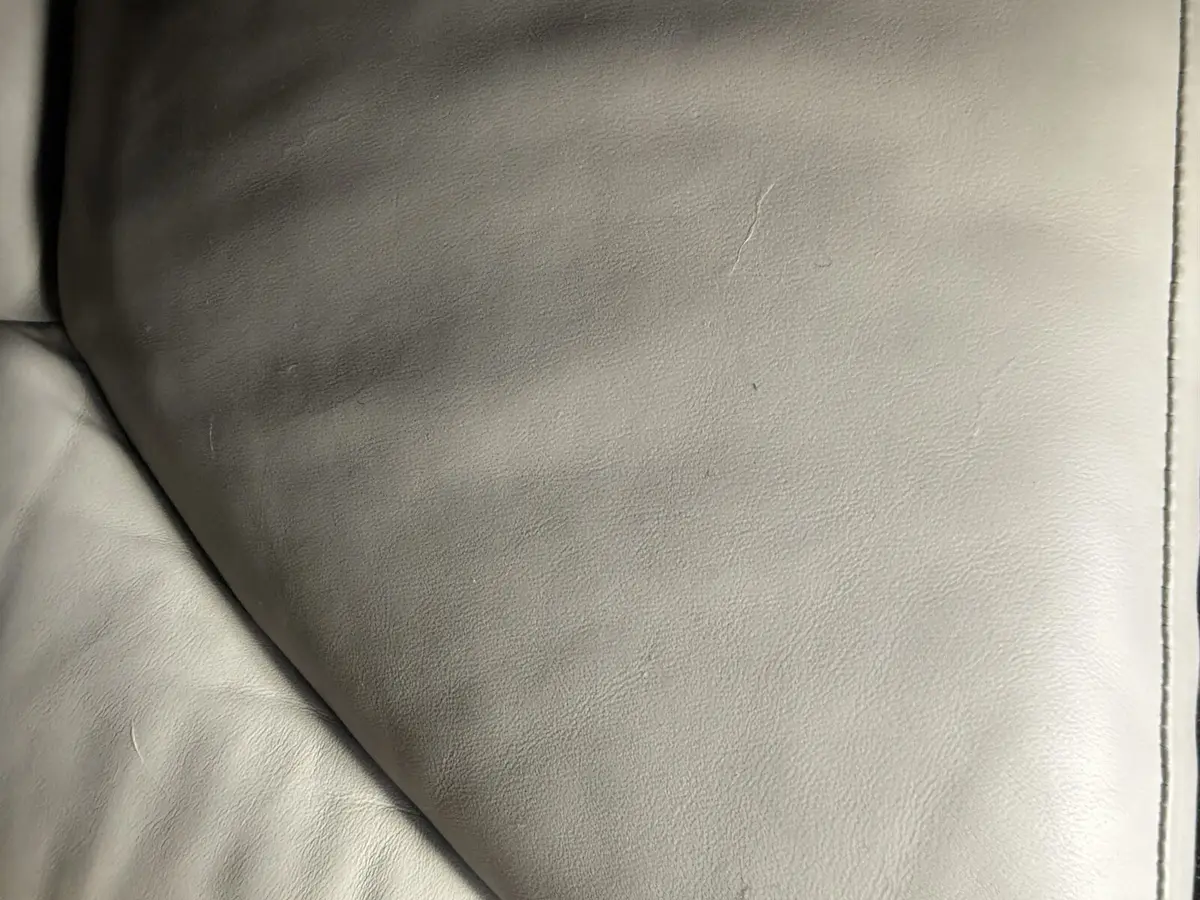
This aircraft’s interior made the material-care side of the job more important than speed. The leather was light, the contrast surfaces were dark, and the cabin had several areas where passengers would immediately notice smudging, lint, towel trails, or residue. That is the difference between cleaning an aircraft and detailing it.
Light leather requires low-aggression cleaning. It should not be flooded, scrubbed harshly, or treated with heavy dressings unless the scope specifically calls for it. The objective is a controlled improvement in presentation: remove visible transfer where appropriate, reset high-touch surfaces, and avoid creating a finish inconsistency.
Carbon accents require the opposite of heavy-handed polishing. They need careful dust removal, clean microfiber, low residue, and attention around edges and transitions. In the cockpit, carbon sits close to controls and labels, so every movement has to be deliberate.
The Giobagnara pieces added another layer. Leather-lined serviceware storage, accessory trays, and custom passenger-facing items communicate the standard of the cabin. They should look ordered, clean, and intentionally placed, but they also need restraint. A premium leather accessory can be damaged by the wrong cleaner, too much moisture, or an aggressive towel just as easily as a seat surface can.
Light Leather & Carbon Accent Care
Exterior Service and Weather
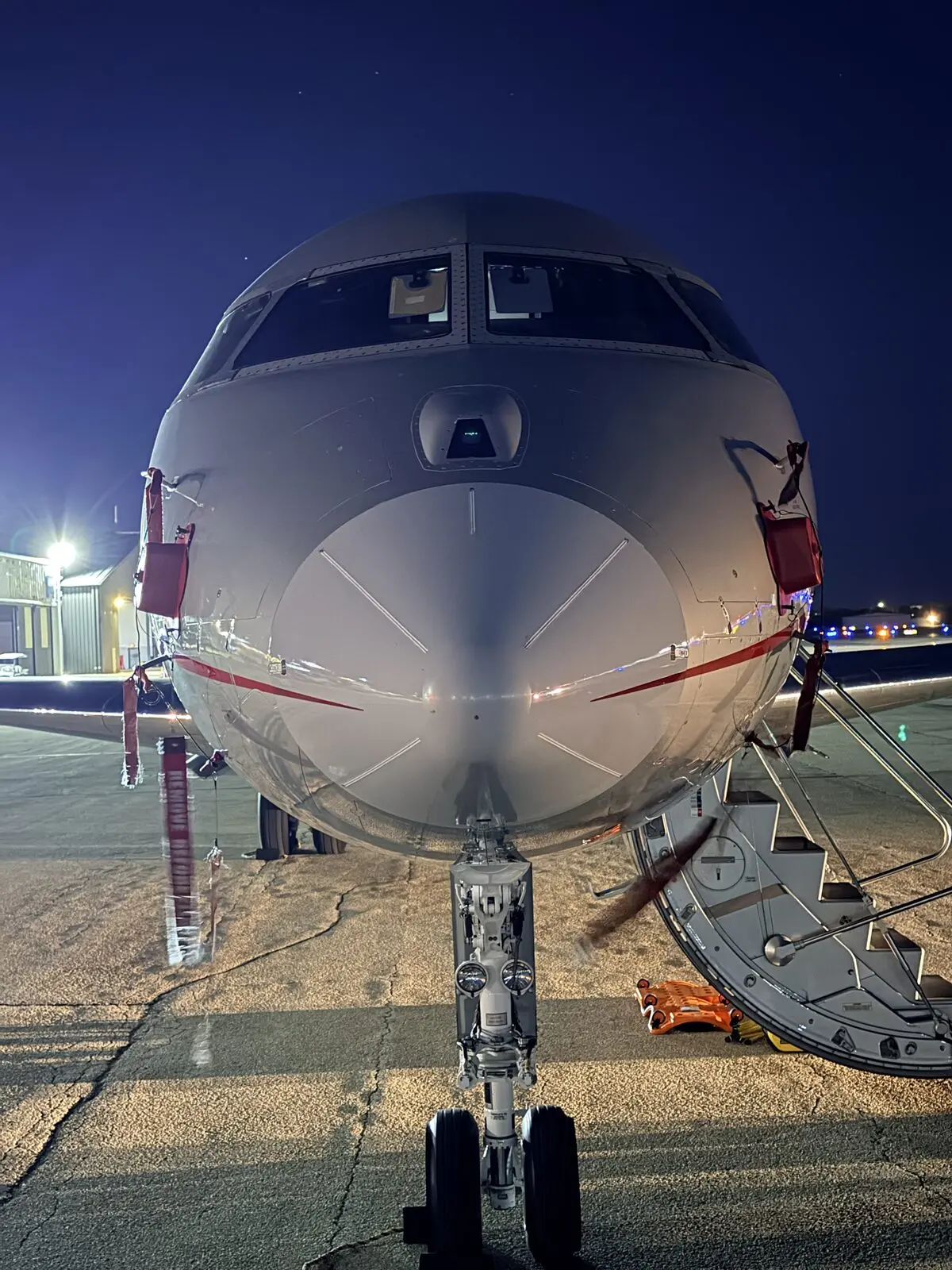
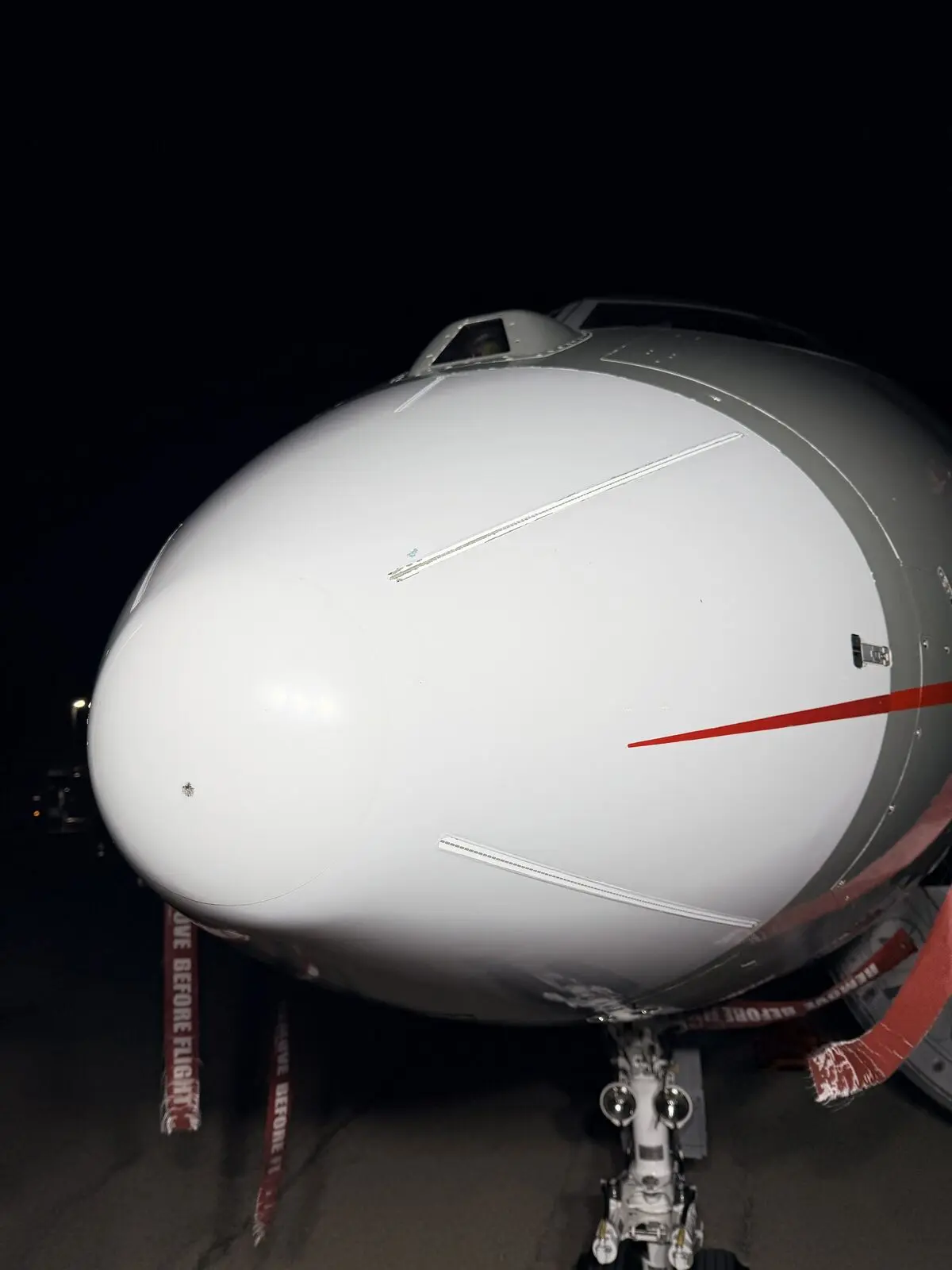
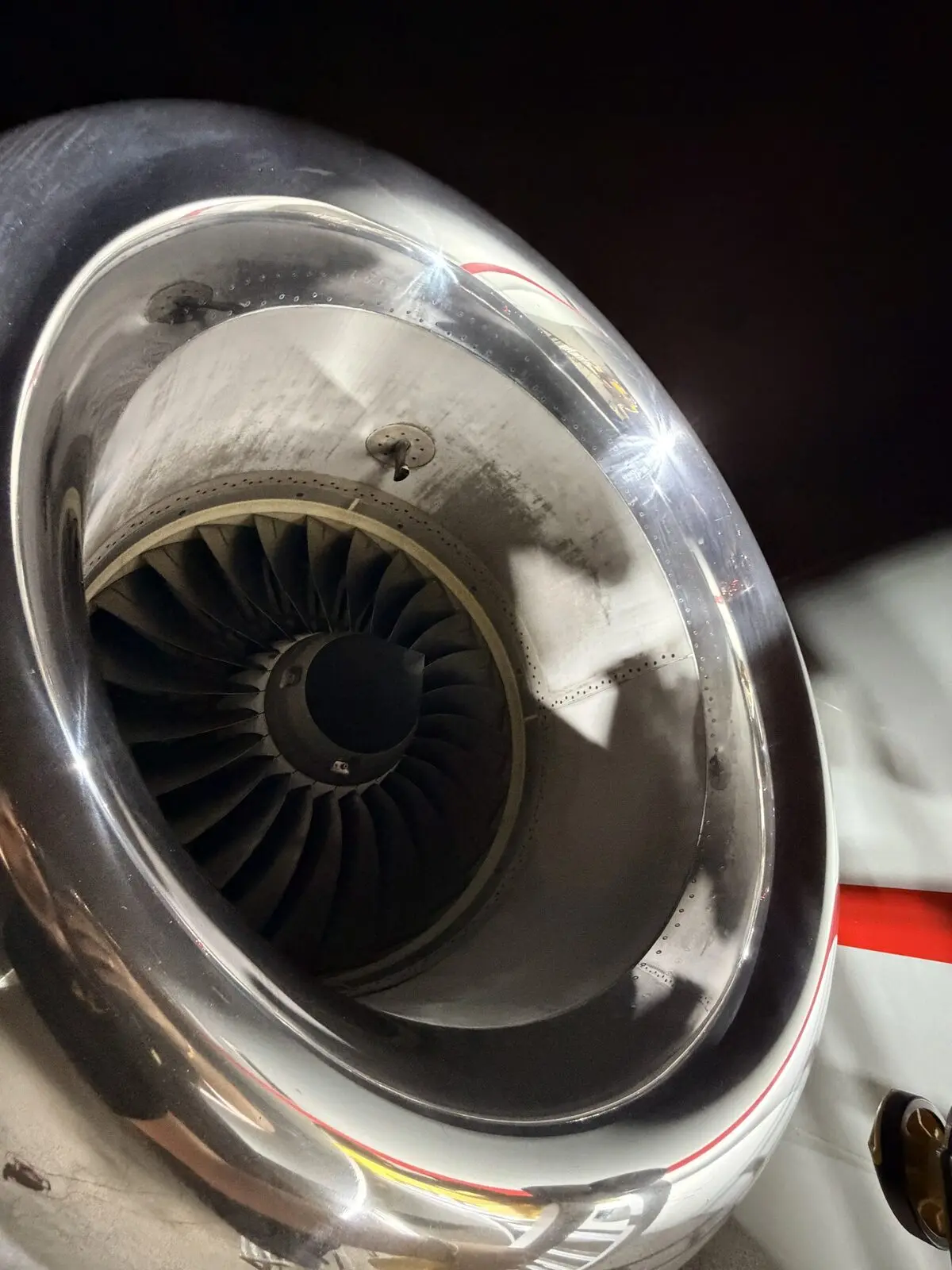
The exterior wash was completed during the same evening-to-overnight service window. A Global 5000 has substantial ramp presence: long fuselage, high tail, large engine inlets, broad wing surfaces, and a nose profile that dominates the first impression. Exterior presentation matters because the aircraft reads as a heavy jet before anyone steps inside it.
The exterior work had to be completed efficiently, but not carelessly. The crew worked through the requested exterior scope and final presentation areas before weather moved in. Heavy rain and thunderstorms began as the exterior work was being completed, but the requested work was finished before release. That timing mattered. The aircraft was not left with a half-completed exterior scope, and the interior work remained protected and complete.
Aircraft-Specific Care Notes
A Global 5000 should be treated as an aircraft first and a luxury interior second. Both matter, but the aircraft context controls the process.
- Aircraft windows require acrylic or polycarbonate-safe habits
- Cockpit areas require restraint around avionics, screens, controls, switches, labels, and placards
- Carpet extraction requires moisture control relative to surrounding finished surfaces
- Leather requires conservative cleaning and finish awareness
- Carbon accents and dark finished surfaces require low-residue towel discipline
- Galley and lavatory resets must improve passenger presentation without crossing into maintenance
- Exterior work around probes, sensors, antennas, static wicks, and engine areas requires caution
Final Result
The aircraft finished cleaner, more organized, and more composed across the cabin, cockpit, lavatory, galley, carpet, and exterior presentation areas. Pet-hair-heavy zones were documented and corrected. Carpeted areas showed a better presentation after dry removal and extraction. Light leather, carbon accents, cabinetry, serviceware storage, and custom leather accessories were reset with restraint.
The result was not theatrical. It was disciplined. The aircraft presented as a heavy business jet should: clean, ordered, refined, and ready for the next movement without unnecessary disruption.
Recommended Next Steps
- For aircraft that carry pets, a same-day or next-arrival cabin reset should be scheduled whenever possible. Pet hair becomes more difficult to remove once it works into carpet fibers, seat seams, sidewall transitions, and lower furniture areas.
- For a Global 5000 or similar large-cabin aircraft, recurring interior maintenance should include carpet extraction intervals, light leather monitoring, serviceware and accessory reset, cockpit dust control, and careful inspection of carbon accents and dark finished surfaces.
- For exterior work, hangar access should be considered whenever weather risk is high. Night-ramp service can be completed successfully, but heavy rain and thunderstorms narrow the margin for timing, drying, and final inspection.