
This overnight Challenger 350 project combined a charter-style exterior presentation wash with a detailed interior reset and several focused corrective areas inside the cabin. The aircraft was scheduled through a tight overnight window at Chicago Midway, which meant the detail work had to be sequenced around ramp access, FBO flow, and a fixed departure deadline. The job was not just about making the aircraft look clean in photographs. It was about returning a high-utilization super-midsize cabin to a standard that felt orderly, quiet, and ready for the next passenger movement.
The Challenger 350 is built around the expectations of business aviation: a stand-up cabin, wide club seating, a rear lavatory, a galley, large cabin windows, and a ramp presence that is more substantial than a light jet without moving into heavy-jet complexity. Those same advantages create more surfaces to manage. Leather seating, plated fixtures, retractable tables, side ledges, lav cabinetry, and deep chair bases all collect use-related residue in different ways. A detailer has to read the cabin like an aircraft cabin, not like a car interior.
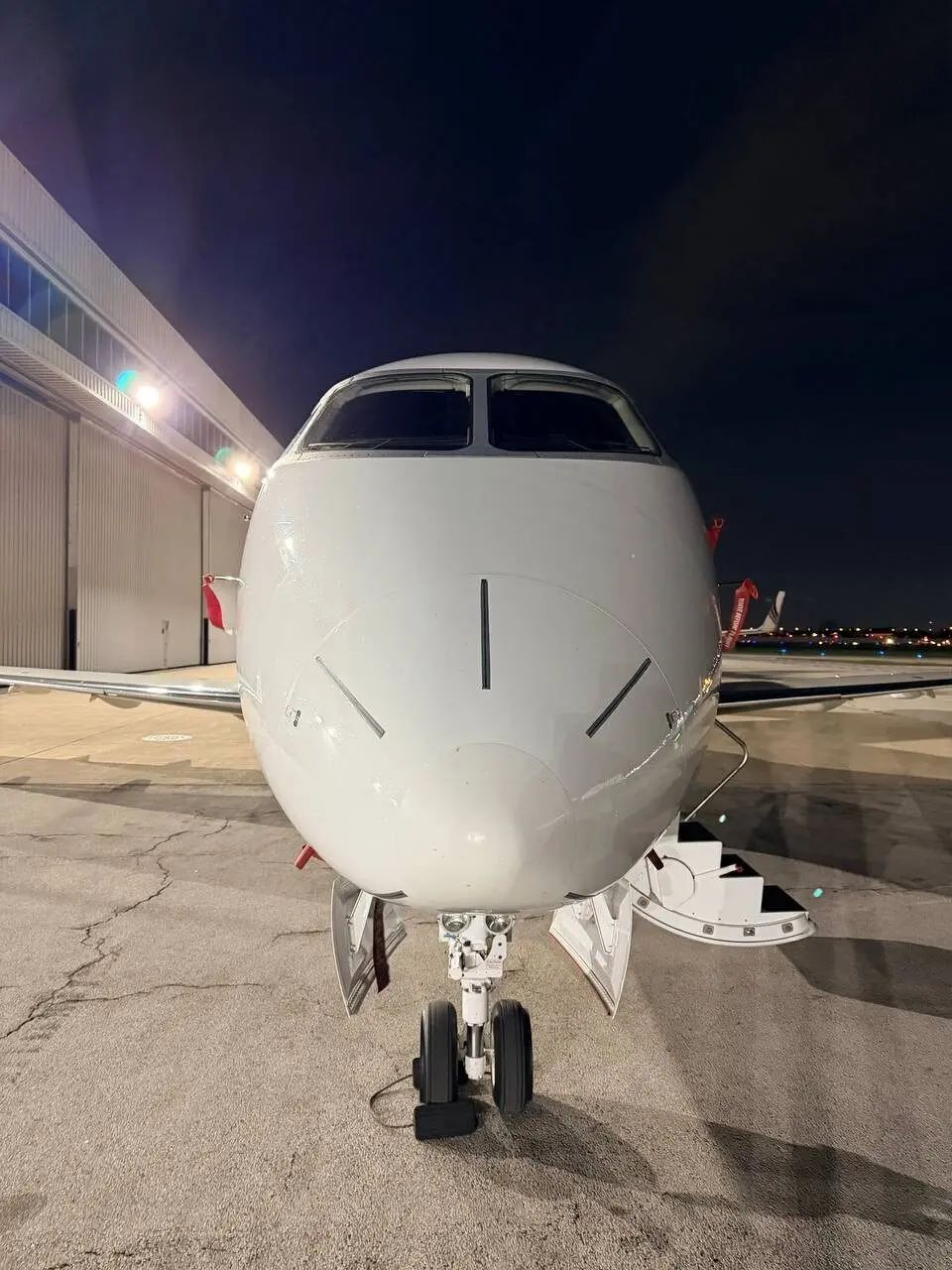
Initial Condition
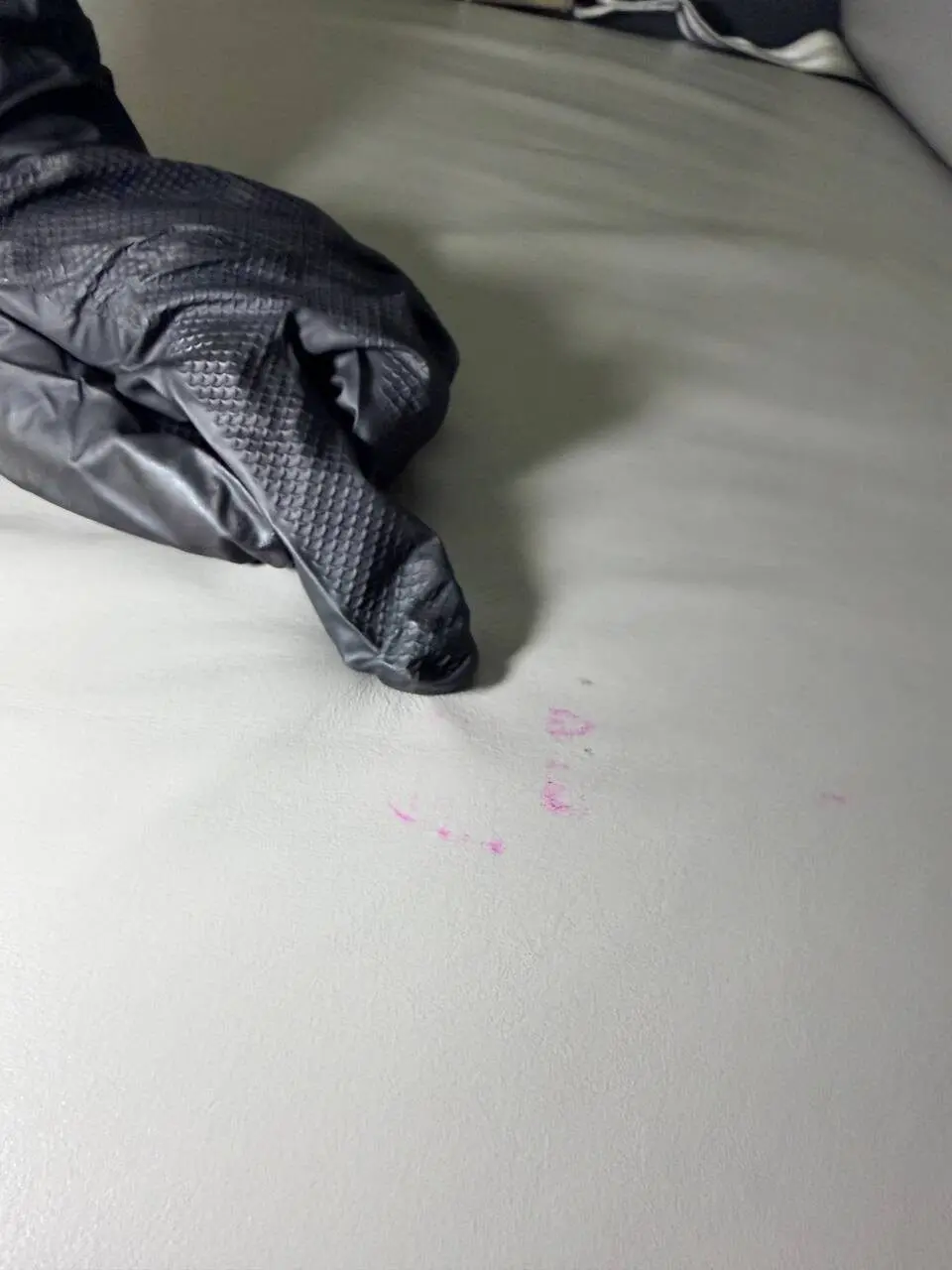
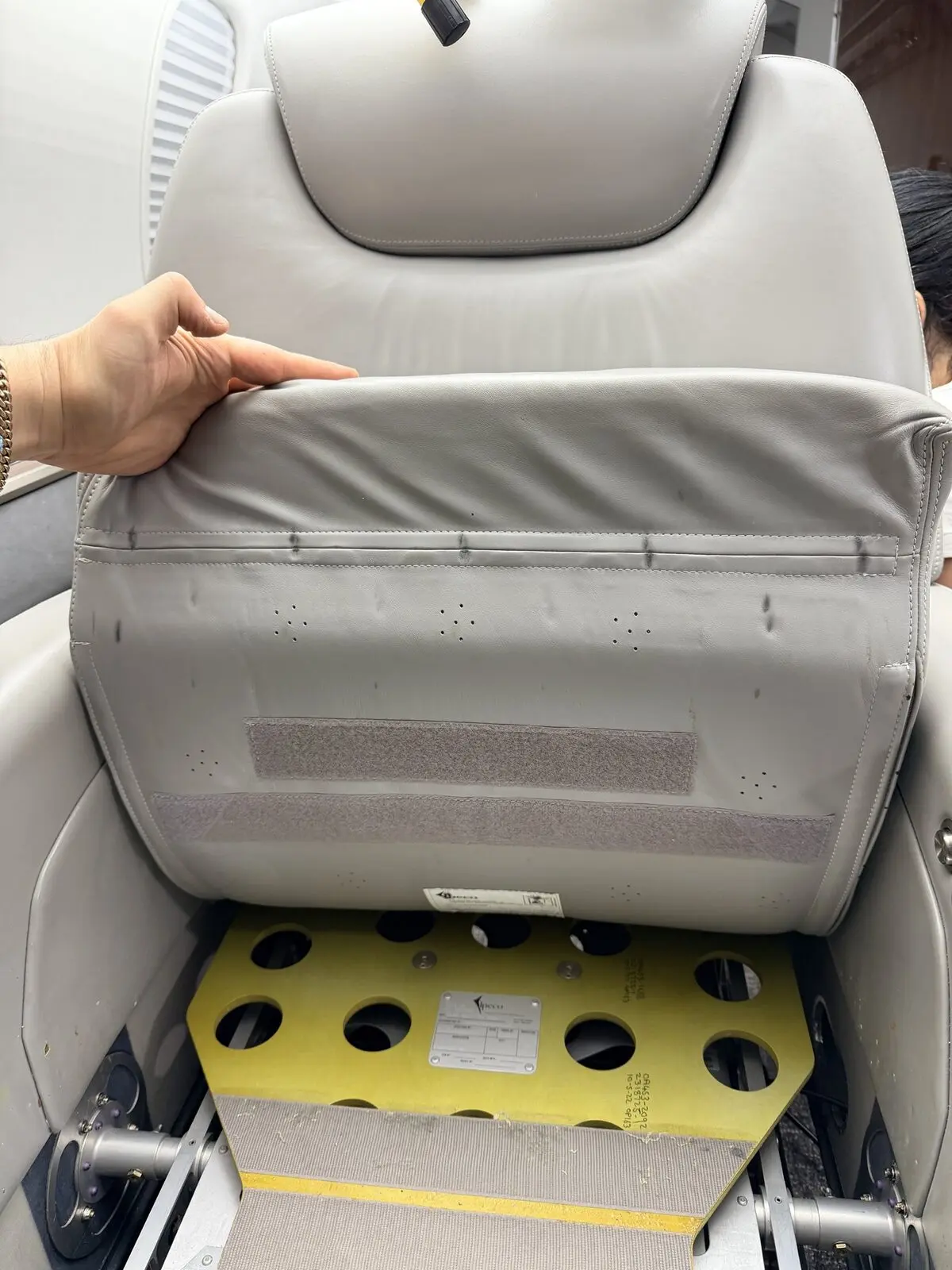
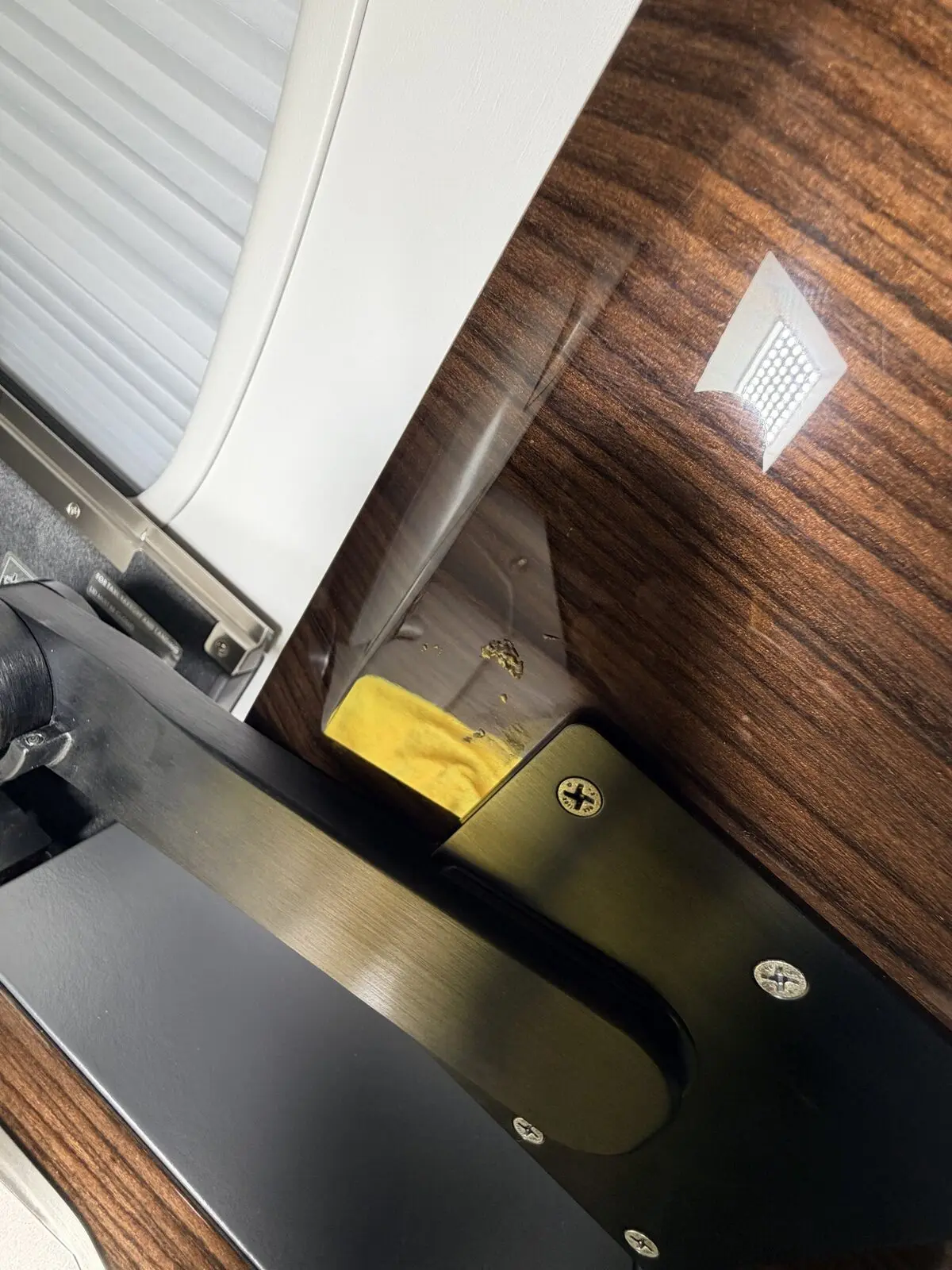
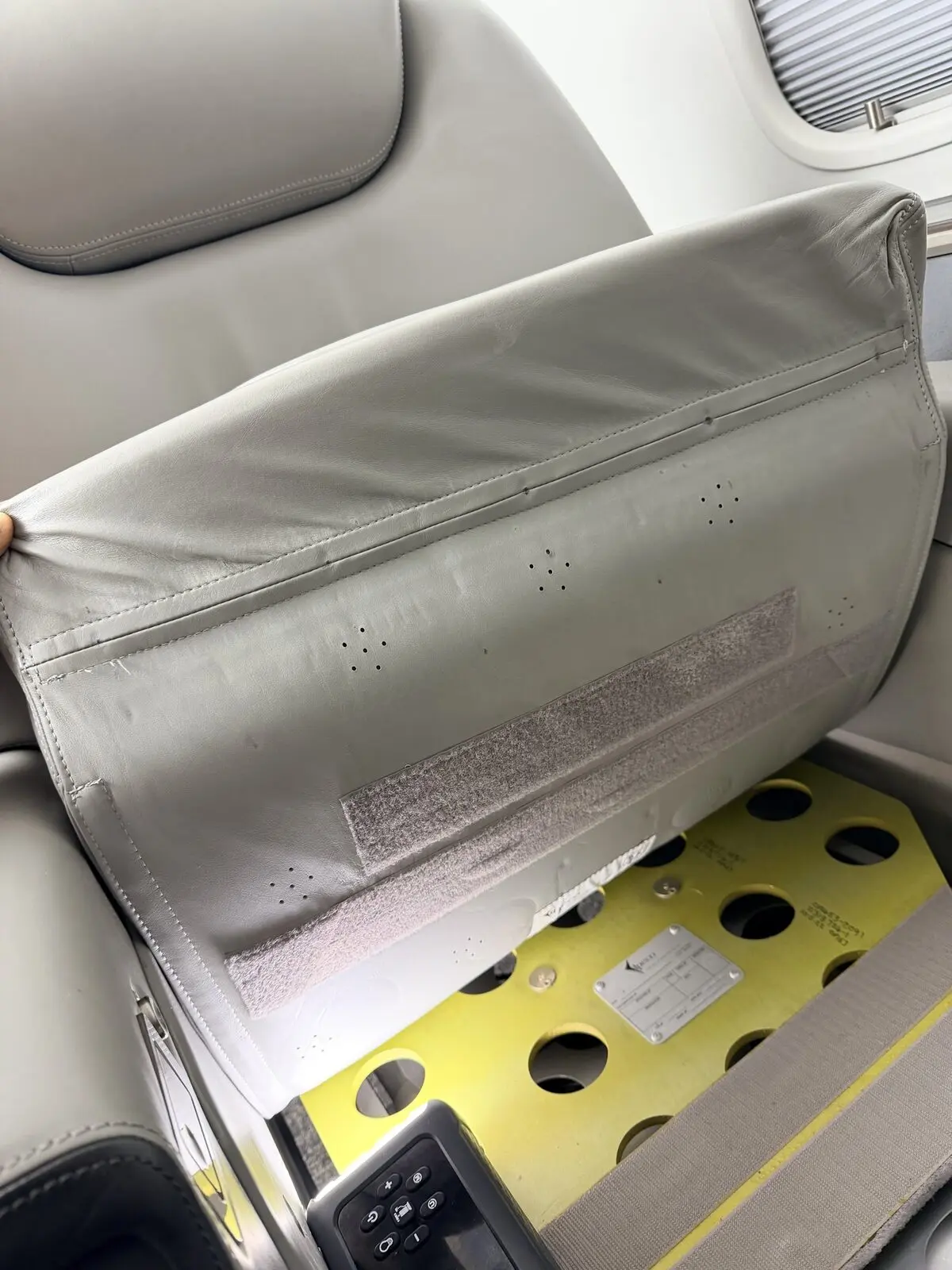
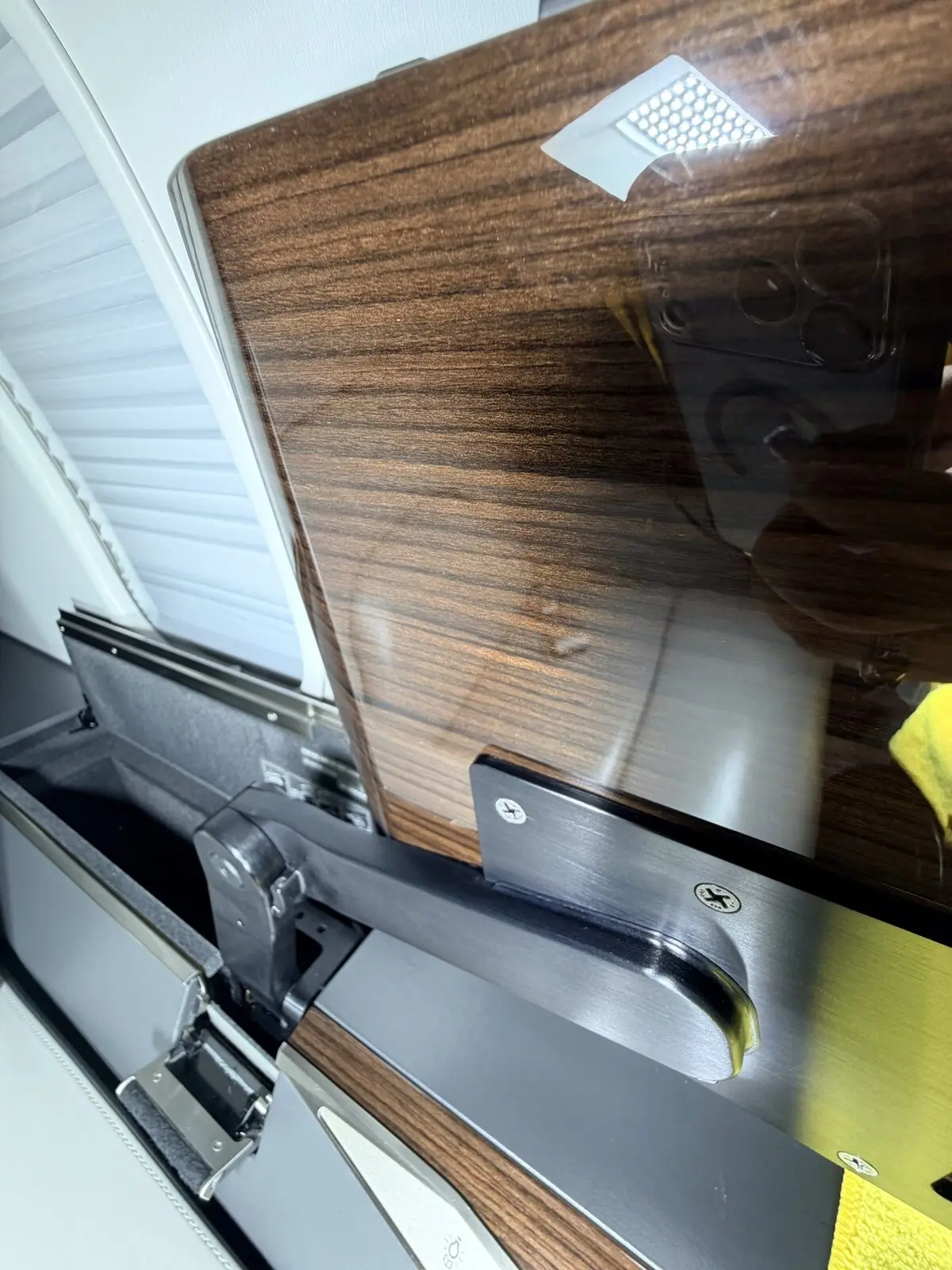
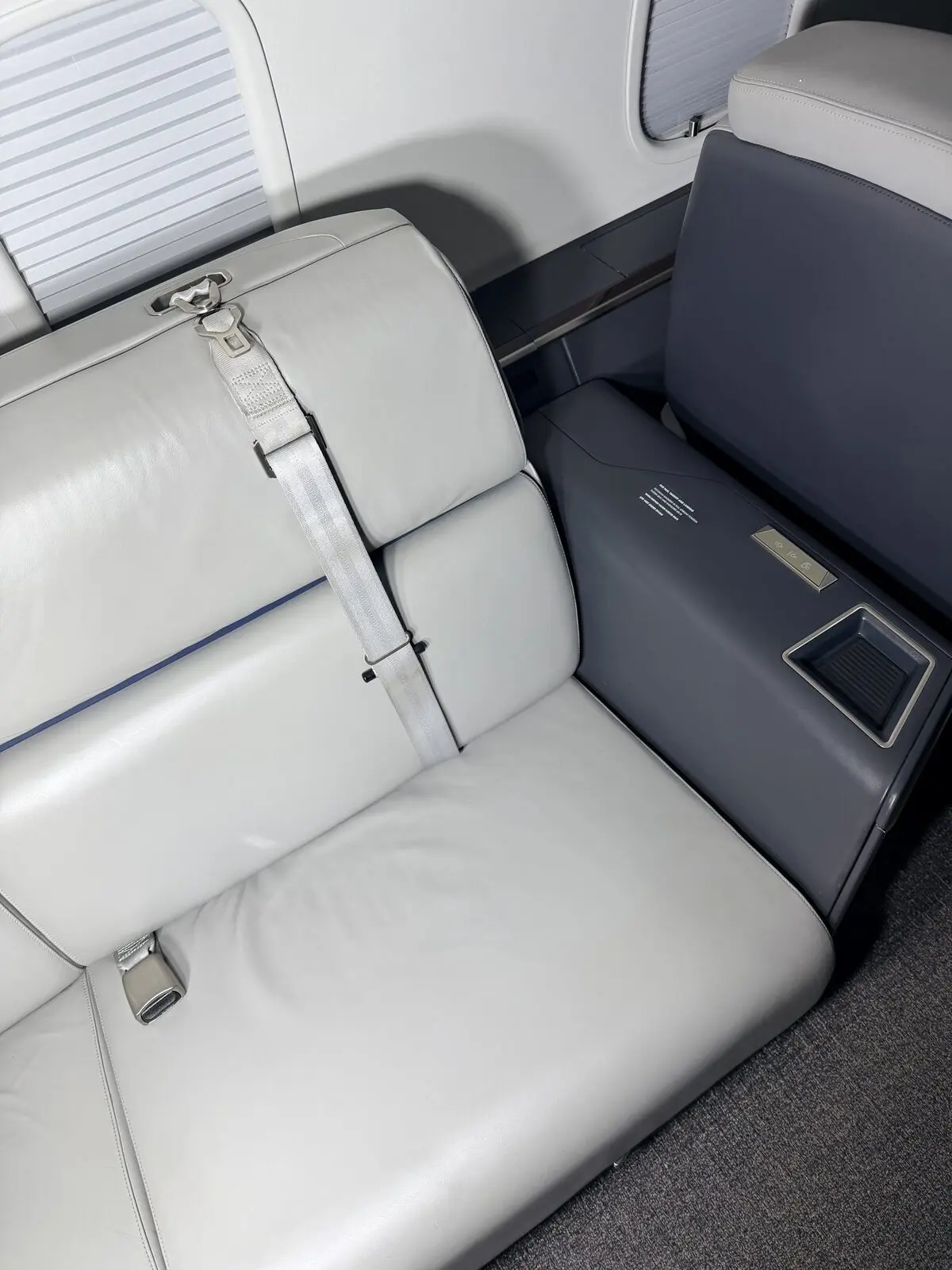
The aircraft showed normal charter-use presentation fatigue plus several specific stain concerns. The most prominent issue was a lipstick stain on the back couch leather — previous detailing teams had attempted removal without success, and care had to be taken to avoid damaging the leather finish in the process. Beyond that, there was additional staining on cabin surfaces including a seatbelt, a lav cabinet door, a leather cover, an armchair, and low-visibility lower chair areas. There was also debris buildup beneath a pop-out tray table and in the narrow gap between the couch and lav wall.
Those details matter because a Challenger cabin is designed for passenger comfort, but the detailing work often happens in tight channels below that comfort layer. The sidewall gap, tray table cavity, lower chair shell, and seatbelt contact points are not the first areas a passenger sees, but they are exactly the places that separate a true cabin reset from a surface wipe-down.
Scope Completed
Detailing Process
The exterior was handled first as a presentation system: nose, leading edges, engine areas, entry zone, handrails, and high-visibility paint surfaces. On a business jet, the exterior does not have to be perfect under inspection lights to matter. It has to read correctly as the passengers approach it under ramp lighting. The nose, door surround, wing leading edges, engine inlets, and entry stairs are the aircraft's handshake.
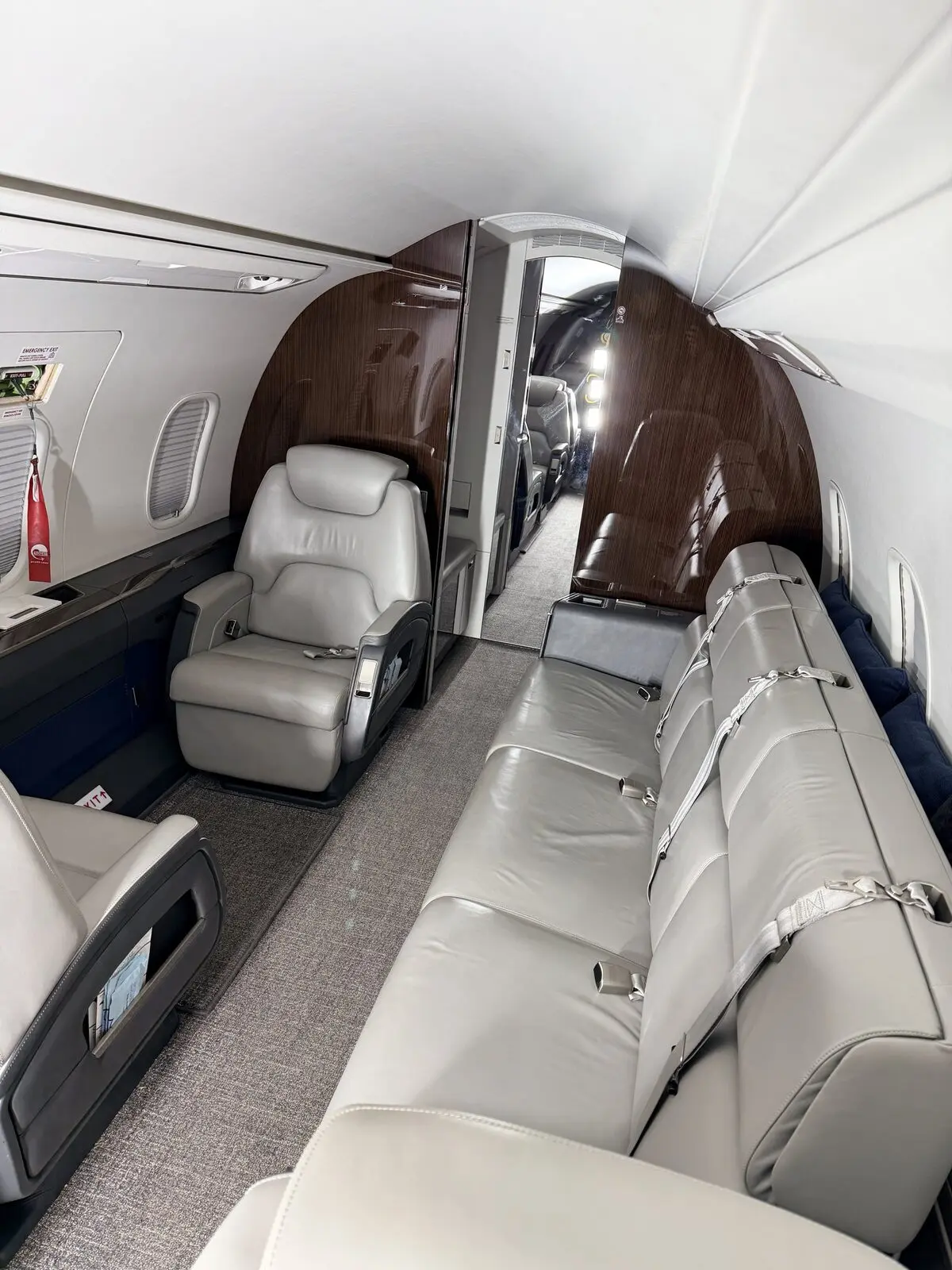
Inside the cabin, the work moved from broad reset to corrective details. Trash and loose items were removed, drawers and compartments were reset, and the cabin was vacuumed before stain correction. That order matters. If the cabin is not stabilized first, small corrective work gets contaminated by loose debris and repeated traffic through the aisle.
The specific concern areas required slower work. The lipstick stain on the back couch had already survived prior removal attempts by other teams, which meant the leather had been exposed to previous chemistry and agitation. Aggressive re-treatment risked stripping the finish rather than just the residue. Leather correction on aviation seating demands caution — the approach was controlled: test, treat, lighten, reassess, and condition where appropriate. The goal was improvement without turning a cosmetic cleaning issue into a material-damage issue.
Corrective Results
The leather couch staining, lower-chair residue, and tray table debris each required a different approach. The before-and-after documentation shows the corrective improvement on each surface.
Lipstick Stain Correction — Back Couch

Lower Chair Stain Cleaning
Tray Table Debris Removal
Aircraft-Specific Care Notes
The Challenger 350 cabin uses a mix of leather, veneer, plated hardware, carpet, sidewall material, acrylic or polycarbonate windows, and cockpit avionics. Each surface has a different risk profile. Leather can be over-cleaned. Veneer can be scratched. Plated hardware can haze. Interior windows can be marred by the wrong towel or chemical. Cockpit controls and screens require restraint.
No liquid product should be sprayed directly into cockpit switchgear, screens, vents, or seat-control areas. Around tray tables, lav cabinetry, and seat bases, moisture control matters because those areas have hinges, tracks, gaps, and trim interfaces. The cabin was treated as an aircraft interior first and a visual detailing project second.
Final Result
The finished aircraft presented as a cleaner, calmer Challenger cabin. The cabin seating looked reset, the lower chair areas were improved, the tray table area was cleared, and the exterior presented properly under ramp lighting. The value of the work was not limited to shine. The aircraft moved through the overnight window without unnecessary disruption, and the operator received a documented result before the next scheduled use.
Exterior Detail
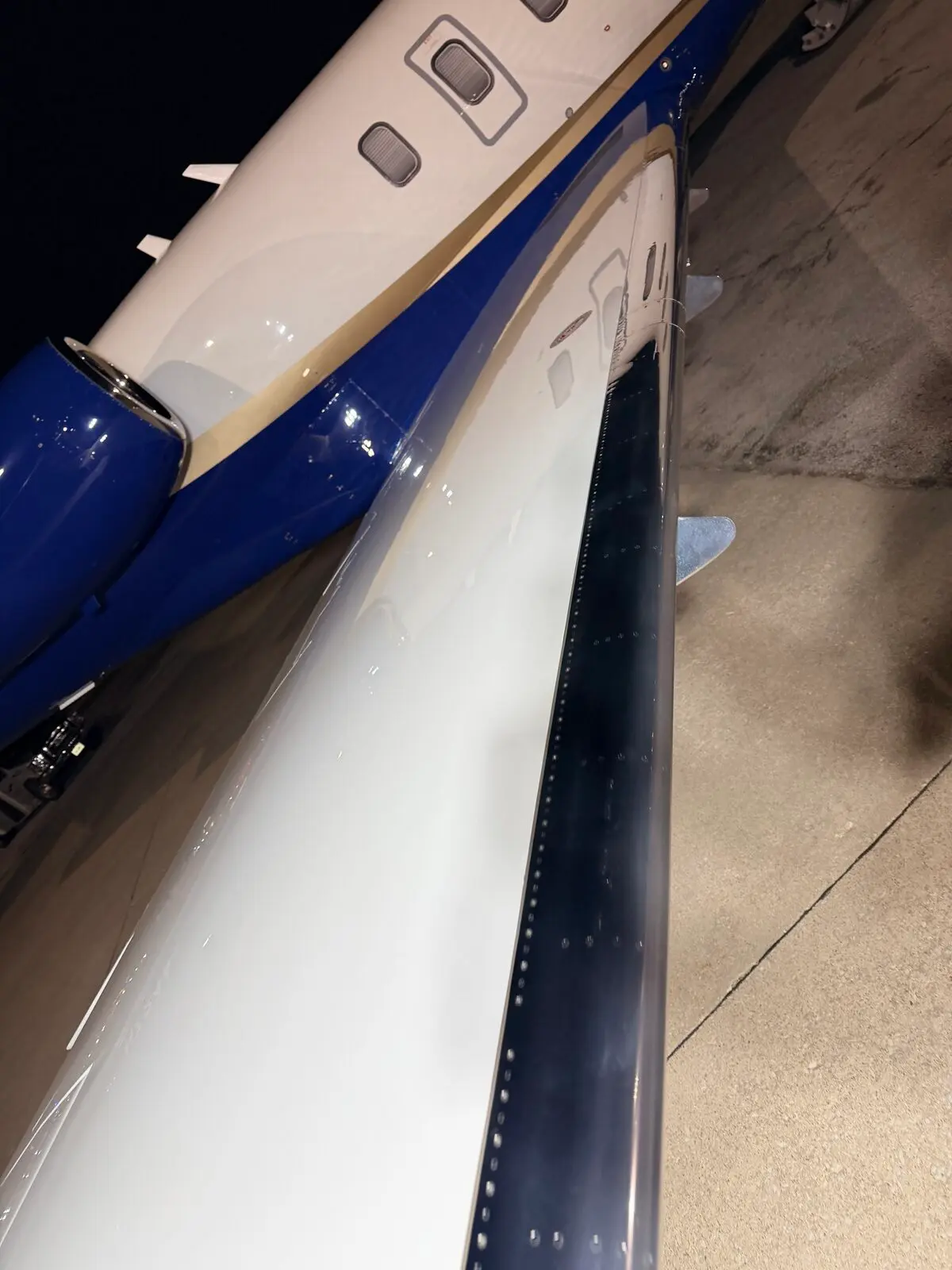
The exterior presentation wash covered the full airframe — nose, wing leading edges, engine nacelles, fuselage, and tail surfaces. On a Challenger 350, the wing and fuselage paint transition is a high-visibility area that shows under ramp lighting. The blue and white livery read cleanly after the wash, with the wing surface reflecting properly and the engine cowling free of exhaust residue.
Recommended Next Step
For Challenger 300/350/3500-family cabins, recurring light interior resets should focus on the hidden wear points: seat bases, sidewall ledges, tray table cavities, lav touchpoints, seatbelt webbing, and carpet edges. A monthly or usage-based corrective pass prevents small stains from becoming larger leather restoration problems.
- Recurring light interior resets focused on hidden wear points
- Seatbelt and leather-contact stain monitoring
- Tray table and lav cabinetry deep cleaning on a regular schedule
- Exterior presentation washes timed around overnight or maintenance windows
- Leather conditioning to maintain cabin finish and prevent cracking
- Ceramic coating consideration for exterior paint protection