
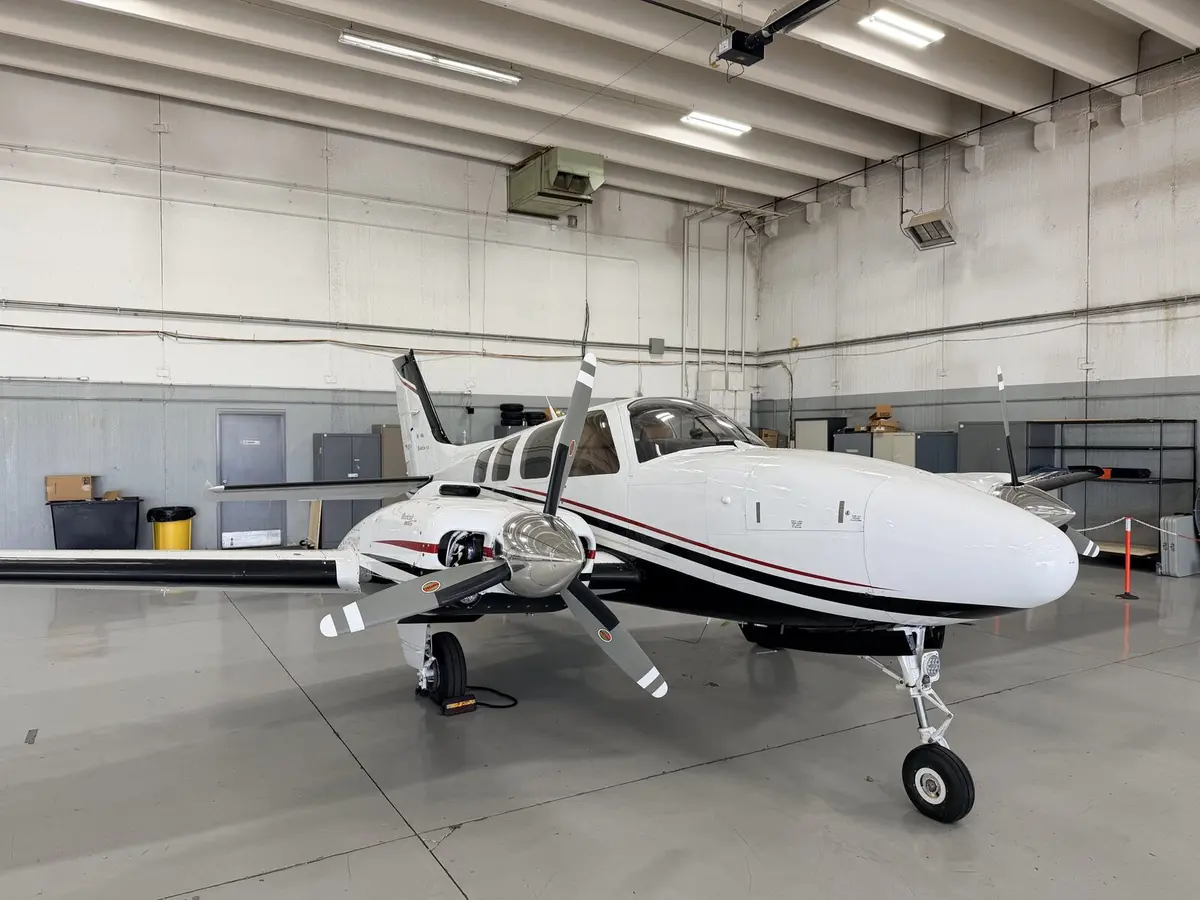
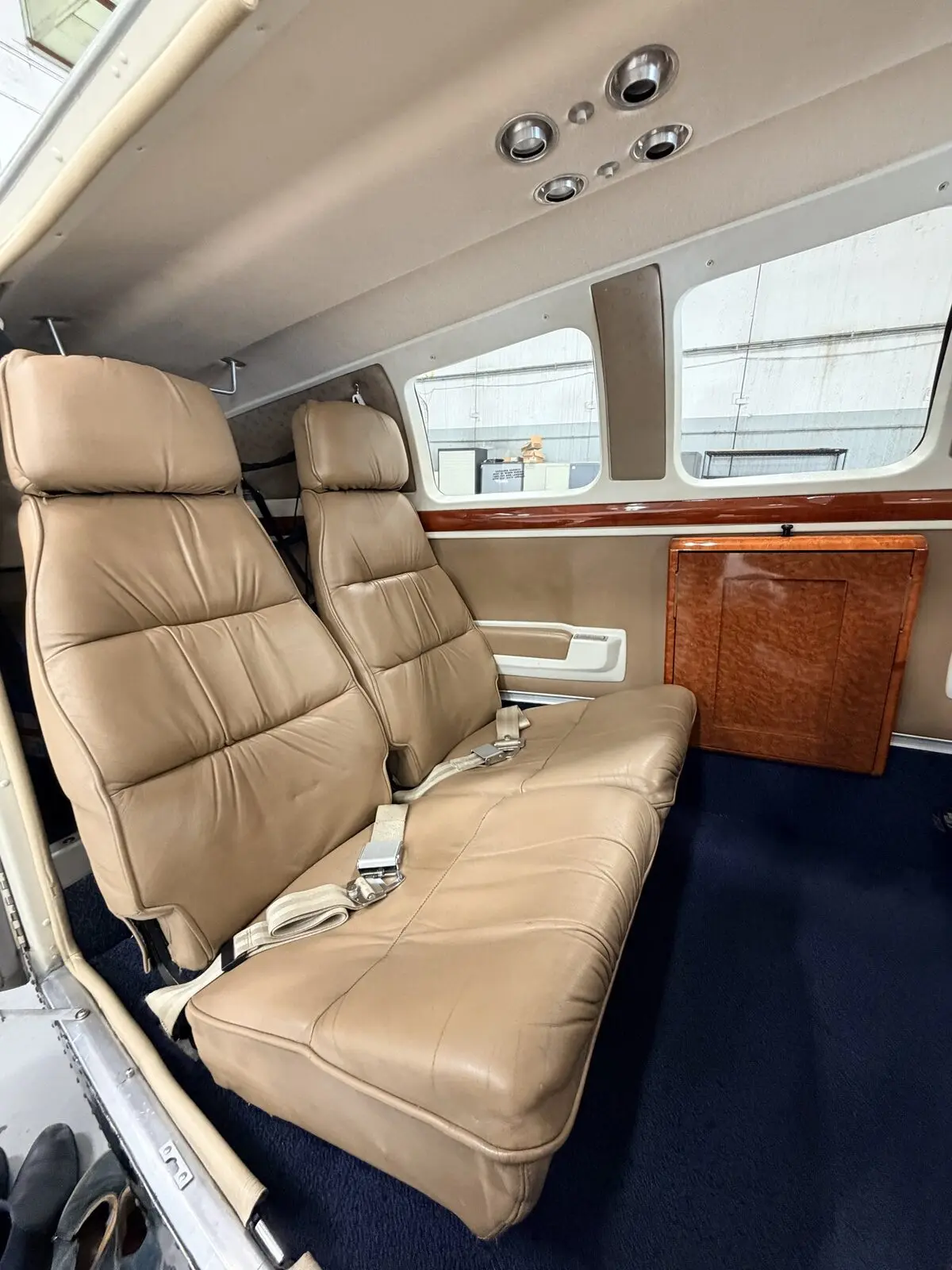
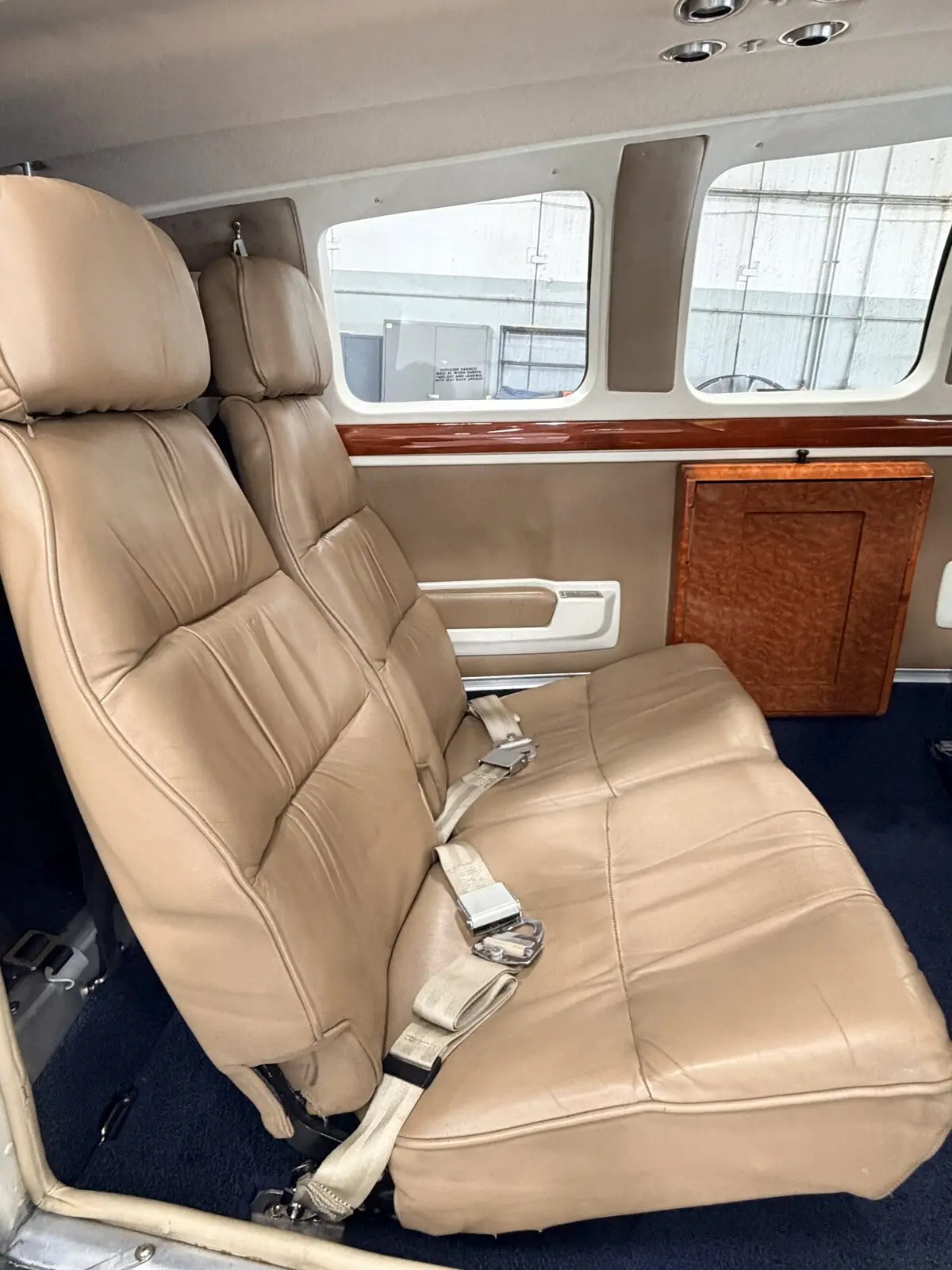
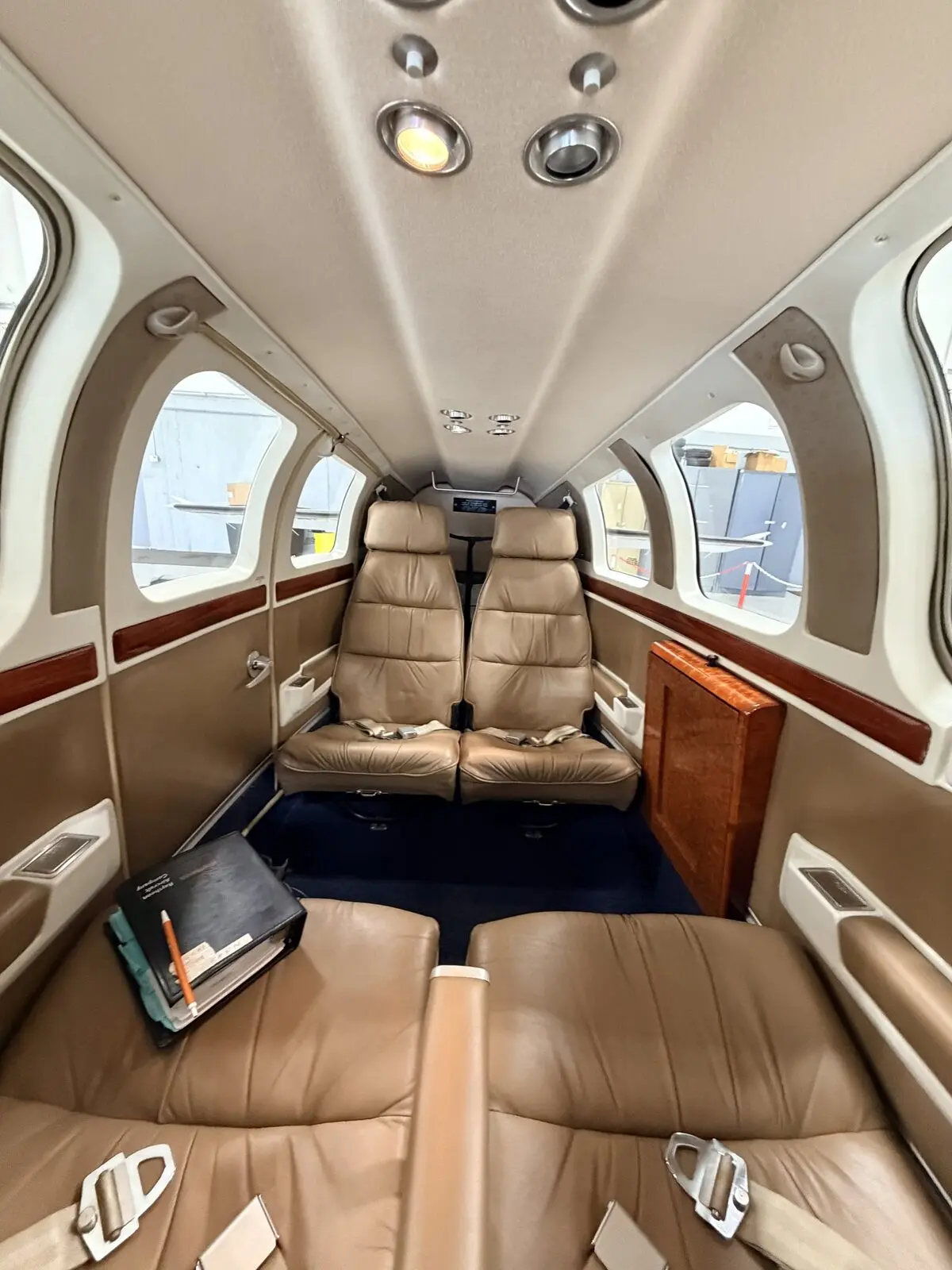
This Beechcraft Baron 58 interior reset was built around a simple goal: return a compact piston twin to a cleaner, sharper, more professional standard without treating it like an automotive interior. The Baron is not a large aircraft, but it is a serious machine — a twin-engine, low-wing aircraft with a compact cabin, narrow entry points, acrylic windows, door seals that matter, and cockpit surfaces that should be handled conservatively.
The work focused on cabin presentation, leather and carpet condition, window clarity, and documentation of areas that needed owner or maintenance-level attention. An aircraft interior reset is not the place to pretend every issue can be solved with product. It is the place to show restraint, make the aircraft present better, and identify which concerns deserve a dedicated follow-up.
Project Details
Initial Condition
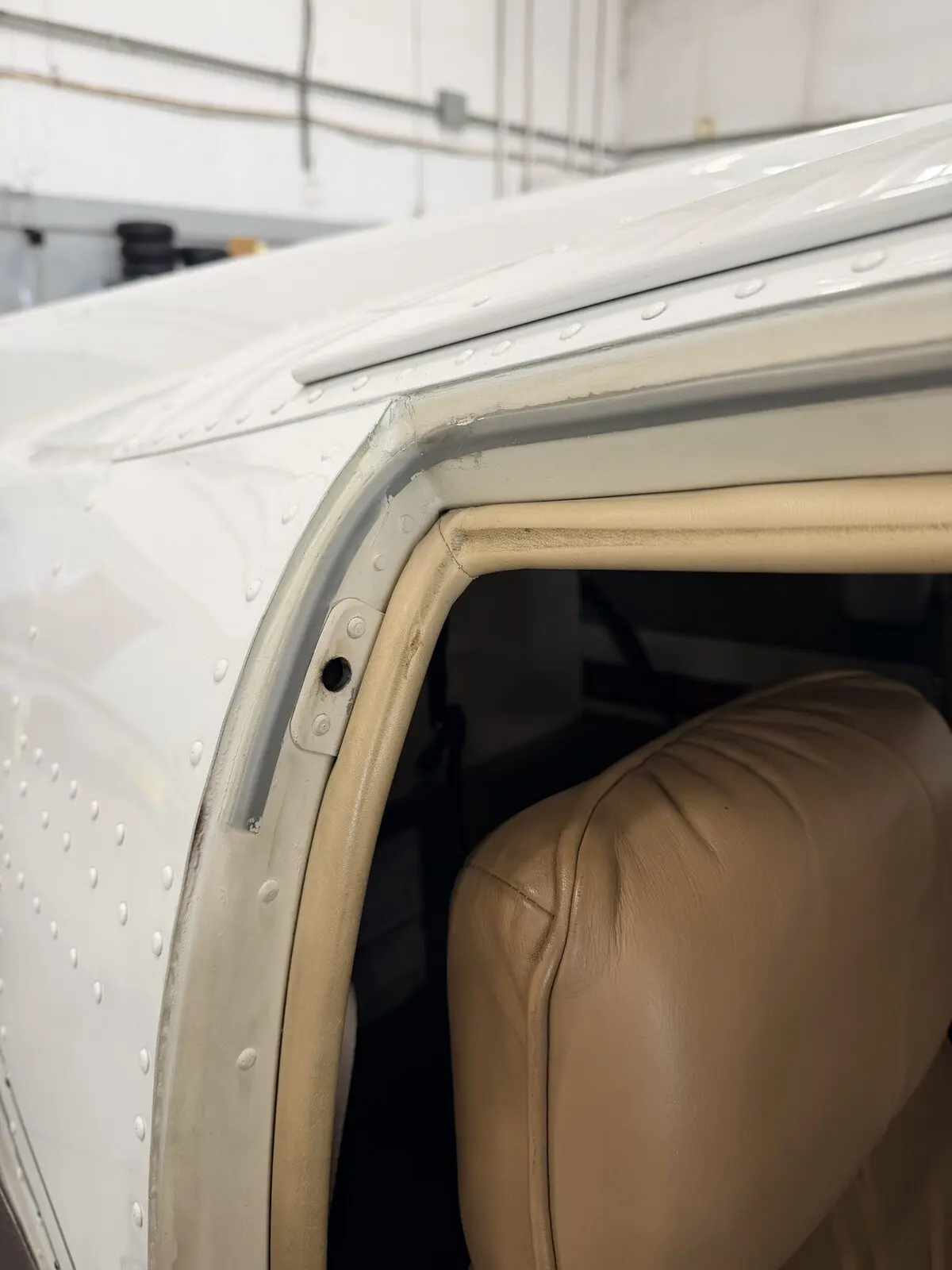
The aircraft showed typical training-use and passenger-use buildup: high-touch residue, window smudging, carpet debris, seat and sidewall wear, and general cabin presentation fatigue. The most important condition note was the cabin door seal condition — the seals showed wear, dryness, and cracking, so they were cleaned gently and documented rather than treated aggressively.
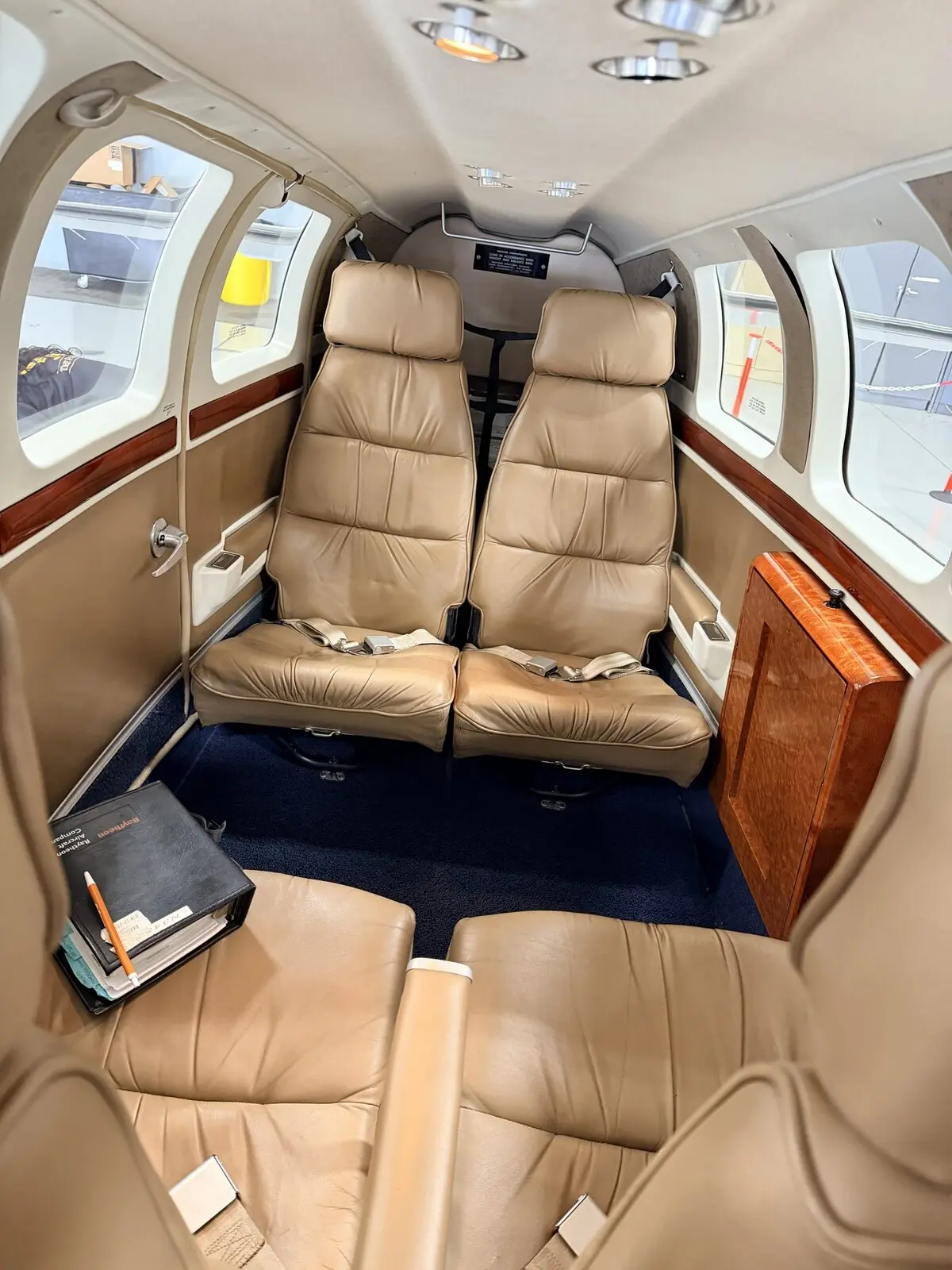
On a Baron, the cabin door and rear access areas are high-contact zones. Students, instructors, owners, passengers, flight bags, headsets, and kneeboards all move through tight spaces. That produces a different kind of wear from a large-cabin jet — more concentrated, more physical, and often closer to sensitive trim and seals.
Scope Completed
- Interior cleaning and presentation reset
- Cabin vacuum and crevice cleaning
- Seat and carpet cleaning
- Leather cleaning and conditioning
- Seatbelt reset
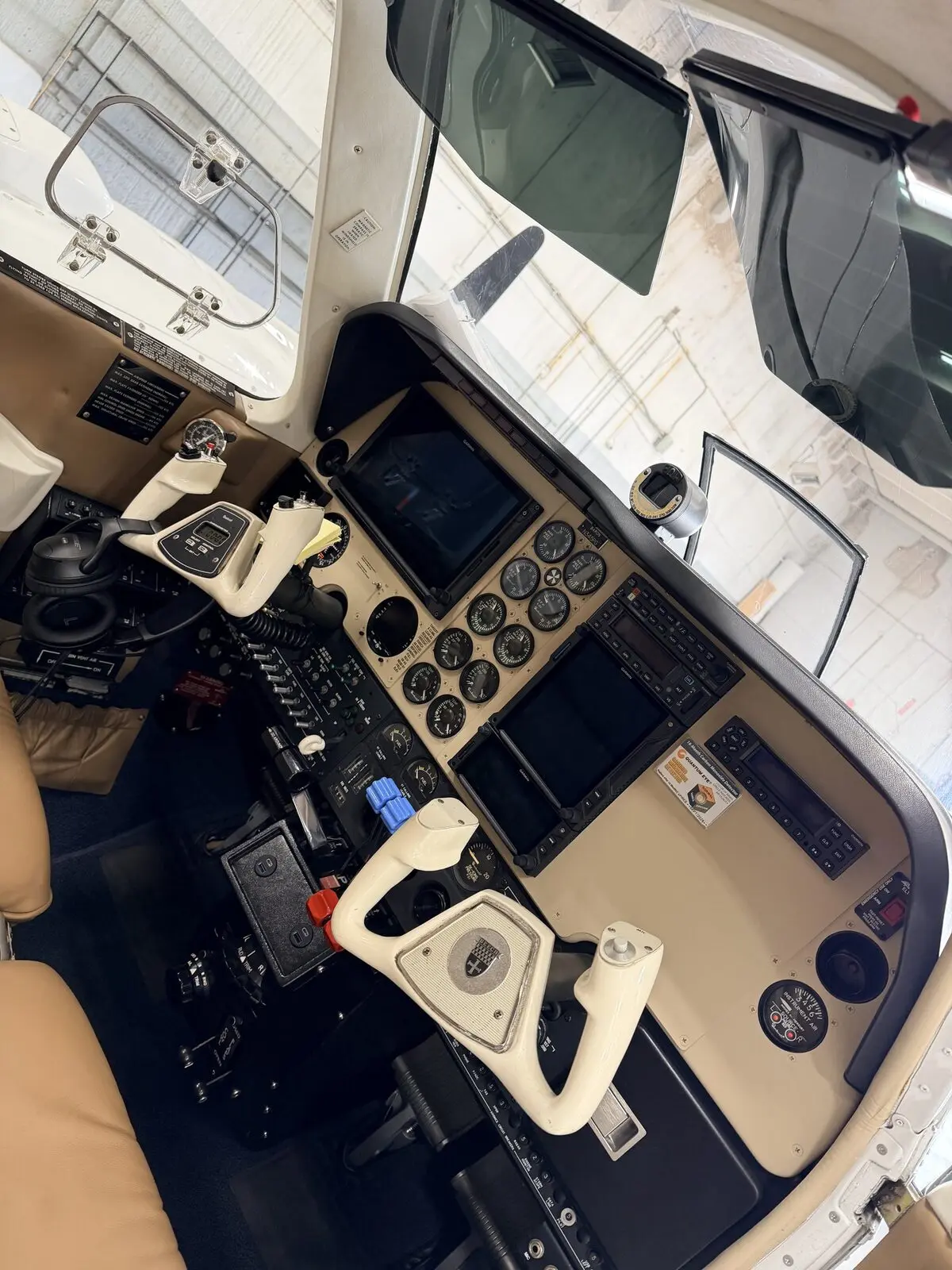
- Cockpit vacuum and conservative dusting
- Interior and exterior window cleaning
- Bug residue removal where needed
- Metal and high-touch surface polish
- Door seal condition documentation
- Recommendations for follow-up seal care and coating maintenance
Detailing Process
The cabin was treated as a compact aircraft workspace. The first priority was controlled access: move carefully, keep tools small, avoid unnecessary product volume, and prevent knee, bag, or hose contact with trim and avionics. The Baron cabin rewards patience — there is not much wasted space, so a detailer has to sequence the job instead of spreading tools everywhere.
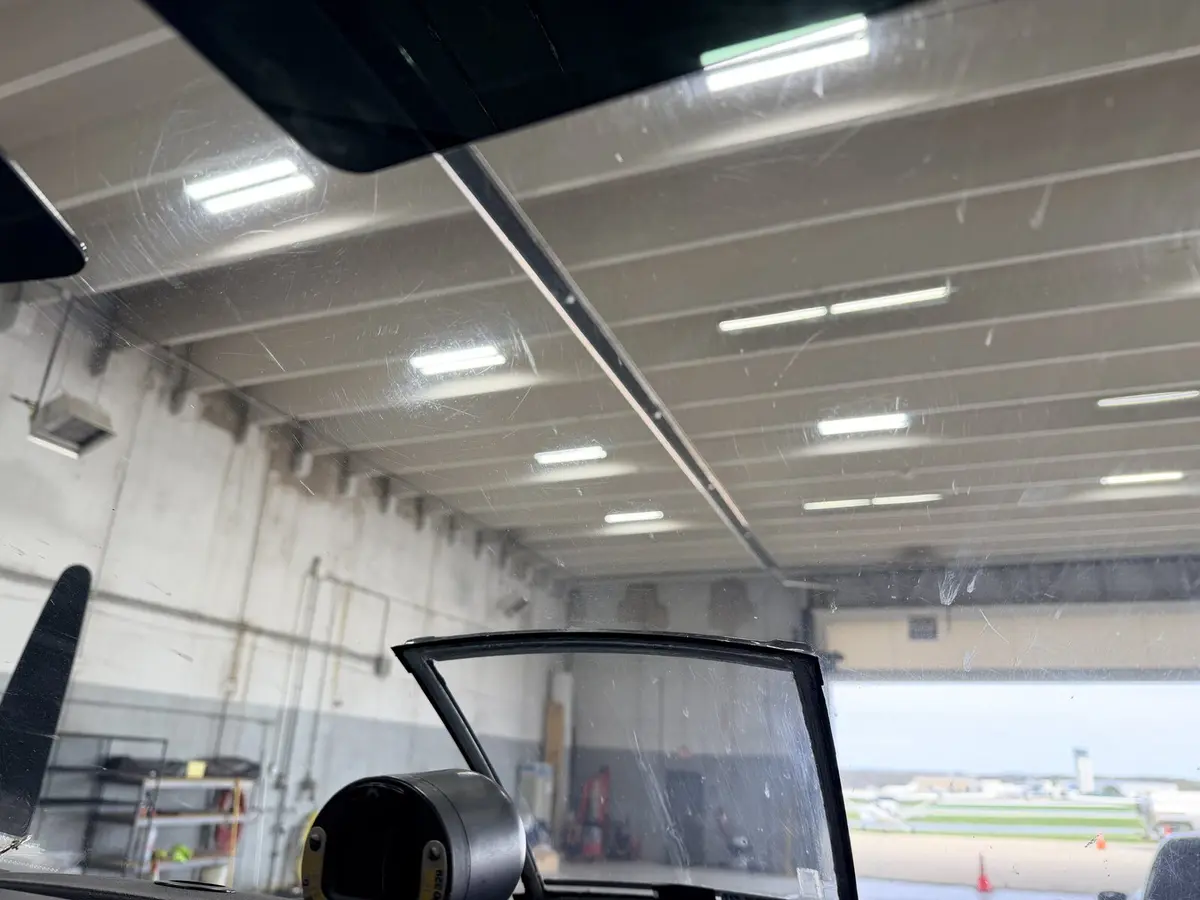
Window work was a major part of the perceived result. Aircraft windows are not automotive glass — they are commonly acrylic or polycarbonate, which can scratch or haze if treated with dirty towels, harsh cleaners, or aggressive pressure. Clean windows in a training aircraft are not only cosmetic. They improve the cockpit and cabin feel immediately and make the aircraft look more cared for from both inside and outside.
The door seals were handled conservatively. Dry, cracking seals can be made worse by aggressive scrubbing or unsuitable dressing. The correct move was documentation, gentle cleaning, and a recommendation for aircraft-compatible seal conditioning if approved.
Aircraft-Specific Care Notes
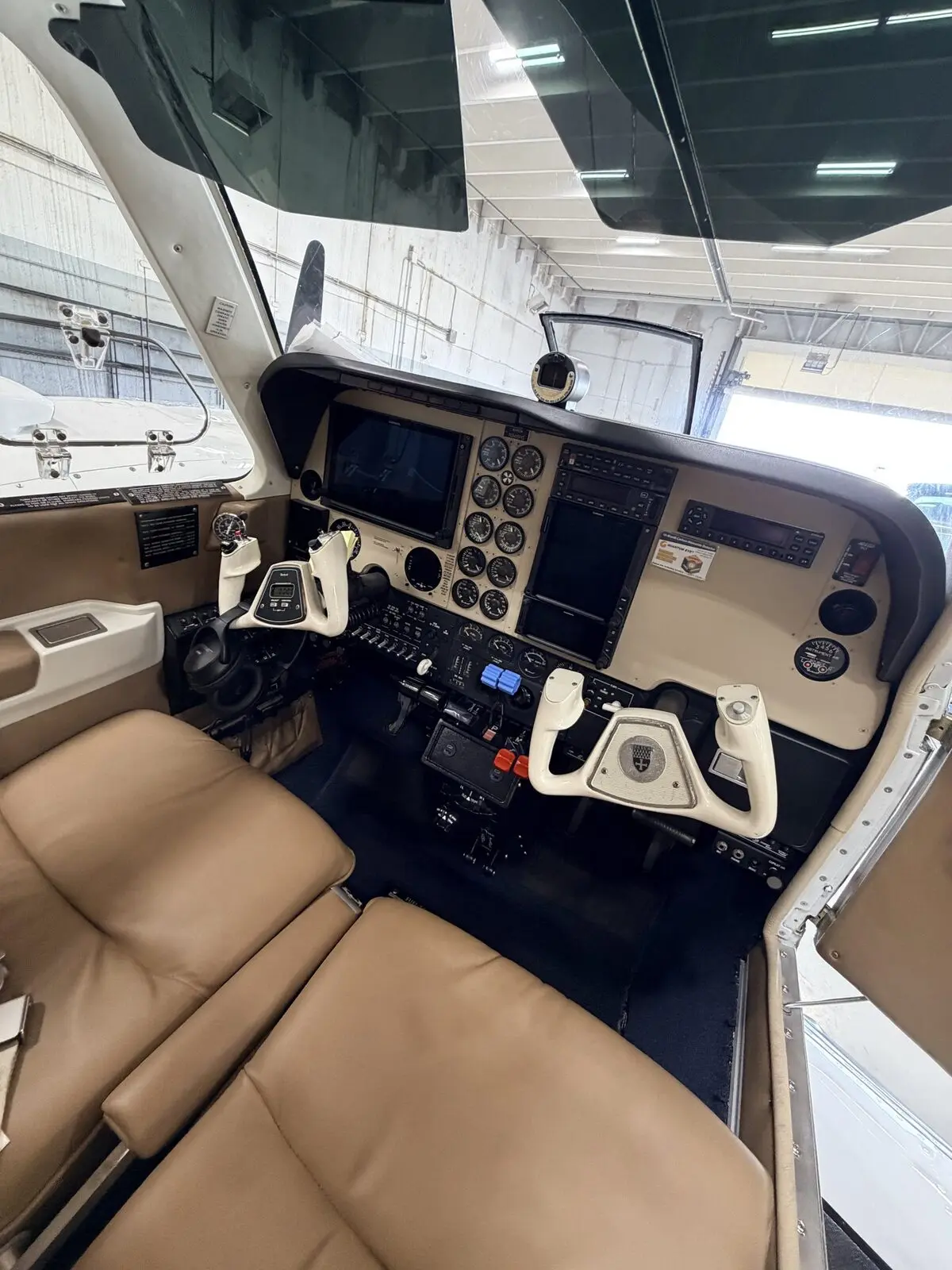
The Baron 58 is a piston twin with a practical cabin and a dense cockpit. That cockpit density changes the detailing process. Controls, throttle quadrant, switches, radios, screens, vents, and placards do not tolerate casual product use. Interior work around the panel was limited to conservative vacuuming, dusting, and surface-safe cleaning.
Training and owner-operated piston aircraft also collect belly residue, step wear, prop-wash residue, and door-area grime faster than many owners expect. A good detailing program for this type of aircraft should be maintenance-aware: clean what belongs to detailing, document what belongs to maintenance, and never blur the two.
Final Result
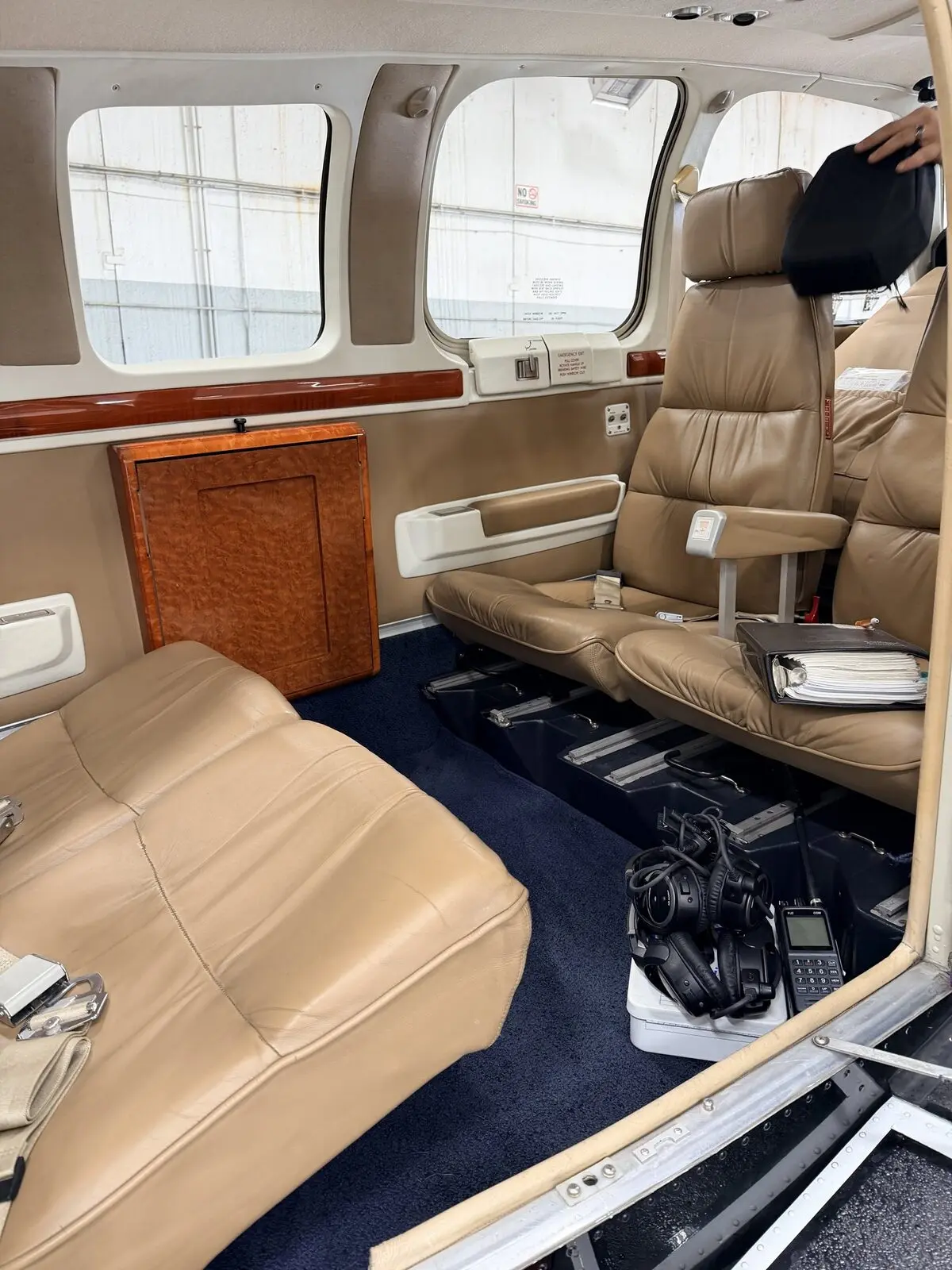
The aircraft presented sharper in the hangar and cleaner in the cabin. The leather seating, carpet, windows, and cockpit approach areas looked more organized and professional. The door seal issue remained documented for follow-up — exactly the right outcome for an aircraft interior reset: improve presentation, avoid overreach, and give the operator a clear next step.
Recommended Next Step
For training and owner-operated piston twins, a recurring interior reset should be paired with periodic window-safe cleaning, door seal review, and exterior presentation washes. If a ceramic coating is already installed, annual inspection and approved maintenance should stay on the calendar so the coating remains useful rather than becoming an ignored line item.
- Recurring interior resets on a seasonal schedule
- Window-safe cleaning with acrylic-appropriate products
- Door seal inspection and conditioning review
- Exterior presentation washes between major details
- Ceramic coating maintenance if applicable